Marine Park · Ontario · Canada
Bruce Peninsula National Park
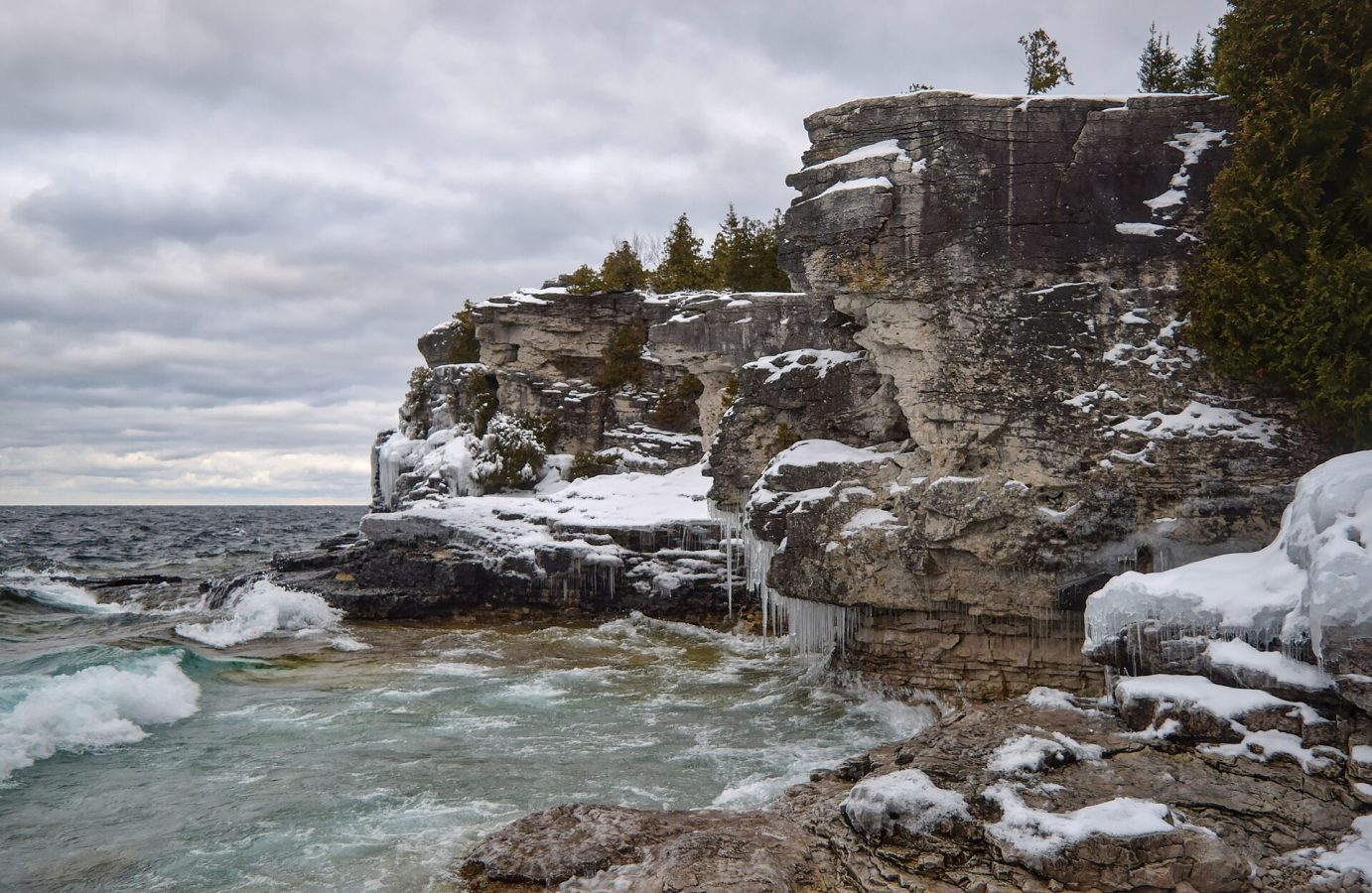
Photo: The Cosmonaut, CC BY-SA 2.5 ca
- Type
- Marine Park
- Area
- 154 km²
- Founded
- 1987
- Visitors
- 460 435 a year (2022)
- Tickets
- 3 tickets and tours
Bruce Peninsula National Park tickets and tours: which one to book
Bruce Peninsula National Park lies at the tip of the long finger of land that separates Georgian Bay from the main body of Lake Huron, in Ontario, about four hours' drive north-west of Toronto, just short of the harbour village of Tobermory, and it has become so popular, thanks to photographs of one turquoise cove, that the visit now turns on a parking reservation. The park's most famous feature, the Grotto, is reached from the Cyprus Lake area, where the car parks are limited; from about May to October a time slot of four hours must be reserved in advance through the Parks Canada reservation system, per vehicle, in addition to the daily entrance fee or the Discovery Pass, and summer weekends sell out weeks ahead, so book as soon as the dates are fixed;
without a reservation cars are turned away at the gate. From the car park it is an easy walk of about thirty minutes on wide trails to the shore at Indian Head Cove and the Grotto. The alternative is to stay at the Cyprus Lake campground, in its tent sites or yurts, which includes access, or to come on one of the tours from Toronto: very long day trips by coach, which generally combine the Grotto, when they have secured access, with Tobermory and a boat to Flowerpot Island, and two-day camping or hiking trips, which are far more relaxed. Guided hiking trips of two or three nights based at Tobermory walk sections of the Bruce Trail. The Singing Sands, on the Lake Huron side, and the Halfway Log Dump, a quieter stretch of the Georgian Bay shore, need no reservation and are well worth the time.
3 tickets and tours for Bruce Peninsula National Park
Live dates and prices from GetYourGuide. Free cancellation on most tickets.
Visiting Bruce Peninsula National Park: what you will see
The park was established in 1987 and covers about 156 square kilometres in several blocks at the northern end of the Bruce Peninsula, the core, with the adjoining Fathom Five marine park, of the Niagara Escarpment biosphere reserve. The escarpment, the same ridge of hard Silurian dolomite over which Niagara Falls drops three hundred kilometres to the south-east, runs up the eastern side of the peninsula and meets Georgian Bay here in white cliffs up to forty metres high, undercut by waves into caves, overhangs, arches and stacks, above water of a transparency and a Caribbean blue-green that astonish visitors who know the Great Lakes only from their cities; it is extremely cold in all seasons. The Grotto is a sea cave at the water's edge, large enough to hold a crowd, with an underwater tunnel through which light enters from the lake and glows blue, reached by a scramble down the cliff, and Indian Head Cove beside it is a beach of smooth white boulders.
The final, wildest kilometres of the Bruce Trail, Canada's oldest and longest footpath, which follows the escarpment for nearly nine hundred kilometres from Niagara, run along these clifftops to Tobermory. Growing out of the cliff faces themselves, stunted, twisted and scarcely a few metres tall, are eastern white cedars that botanists found in the 1980s to be the oldest trees in eastern North America, some more than a thousand years old, an ancient forest hanging vertically and unnoticed. The peninsula's thin limestone pavements, called alvars, and its fens make it one of the richest places for wild orchids in North America, with some forty-three species, among them the ram's-head lady's slipper and the calypso, along with the dwarf lake iris and the rare lakeside daisy. Black bears, porcupines, fishers, snowshoe hares, and the massasauga, Ontario's only venomous snake, a small, shy rattlesnake, live here, and the park is a dark-sky preserve. The land is the traditional territory of the Saugeen Ojibway Nation.
Bruce Peninsula National Park: best time to go, seasons and hours
The park is open all year. July and August are the high season, warm, 22 to 26 degrees, crowded, with every parking slot taken and the water of Georgian Bay at its least frigid, which is to say about 15 to 18 degrees; late May and June are the time of the orchids and other wildflowers, with blackflies and mosquitoes; September and early October bring clear skies, warm lake water by local standards, autumn colour and few people, and are the best weeks;
in winter the road to Cyprus Lake is closed to vehicles beyond a gate, and the park is visited on snowshoes and skis, with the cliffs draped in ice. The rocks at the Grotto are slippery, and people are injured jumping and scrambling every year. Allow a full day, better two. Tobermory, Flowerpot Island and the shipwrecks of Fathom Five are ten minutes away, and the Chi-Cheemaun ferry crosses to Manitoulin Island.
More tours and activities in Ontario
Before you go
Can I book a tour or safari in Bruce Peninsula National Park online?
Yes. GetYourGuide lists 3 tickets and tours for Bruce Peninsula National Park, with live dates and prices and free cancellation on most of them.
When is Bruce Peninsula National Park open?
The park is open all year.
How many days do you need in Bruce Peninsula National Park?
Allow a full day, better two.
How big is Bruce Peninsula National Park?
Bruce Peninsula National Park covers 154 km².
When was Bruce Peninsula National Park founded?
Bruce Peninsula National Park was established in 1987.
How many people visit Bruce Peninsula National Park?
Bruce Peninsula National Park receives about 460 435 a year (2022).
Where is Bruce Peninsula National Park?
Bruce Peninsula National Park is in Ontario, Canada. The map on this page shows the exact spot.