Mountain Park · Nova Scotia · Canada
Cape Breton Highlands National Park
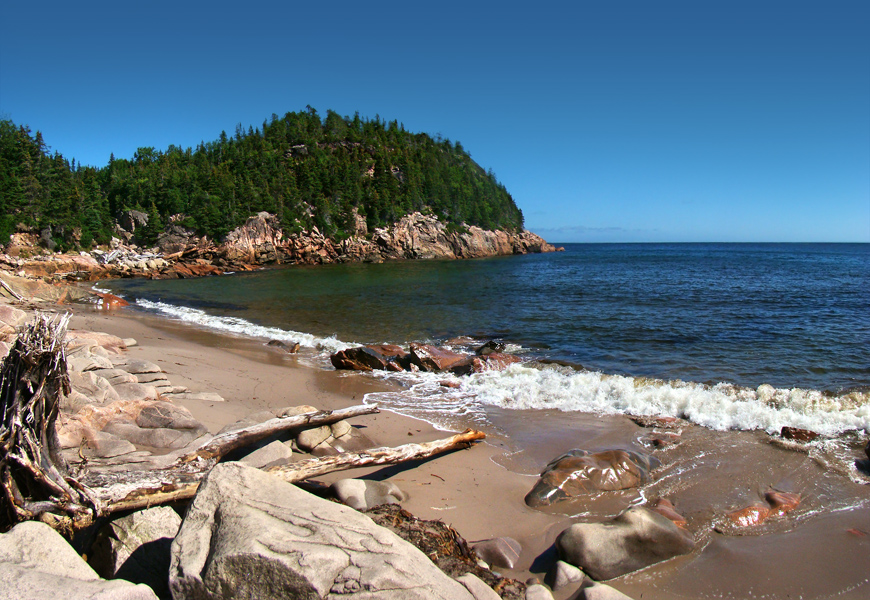
Photo: Tango7174, CC BY-SA 4.0
- Type
- Mountain Park
- Where
- Nova Scotia, Canada
- Area
- 948 km²
- Founded
- 1936
- Visitors
- 277 203 a year (2022)
- Elevation
- 535 m above sea level
- Tickets
- 2 tickets and tours
- Website
- pc.gc.ca/fr/pn-np/ns/cbreton
Cape Breton Highlands National Park tickets and tours: which one to book
Cape Breton Highlands is the national park at the northern end of Cape Breton island, in the Canadian province of Nova Scotia, and for most visitors it is inseparable from the Cabot Trail, a road of 298 kilometres that loops round the northern part of the island and is regularly named among the most beautiful drives in North America; about a third of the trail runs through the park, hugging the cliffs on the western, Gulf of St Lawrence side, climbing over the plateau, and descending to the coves of the eastern, Atlantic side. The park is about four to five hours by road from Halifax, and an hour and a half to two hours from Sydney, the island's town and airport and a port of call for cruise ships, from which day tours by coach drive the whole trail in nine or ten hours, a long day with limited stops.
It is far better done with a rental car over two or three days, anticlockwise if one wants to be on the sea side of the road, staying in the Acadian fishing village of Chéticamp at the western entrance, in Pleasant Bay, or at Ingonish on the eastern side. The Parks Canada entry pass, per person per day or the annual Discovery Pass, is bought at the visitor centres at Chéticamp and Ingonish. The park has twenty-six marked trails. The famous one is the Skyline, a level loop of about eight kilometres along a headland, ending in a long boardwalk with steps down a bare ridge high above the sea and the road, where moose are regularly seen and whales sometimes spotted; rangers lead sunset walks there. Franey, Middle Head, Acadian, Fishing Cove and the bog boardwalk are the other favourites. Whale-watching boats go out from Pleasant Bay and Chéticamp, and the Highlands Links at Ingonish is a celebrated golf course. The guided UTV tours run in the hardwood hills outside the park.
2 tickets and tours for Cape Breton Highlands National Park
Live dates and prices from GetYourGuide. Free cancellation on most tickets.
Visiting Cape Breton Highlands National Park: what you will see
The park was established in 1936, the first national park in Atlantic Canada, and covers 948 square kilometres, about a fifth of northern Cape Breton, stretching across the island from the Gulf to the Atlantic. It protects the Cape Breton highlands, the northernmost extension of the Appalachian mountain chain on the mainland of North America: an ancient, worn-down plateau of granite, gneiss and schist, averaging 350 to 500 metres above the sea, with White Hill, 535 metres, the highest point in Nova Scotia, which ends at the coast in steep, forested headlands and cliffs, and is cut by deep, V-shaped river canyons. Its special character comes from the meeting of three kinds of forest at different heights: in the sheltered valleys and lower slopes, the Acadian forest, a mixture of sugar maple, yellow birch, beech and hemlock, of which the Grande Anse valley holds stands of sugar maples more than 350 years old, among the oldest in the Maritimes, and which turns the hillsides scarlet, orange and gold in early October;
above it the boreal forest of balsam fir and white birch; and on the exposed plateau, a taiga of stunted, wind-flagged spruce, some of them a century and a half old and a metre tall, heath barrens and bogs, a landscape that belongs to Labrador. Moose, which were wiped out on the island by hunting and reintroduced from Alberta in the 1940s, became so numerous that they browsed the regenerating forest into grassland over large areas, and the park has had to cull them, together with the Mi'kmaq, on whose unceded territory it lies. Black bears, coyotes, which killed a young hiker on the Skyline trail in 2009, lynx, pine martens, snowshoe hares, bald eagles in great numbers, and, offshore, pilot, minke, fin and humpback whales, grey seals and gannets are the wildlife. The human setting is as distinctive: Chéticamp is French-speaking Acadian, known for its hooked rugs; the eastern shore was settled by Highland Scots, and Gaelic, fiddle music and ceilidhs are alive; John Cabot is supposed to have landed near here in 1497.
Cape Breton Highlands National Park: best time to go, seasons and hours
The park is open all year, but most of its facilities, campgrounds and visitor services operate from mid-May to mid-October. July and August are the warmest months, 20 to 25 degrees, with the most visitors; the first half of October is the peak of the autumn colours and coincides with the Celtic Colours music festival, held across the island, when accommodation must be booked far ahead;
June is cool and green, with blackflies; winter brings heavy snow, the closure of most services, and cross-country skiing and snowshoeing. Fog is common on the Atlantic side, and wind on the plateau. Drive slowly at dawn and dusk, when moose are on the road. Allow two to three days. Baddeck, with the Alexander Graham Bell museum, is an hour south, the Fortress of Louisbourg two and a half hours, and Halifax five.
More tours and activities in Nova Scotia
Before you go
Can I book a tour or safari in Cape Breton Highlands National Park online?
Yes. GetYourGuide lists 2 tickets and tours for Cape Breton Highlands National Park, with live dates and prices and free cancellation on most of them.
How much is the entrance fee for Cape Breton Highlands National Park?
The Parks Canada entry pass, per person per day or the annual Discovery Pass, is bought at the visitor centres at Chéticamp and Ingonish.
When is Cape Breton Highlands National Park open?
The park is open all year, but most of its facilities, campgrounds and visitor services operate from mid-May to mid-October.
How many days do you need in Cape Breton Highlands National Park?
Allow two to three days.
How big is Cape Breton Highlands National Park?
Cape Breton Highlands National Park covers 948 km².
When was Cape Breton Highlands National Park founded?
Cape Breton Highlands National Park was established in 1936.
How many people visit Cape Breton Highlands National Park?
Cape Breton Highlands National Park receives about 277 203 a year (2022).
Where is Cape Breton Highlands National Park?
Cape Breton Highlands National Park is in Nova Scotia, Canada. The map on this page shows the exact spot.