
Piatra Craiului National Park
Romania
Piatra Craiului is the limestone ridge of the southern Carpathians above the town of Zărnești, forty minutes from…
11 tickets & tours
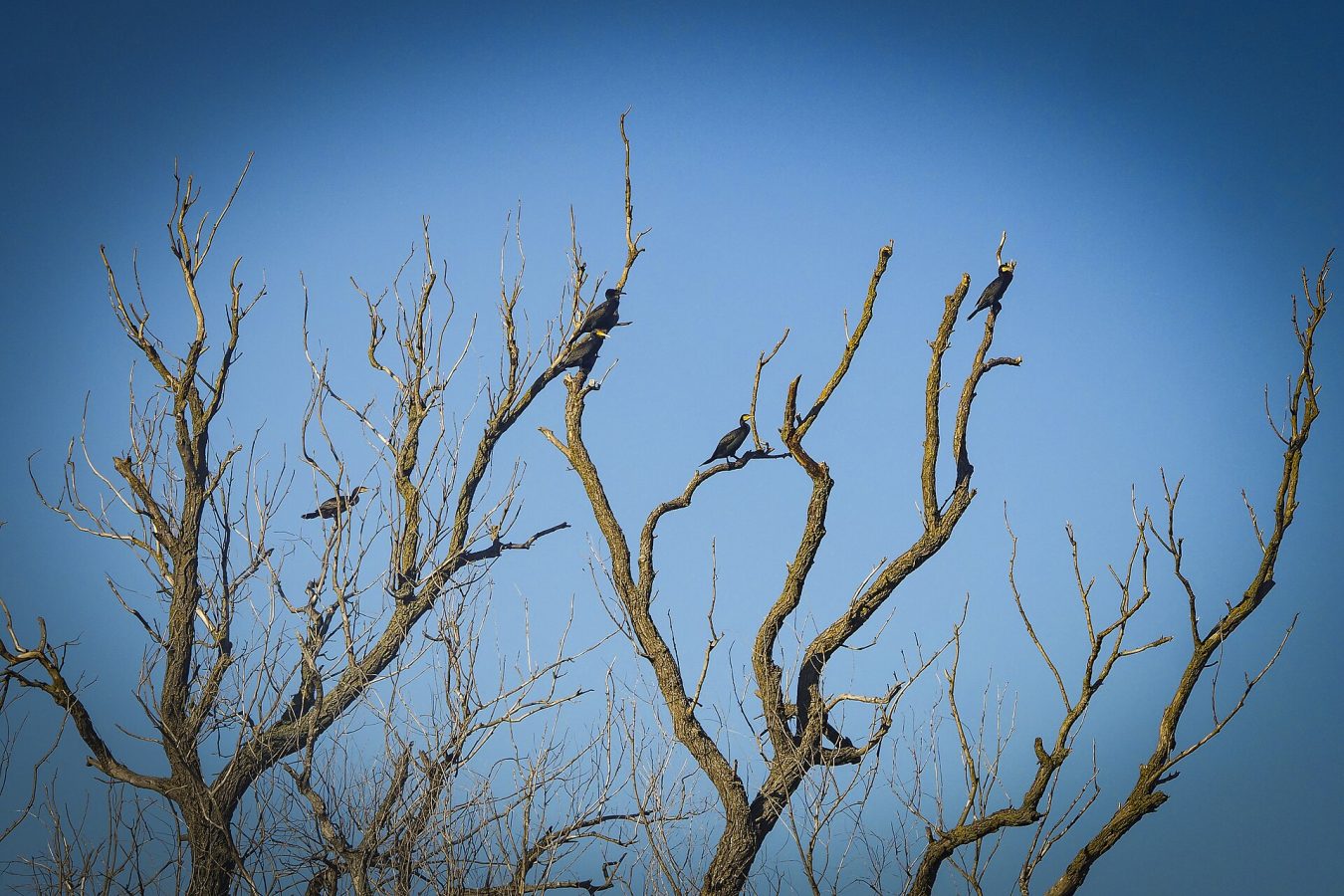
Photo: RESTORE4Cs, CC BY 4.0
The Danube Delta is at the far eastern end of Romania, where the river enters the Black Sea, and has nothing to do with the Danube Bend hiking trips sold from Budapest, a thousand river-kilometres upstream. The gateway is Tulcea, a port town four to five hours by road from Bucharest and two from Constanța, and beyond Tulcea there are, with few exceptions, no roads: everything moves by water. There are three ways of seeing the delta. Day trips by small motorboat from Tulcea, or from the villages of Murighiol and Mahmudia on the southern arm, run for three to eight hours through the nearer channels and lakes and show pelicans, herons and water lilies to anyone short of time, and the three-day tours from Bucharest are built on these.
Better is to go in and stay: public ferries and fast boats run daily from Tulcea down the Sulina arm to Crișan, Mila 23 and the town of Sulina, and down the other arms to Sfântu Gheorghe and Chilia, where family guesthouses and a few floating hotels provide full board, heavily based on fish, and their own boatmen for daily excursions at dawn and dusk; from Sulina, boats go to the point where the river meets the sea, to Musura bay and to the Letea forest. Best of all, for birdwatchers and photographers, are small boats, kayaks or canoes with a specialist guide, which can enter the narrow channels and floating reedbeds where the larger boats cannot and must not. Every visitor needs the reserve's entry permit, cheap, bought online or in Tulcea, and normally included by operators. Choose one that respects the speed limits: fast boats swamp nests.
Live dates and prices from GetYourGuide. Free cancellation on most tickets.
The delta is the second largest in Europe after the Volga's and much the best preserved, some 5,800 square kilometres with its lagoons, of which about four fifths lie in Romania and the rest in Ukraine; the Romanian part was declared a biosphere reserve in 1990 and a World Heritage Site in 1991, and is a Ramsar wetland. The Danube, having crossed ten countries, divides below Tulcea into three arms, Chilia in the north, which carries most of the water and forms the border, Sulina in the middle, straightened in the nineteenth century by the European Commission of the Danube for sea-going ships, and Sfântu Gheorghe in the south, and between them lies a labyrinth of channels, lakes, marshes and the largest continuous reedbed on earth, about 1,560 square kilometres of it, much of it growing on plaur, floating mats of roots and peat a metre thick, that rise and fall with the water and drift with the wind. It is still growing seawards by some forty metres a year.
More than 300 species of birds have been recorded, and the delta holds the greater part of Europe's breeding white pelicans, several thousand pairs at Roșca-Buhaiova, with the rarer Dalmatian pelican, most of the world's pygmy cormorants, glossy ibis, spoonbills, squacco, purple and night herons, little bitterns, whiskered terns, white-tailed eagles, rollers and bee-eaters, and in winter a large share of the world's red-breasted geese. Some forty-five freshwater fish species, among them the carp, pike, zander and catfish of the local cuisine, and the sturgeons, now strictly protected, live in its waters, with otters, European mink, wild cats and golden jackals on its banks. On the sand ridges of Letea and Caraorman grow strange forests of oak hung with lianas, among dunes where half-wild horses roam. The delta's fifteen thousand people include Lipovans, Russian Old Believers who fled here in the eighteenth century, fishermen with long beards and blue-painted houses, and Ukrainians, the Haholi.
Boats run all year, and the tourist season from April to October. Late April to mid-June is the peak for birds, with the breeding colonies active, migrants passing, the water high enough to enter the smaller channels, and the first mosquitoes; July and August are hot, with water lilies in flower, lower water, clouds of mosquitoes at dusk and the most visitors;
September and October bring the autumn migration, mild weather and quiet; winter is for the geese and the hardy. Bring repellent, long sleeves for the evening, and binoculars. Allow three days at the least. Tulcea has the delta museum, the Greek and Roman ruins of Histria and the Black Sea resorts are to the south, the Măcin mountains to the west, and Bucharest four to five hours.
Yes. GetYourGuide lists 2 tickets and tours for Danube Delta Biosphere Reserve, with live dates and prices and free cancellation on most of them.
Allow three days at the least.
Danube Delta Biosphere Reserve covers 5 800 km².
Danube Delta Biosphere Reserve was established in 1990.
Danube Delta Biosphere Reserve is in Romania. The map on this page shows the exact spot.
Romania
Piatra Craiului is the limestone ridge of the southern Carpathians above the town of Zărnești, forty minutes from…
11 tickets & tours
Romania
Retezat is a compact massif of granite peaks and glacial lakes in the Southern Carpathians, in Hunedoara county in the…
2 tickets & tours
