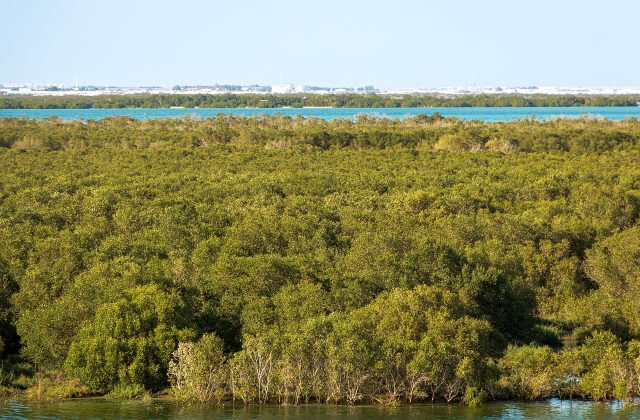
Mangrove National Park, Abu Dhabi
379 km away
Mangrove National Park is the protected mangrove forest along the eastern shore of Abu Dhabi island, minutes from the…
2 tickets & tours
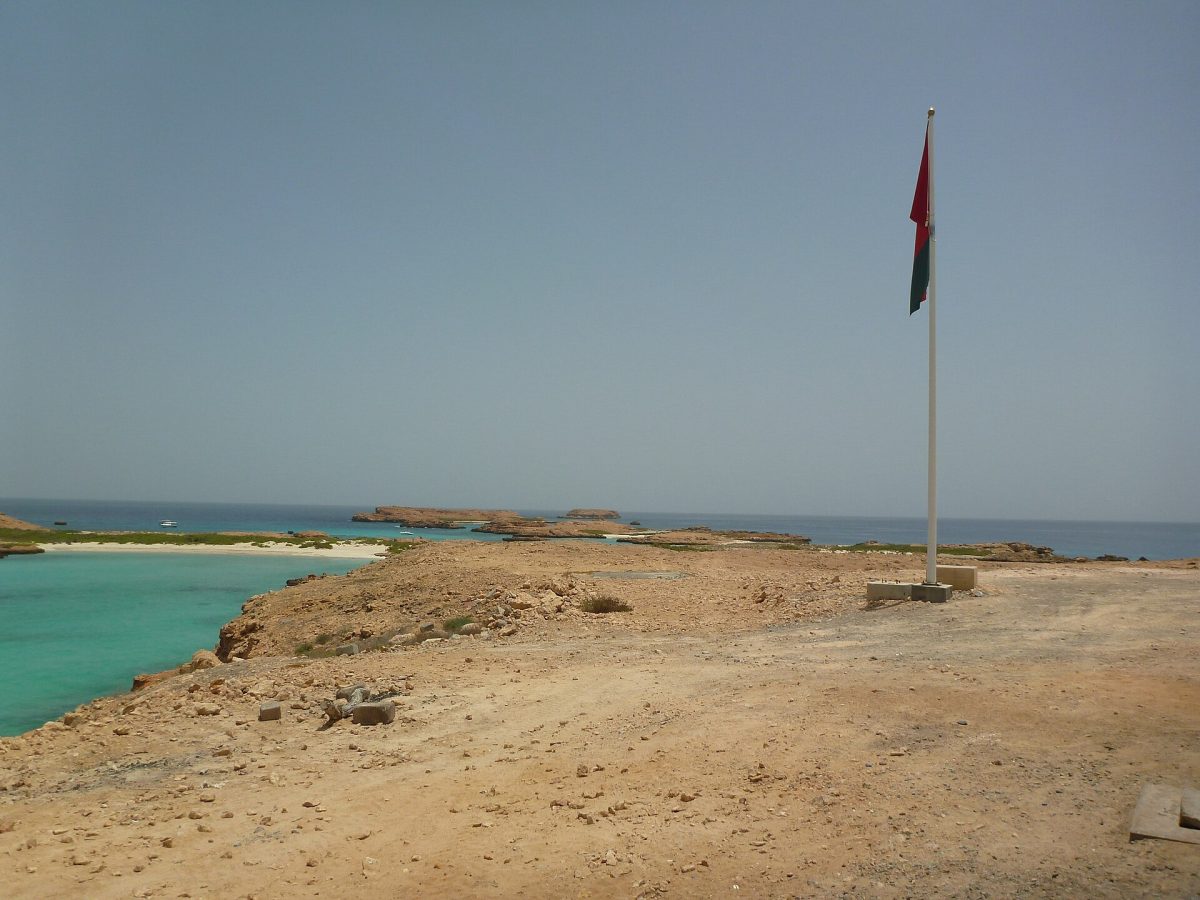
Photo: Wusel007, CC BY-SA 4.0
The Daymaniyat islands are a chain of nine small, bare, rocky islands, with their surrounding reefs, lying sixteen to eighteen kilometres off the coast of Oman, in the Gulf of Oman, between forty and seventy kilometres west of the capital, Muscat, and they offer the best snorkelling and diving in the country, in clear, turquoise water over coral, with turtles all but guaranteed. Nobody lives on them, there are no facilities of any kind, and they are visited only on organised boat trips, since every visitor needs a permit from the environment authority, which the licensed operators obtain and include in their price. The boats leave in the morning, mostly from the marina of Al Mouj, beside Muscat's airport, from which the crossing takes forty-five minutes to an hour in a fast open boat, and also from Seeb and from Al Sawadi, further up the coast, which is nearer.
A typical snorkelling trip lasts four to five hours and makes two stops at sheltered bays on different islands, with masks, fins and life vests, soft drinks, fruit and a guide who swims with the group; diving boats make two dives at sites such as the Aquarium, a shallow reef crowded with fish, and the walls and coral gardens of the western islands. The rules of the reserve govern the day. From the beginning of May to the end of October, which is the nesting season of the turtles and the seabirds, landing on any of the islands is strictly forbidden, and all the time is spent in the water or on the boat; from November to April, boats may put their passengers ashore on the white sand beaches of one or two of the islands to rest and picnic between swims, and overnight camping has at times been allowed by special permit. Touching or chasing the turtles, standing on the coral, fishing and the taking of shells are prohibited.
Live prices from GetYourGuide for tours whose route includes this park. Free cancellation on most of them.
The islands and the sea round them were declared a nature reserve in 1996, the first marine reserve in Oman, covering about 203 square kilometres, of which the land amounts to no more than a hundred hectares, and they are on the country's tentative list for World Heritage. The islands are low platforms and ridges of pale limestone, undercut by the waves into overhangs and caves, with a few beaches of coral sand in the coves of their southern, sheltered sides, and no fresh water, trees or soil to speak of; their interest lies at and below the water line. The reefs that fringe them are the best developed on the Omani coast, with wide beds of table and staghorn corals, massive brain corals and, in places, slopes of purple and pink soft coral, and they have shown an unusual resistance to the bleaching that has devastated reefs elsewhere, perhaps because the summer monsoon drives an upwelling of cold, nutrient-rich water along this coast, which both cools the corals and feeds an abundance of plankton, at the cost of turning the sea green and cloudy for weeks at a time. The fish life is correspondingly rich: clouds of fusiliers, snappers and sweetlips, angelfish, parrotfish, honeycomb moray eels of great size, cuttlefish, rays, the zebra shark, a harmless spotted shark that lies on the sand, and blacktip reef sharks in the shallows.
Between about July and October, whale sharks, the largest fish in the sea, gather round the islands to feed on the plankton bloom, and swimming beside one is the particular prize of a summer visit. The reserve was created above all for its turtles. The hawksbill turtle, which is critically endangered throughout the world, nests on the islands' beaches in numbers, several hundred females a year, that make this one of the densest nesting sites known for the species, chiefly between March and July, and green turtles both nest and feed here, so that snorkellers meet them, grazing on the reef or resting under ledges, on almost every outing. The islands are equally important for seabirds: in summer tens of thousands of bridled terns, with white-cheeked and roseate terns, breed on the ground; red-billed tropicbirds nest in crevices; ospreys build their bulky nests on the rocks; and the sooty falcon, a slender grey falcon that breeds in the hottest months in order to feed its young on migrating songbirds, has one of its few colonies here. The islands appear in a Greek sailing guide of the first century, the Periplus of the Erythraean Sea, and old lookout posts and graves show that fishermen and pearl divers from the coast have used them for centuries.
Boats run all year, weather permitting. The most comfortable period is from October to May, when the air temperature is 25 to 32 degrees, the sea 23 to 28, and landing on the beaches is permitted from November; in winter a northerly wind, the shamal, occasionally makes the crossing rough and causes cancellations. From June to September it is extremely hot and humid, 38 to 45 degrees, with no shade on the boat but its canopy, and the sea temperature and visibility fluctuate sharply as cold upwellings arrive, but this is the season of the whale sharks, with the peak in September and October, and of the nesting turtles.
Visibility ranges from eight to twenty-five metres and cannot be predicted. Weekends, which in Oman fall on Friday and Saturday, are busy. Bring a long-sleeved swimming shirt, reef-safe sunscreen, a hat, a towel and seasickness tablets if needed, and book a day or two ahead. Allow half a day. Muscat, with its grand mosque and the old port of Muttrah, is half an hour from the marina, and the forts of Nakhal and Rustaq are an hour inland from Barka.
379 km away
Mangrove National Park is the protected mangrove forest along the eastern shore of Abu Dhabi island, minutes from the…
2 tickets & tours
Yes. GetYourGuide sells tickets and guided tours whose route includes Daymaniyat Islands Nature Reserve; live prices are shown on this page.
Daymaniyat Islands Nature Reserve covers 203 km².
Daymaniyat Islands Nature Reserve was established in 1996.
Daymaniyat Islands Nature Reserve is in Oman. The map on this page shows the exact spot.