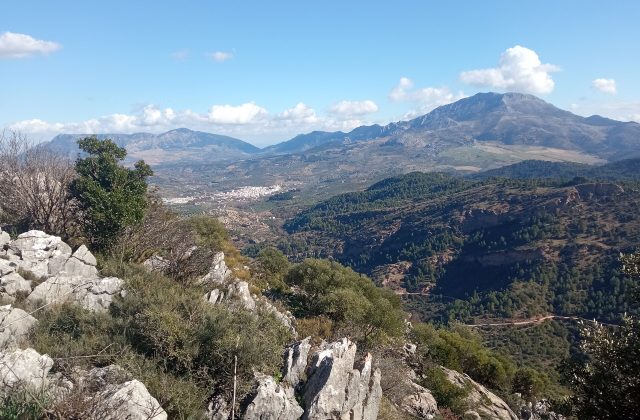
Sierra de las Nieves National Park
Andalusia, Spain
The Sierra de las Nieves is the limestone massif that rises between Marbella and Ronda in the province of Málaga, less…
5 tickets & tours
Wetland Park · Andalusia · Spain

Photo: Gabriela Coronado Hernández, CC BY-SA 4.0
Doñana is the delta of the Guadalquivir on the Atlantic coast of Andalusia, an hour from Seville, and the core of the national park cannot be entered freely: access to the interior is only on the authorised 4×4 tours, run by a handful of licensed concessionaires on fixed routes. The classic one leaves twice a day from the El Acebuche visitor centre near Matalascañas, four hours in a high-wheeled green bus along the wild beach, across the moving dunes, through the pine woods and the scrub and out to the edge of the marshes and the abandoned palace area, and must be booked well ahead in spring. From El Rocío, smaller vehicles run northern routes through the Coto del Rey woods and the marsh edge, better for birds and with more hope of a lynx;
from Sanlúcar de Barrameda on the Cádiz side, a boat crosses or sails up the Guadalquivir with guided landings, and 4×4 tours cover the southern sector. The day tours from Seville bundle the transfer, a concessionaire's route and an hour in El Rocío, and the birdwatching and lynx tours with specialist guides work the park's edges and the natural park around it for a full day from dawn. Horse rides along the beach and the pinewoods near El Rocío and Matalascañas stay outside the core. The visitor centres at El Acebuche, La Rocina and the Acebrón palace have free boardwalk trails and hides, which with a car make a good self-guided day.
Live dates and prices from GetYourGuide. Free cancellation on most tickets.
The park was created in 1969, after the newly founded World Wildlife Fund and Spanish scientists led by José Antonio Valverde bought part of the marshes to stop their drainage, on land that had been a hunting reserve of the dukes of Medina Sidonia since the thirteenth century and takes its name from Doña Ana, a duke's wife; with the surrounding natural park it protects more than a thousand square kilometres, a World Heritage Site since 1994, a biosphere reserve and a Ramsar wetland. It has three landscapes. The marismas, the seasonal marshes of clay that flood with the winter rains and dry to cracked mud by July, are the wintering ground of half a million waterbirds, greylag geese from Scandinavia above all, and a staging post for six million birds a year migrating between Europe and Africa, with flamingos, spoonbills, glossy ibis, purple herons, marbled teal and white-headed ducks among the breeders.
The moving dunes, the largest dune field in Europe, advance inland from thirty kilometres of empty beach at several metres a year, burying umbrella pines whose dead tops emerge again behind them in the hollows called corrales. The cotos, stabilised sands with cork oaks, pines and Mediterranean scrub, are the home of the Iberian lynx, which in 2002 was down to fewer than a hundred animals here and in the Sierra Morena and has recovered to more than two thousand in Iberia through captive breeding run partly from El Acebuche, and of the Spanish imperial eagle, with red and fallow deer, wild boar and the half-wild marsh horses. El Rocío, a village of sand streets and hitching rails on the marsh edge, receives a million pilgrims at Pentecost. The park is dying of thirst: legal and illegal wells for strawberry farms and the coastal resorts have lowered the aquifer, the lagoons that never dried have dried, and the marsh now floods fully in few years.
The visitor centres open daily from about 8 or 9 am to 3 pm in summer and later in the cooler months, and the 4×4 tours leave early in the morning and in mid-afternoon. The season depends on water: from November to February, in a wet year, the marshes are full of geese and ducks; March to May is the peak, with the breeding colonies, the migrants and the flowers;
from July to September the marsh is a dry plain and the heat is fierce, with the beach and the dunes the only reasonable outing. Check how much water the winter brought before planning a birding trip. Avoid the week of the Rocío pilgrimage at Pentecost unless that is the purpose. Allow a full day. Seville is an hour north-east, Huelva and the Columbus sites half an hour west, and Sanlúcar's sherry bodegas are across the river.
Yes. GetYourGuide lists 10 tickets and tours for Doñana National Park, with live dates and prices and free cancellation on most of them.
Doñana National Park covers 543 km².
Doñana National Park was established in 1969.
Doñana National Park is in Andalusia, Spain. The map on this page shows the exact spot.
Andalusia, Spain
The Sierra de las Nieves is the limestone massif that rises between Marbella and Ronda in the province of Málaga, less…
5 tickets & tours
Andalusia, Spain
The Sierra de Grazalema is a knot of rugged limestone mountains in the north-east of the province of Cadiz, in…
1 ticket or tour
