Arusha National Park
Tanzania
Arusha National Park is the small park on the doorstep of the safari capital of northern Tanzania, twenty-five…
293 tickets & tours
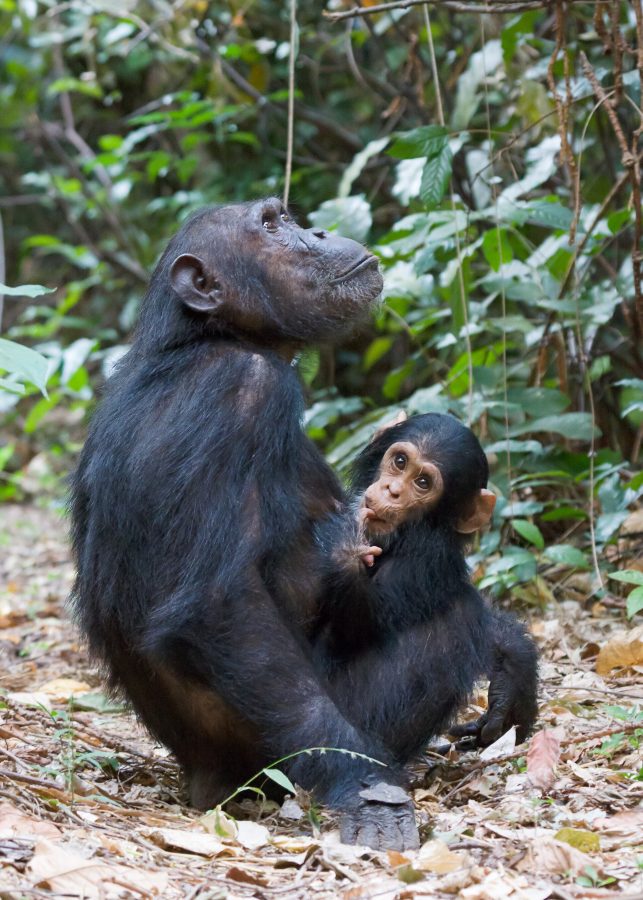
Photo: Ikiwaner, GFDL 1.2
Gombe is the narrow strip of forested hills on the eastern shore of Lake Tanganyika where Jane Goodall began her study of chimpanzees in 1960, and it is one of the smallest and most remote of Tanzania's parks: there is no road, and everything starts in the lake port of Kigoma, which is reached by air from Dar es Salaam, usually with a stop, in about three hours, or by the central railway in two days. From Kigoma the park is twenty-odd kilometres north by water. The tours sold there, as day trips or, better, two- and three-day packages, charter a motorboat, an hour to an hour and a half, and include the park fees, which are among the highest in the country, the compulsory guide, meals and a bed;
the very cheap alternative is the lake taxi, a crowded wooden boat that leaves the village of Kibirizi around midday, takes three hours and returns at dawn, which obliges a stay of two nights. Accommodation is the national park's simple rest house and bandas at Kasekela, on the beach, or a single small tented lodge further along the shore. Trekking leaves in the morning with a park guide, in touch with the researchers' trackers who have followed the chimpanzees from their nests; the walk may be half an hour or four hours of steep, slippery scrambling, and once the group is found visitors may stay one hour, at ten metres, wearing a mask; the minimum age is fifteen, and anyone with a cold stays behind. The longer packages add Mahale, by light aircraft or a long boat journey, and kayaking and sightseeing at Ujiji.
Live dates and prices from GetYourGuide. Free cancellation on most tickets.
Gombe Stream was made a game reserve by the British in 1943 and a national park in 1968, and it covers only about 35 square kilometres of land, sometimes given as 52 with its strip of lake: a series of steep-sided valleys, each with its stream, running down from the rift escarpment at 1,500 metres to a lake shore of pebbles and sand at 773, clothed in evergreen forest along the streams, open miombo woodland on the slopes and grassland on the ridge tops. Here, in July 1960, Jane Goodall, twenty-six years old and without a degree, arrived with her mother, sent by the palaeontologist Louis Leakey, and that November watched a male she called David Greybeard strip a twig and fish termites from a mound with it, an observation that overturned the definition of man as the tool-maker; she went on to record hunting and meat-eating, lifelong family bonds, individual personalities, a four-year war in which one community exterminated another, infanticide and adoption.
The study of the Kasekela community, now more than sixty years old and continued by Tanzanian field staff and the institute she founded, is the longest continuous study of any wild animal, and visitors meet the descendants of the named individuals, the F-family and the G-family, of her books. About ninety to a hundred chimpanzees live in the park, in three communities, isolated by farmland from all others. Olive baboons, studied almost as long, stroll the beach and enter unlatched rooms; red colobus, which the chimpanzees hunt, red-tailed and blue monkeys and their hybrids, vervets, bushbuck and bushpigs share the forest. The Kakombe waterfall, twenty metres high, is a short walk from the rest house, Jane's Peak looks over the lake to the mountains of Congo, and the water, clear and warm, holds hundreds of species of endemic cichlid fish, a pleasure to snorkel among.
Treks go out every morning of the year. The long dry season, from June to October, is the easiest, with firmer trails and the chimpanzees often lower down the slopes; in the wet season, from November to mid-May, the forest is lush, the paths are steep mud, the waterfall is full and the chimpanzees may be found close to the shore feeding on fruit;
the short dry spell of January and February is a good compromise. It is hot and humid at the lake in all months. Allow two nights. Kigoma's old German railway station and Ujiji, where Stanley found Livingstone in 1871, are the sights of the mainland, Mahale Mountains park is the larger and wilder chimpanzee forest to the south, and Katavi lies inland.
Yes. GetYourGuide lists 6 tickets and tours for Gombe National Park, with live dates and prices and free cancellation on most of them.
Gombe National Park covers 35 km².
Gombe National Park was established in 1968.
Gombe National Park is in Tanzania. The map on this page shows the exact spot.
Tanzania
Arusha National Park is the small park on the doorstep of the safari capital of northern Tanzania, twenty-five…
293 tickets & tours
Tanzania
The Serengeti is the most famous safari park in the world, and the tours sold for it are almost all multi-day trips…
217 tickets & tours
Tanzania
Tarangire is the elephant park of northern Tanzania and, at two hours by paved road from Arusha, the easiest of the…
209 tickets & tours
Tanzania
Mikumi is the safari park for people based on the coast: four to five hours by road west of Dar es Salaam, and…
190 tickets & tours
Tanzania
Lake Manyara is the small park under the Rift Valley wall that most northern Tanzania safaris pass through on their…
81 tickets & tours
Tanzania
Kilimanjaro National Park is the mountain above the tree line, and its product is the climb: every ascent must be made…
69 tickets & tours