Victoria Falls National Park
Zimbabwe
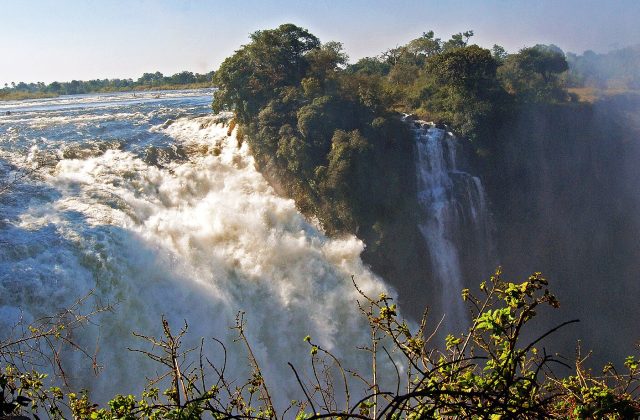
Victoria Falls National Park is the small Zimbabwean park that holds the rainforest walkway along the lip of the gorge…
71 tickets & tours

Photo: JackyR, CC BY-SA 3.0
Hwange is Zimbabwe's largest park, two hours south of Victoria Falls on the Bulawayo road, and it is sold from the Falls as a day safari and as the second stop of the multi-day circuits with Chobe. The full-day safaris from Victoria Falls leave at dawn, reach the park's Main Camp gate by eight, drive the pans of the northern section in an open vehicle with a guide, picnic at a platform above a waterhole and return by dark; they give five or six hours in the park and are the practical way to see it from the Falls. The overnight and two-night safaris stay at the camps and lodges inside or on the park's edge, add the dawn and night drives and the sundowner at a pan, and are the better choice, since Hwange's game is at the waterholes at first and last light;
the four- to seven-day tours combine Hwange with Chobe and the Falls, by road across the border. Inside the park, the game drives, the walking safaris with an armed guide and the hides at the pans are booked at the camps, and the park fees are per person per day at the gates and included by the operators. Self-drivers with a 2×4 can cover the Main Camp and Sinamatella sections on the graded roads, and the national parks' lodges and campsites are cheap; the concessions in the south and west are lodge-only. Hwange is quieter than Chobe and cheaper than Botswana, and its elephants are as many.
Live dates and prices from GetYourGuide. Free cancellation on most tickets.
The park was founded in 1928 as the Wankie game reserve and became a national park in 1961, and it covers about 14,650 square kilometres of the north-west of Zimbabwe on the edge of the Kalahari sands, between the Bulawayo–Victoria Falls road and the Botswana border, the largest park in the country and part of the Kavango–Zambezi transfrontier area. It has no permanent rivers, and its game depends on the pans, the natural depressions that fill in the rains and the boreholes pumped since the 1930s, so that the dry-season safari is a tour of the waterholes: Nyamandhlovu with its platform, Guvalala, Ngweshla, Kennedy and the Masuma dam in the Sinamatella section, where the elephants arrive in herds of hundreds through the afternoon, jostling with the buffalo, the zebras, the sable, the roan and the giraffes for the water while the crocodiles wait and the lions lie in the shade;
Hwange's elephant population of some 45,000 is one of the largest in Africa and the reason the park is known. The vegetation is Kalahari woodland of teak and bauhinia in the south, mopane in the north and the grasslands of the vleis between, and the wildlife includes the Big Five with the black rhinos in guarded sections, cheetahs, wild dogs in one of their strongholds, brown hyenas, gemsbok at the northern limit of their range and 400 bird species with the bateleur and the kori bustard on the plains. The lion Cecil, killed by a hunter outside the boundary in 2015, was a Hwange lion, and the cyanide poisoning of the elephants at the pans in 2013 was the park's darkest year; the pumping of the boreholes, paid for by the lodges and the charities, keeps the animals alive in the drought. The Sinamatella camp on its ridge and the Main Camp are the old park headquarters, and the Painted Dog conservation centre at the gate is the wild dogs' hospital.
The park gates open at 6 am and close at 6 pm in summer and 6.30 am to 6 pm in winter, with the camps' night drives by arrangement. The dry season from July to October is the time, with the game crowding the pans as the veld dries and September and October the peak, hot and dusty with the elephants in their thousands;
the rains from November to April green the park, fill the natural pans, scatter the animals and bring the birds and the newborns, with some roads impassable and the lodges cheap; May and June are cool and pleasant with the game beginning to concentrate. Sit at a pan in the afternoon. Allow a full day from the Falls or two nights in the park, four with Chobe. Victoria Falls is two hours north, Bulawayo and the Matobo hills three hours south-east, and Kasane in Botswana three hours by road.
Yes. GetYourGuide lists 16 tickets and tours for Hwange National Park, with live dates and prices and free cancellation on most of them.
Inside the park, the game drives, the walking safaris with an armed guide and the hides at the pans are booked at the camps, and the park fees are per person per day at the gates and included by the operators.
Allow a full day from the Falls or two nights in the park, four with Chobe.
Hwange National Park covers 14 651 km².
Hwange National Park was established in 1928.
Hwange National Park is in Zimbabwe. The map on this page shows the exact spot.
Zimbabwe
Victoria Falls National Park is the small Zimbabwean park that holds the rainforest walkway along the lip of the gorge…
71 tickets & tours
Zimbabwe
Mana Pools lies on the Zimbabwean bank of the lower Zambezi, downstream of the Kariba dam, in the far north of the…
1 ticket or tour