Than Bok Khorani National Park
Thailand
Than Bok Khorani is a national park in the north of the province of Krabi, in southern Thailand, and it consists of two…
79 tickets & tours
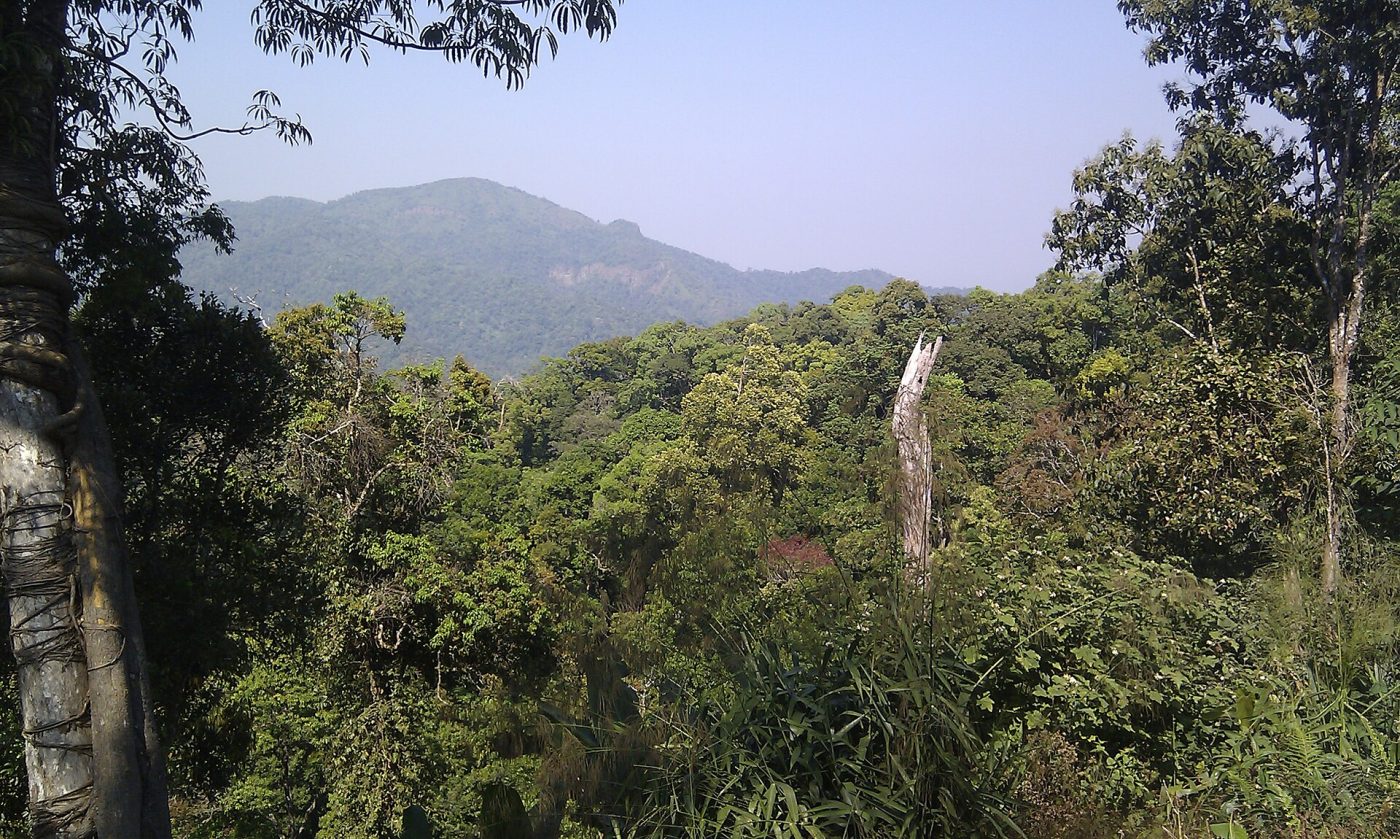
Photo: JJ Harrison (https://www.jjharrison.com.au/), CC BY-SA 3.0
Kaeng Krachan is the largest national park in Thailand, a great block of forested mountains along the Burmese border in the provinces of Phetchaburi and Prachuap Khiri Khan, and its headquarters, beside a large reservoir, lie about three hours by road south-west of Bangkok and an hour to an hour and a half from the beach resorts of Hua Hin and Cha-am, from all of which nature day tours and overnight trips are run. There is no public transport into the park, and the choice is between a tour, which is much the simplest, and a hired vehicle. From the headquarters, where the entrance fee is paid and camping booked, it is another twenty kilometres to the Sam Yot checkpoint, the true entrance to the forest, from which a single road runs thirty-six kilometres into the mountains. The first fifteen kilometres, to the campsite of Ban Krang, are surfaced and open to any car, crossing several streams where clouds of butterflies gather on the wet sand;
beyond Ban Krang the road becomes a steep, narrow, rutted track, on which only four-wheel drives and pickups are allowed, travelling up during fixed periods of the morning and afternoon and down during others, to the campsite and viewpoints of Phanoen Thung, at about a thousand metres. Visitors walk along the road itself, which is where most animals and birds are seen, and on a few trails, the longest leading in five or six hours to the Tho Thip waterfall. Both campsites have tents for hire, simple restaurants in the season and cold showers, and there are bungalows by the reservoir. In the south of the park, reached separately from Hua Hin in an hour, the Pala-U waterfall climbs in many tiers through the forest, the first few being an easy walk. Outside the park boundary, several farmers have built photographic hides beside small pools, where shy forest birds and mammals come to drink and bathe.
Live dates and prices from GetYourGuide. Free cancellation on most tickets.
The park was declared in 1981 and enlarged in 1984 to 2,915 square kilometres, and in July 2021, after several deferred attempts, the Kaeng Krachan forest complex, comprising it and three adjoining reserves, was inscribed as a World Heritage Site. It covers the eastern slope of the Tenasserim range, rising to about 1,500 metres, the watershed of the Phetchaburi and Pran Buri rivers, and continues without interruption into an even larger tract of forest on the Burmese side, the whole forming one of the largest intact forests of mainland South-East Asia. Its position gives it an unusual fauna: it lies where the animals and plants of the Indo-Burmese region to the north meet those of the Malay peninsula to the south, at the limit of range of many species from both, so that the bird list, of more than 460 species, the longest of any Thai park, includes such things as the ratchet-tailed treepie, found nowhere else in Thailand, all seven of the country's broadbills, six hornbills, among them the great, the wreathed and the very rare plain-pouched, the grey peacock-pheasant, Kalij pheasants, the giant pitta and woodpeckers of many kinds. It is also one of the few places in Asia where a leopard may reasonably be hoped for: both spotted and black ones are regularly met walking along the road between Ban Krang and Phanoen Thung in the early morning or late afternoon.
Dusky langurs with white spectacles, white-handed gibbons, whose songs fill the valley at dawn, stump-tailed macaques, giant squirrels, Asian elephants, which make the road dangerous at times, gaur, sambar, serow, sun and black bears, dholes, the Malayan tapir, the banded linsang, yellow-throated martens, porcupines, and a small number of tigers are present, and a population of the critically endangered Siamese crocodile survives in the upper Phetchaburi river. About three hundred species of butterflies have been counted at the stream crossings. From the viewpoint at Phanoen Thung, on cool mornings, the valleys below are filled with a level sea of mist pierced by forested ridges, which draws many Thai visitors. The World Heritage listing was delayed chiefly by the treatment of the Karen villagers of Bang Kloi, who had lived for generations deep inside the forest, were forcibly moved down to the edge of the park, saw their houses and rice barns burned by park officials in 2011, and whose leading activist, known as Billy, disappeared in 2014 after being detained by the park's chief, his burnt remains being found in the reservoir five years later; the dispute is not settled.
The lower part of the park is open all year, but the road beyond Ban Krang, and usually the whole interior, is closed for the rainy season from 1 August to 31 October, and sometimes at other times because of elephants or damage, so check before travelling. The cool, dry season, from November to February, is the most comfortable, with the sea of mist at its most reliable and cold nights at Phanoen Thung; from March to May it is hot, but this is the best time for butterflies, for nesting broadbills and hornbills, and for mammals at the water;
June and July are wet, green and empty. Weekends and Thai holidays bring crowds to the campsites. Be on the road at first light. Bring binoculars, leech socks in the wet months, a warm layer for the mornings, repellent and a torch, keep well away from elephants, and never leave food in a tent. Allow two days. Phetchaburi, with its cave temple and hilltop palace, is an hour from the headquarters, Hua Hin an hour and a half, and Bangkok three.
Yes. GetYourGuide lists one ticket or tour for Kaeng Krachan National Park, with live dates and prices and free cancellation on most of them.
From the headquarters, where the entrance fee is paid and camping booked, it is another twenty kilometres to the Sam Yot checkpoint, the true entrance to the forest, from which a single road runs thirty-six kilometres into the mountains.
The lower part of the park is open all year, but the road beyond Ban Krang, and usually the whole interior, is closed for the rainy season from 1 August to 31 October, and sometimes at other times because of elephants or damage, so check before travelling.
Kaeng Krachan National Park covers 2 915 km².
Kaeng Krachan National Park was established in 1981.
Kaeng Krachan National Park receives about 103 510 a year (2019).
Kaeng Krachan National Park is in Thailand. The map on this page shows the exact spot.
Thailand
Than Bok Khorani is a national park in the north of the province of Krabi, in southern Thailand, and it consists of two…
79 tickets & tours
Thailand
Ao Phang Nga is the bay of limestone towers between Phuket and Krabi that Hollywood made famous as the setting for a…
73 tickets & tours
Thailand
Doi Inthanon is the highest mountain in Thailand and the most visited national park in the north, sixty kilometres from…
72 tickets & tours
Thailand
The Phi Phi islands are protected as the Hat Noppharat Thara–Mu Ko Phi Phi National Park, and the park fee is collected…
37 tickets & tours
Thailand
Tarutao is a marine park of fifty-one islands in the Andaman Sea, in the far south-west of Thailand, off the coast of…
31 tickets & tours
Thailand
Khao Yai is Thailand's first national park, two and a half to three hours north-east of Bangkok, and it is sold…
27 tickets & tours