Glacier Park · Yukon · Canada
Kluane National Park and Reserve
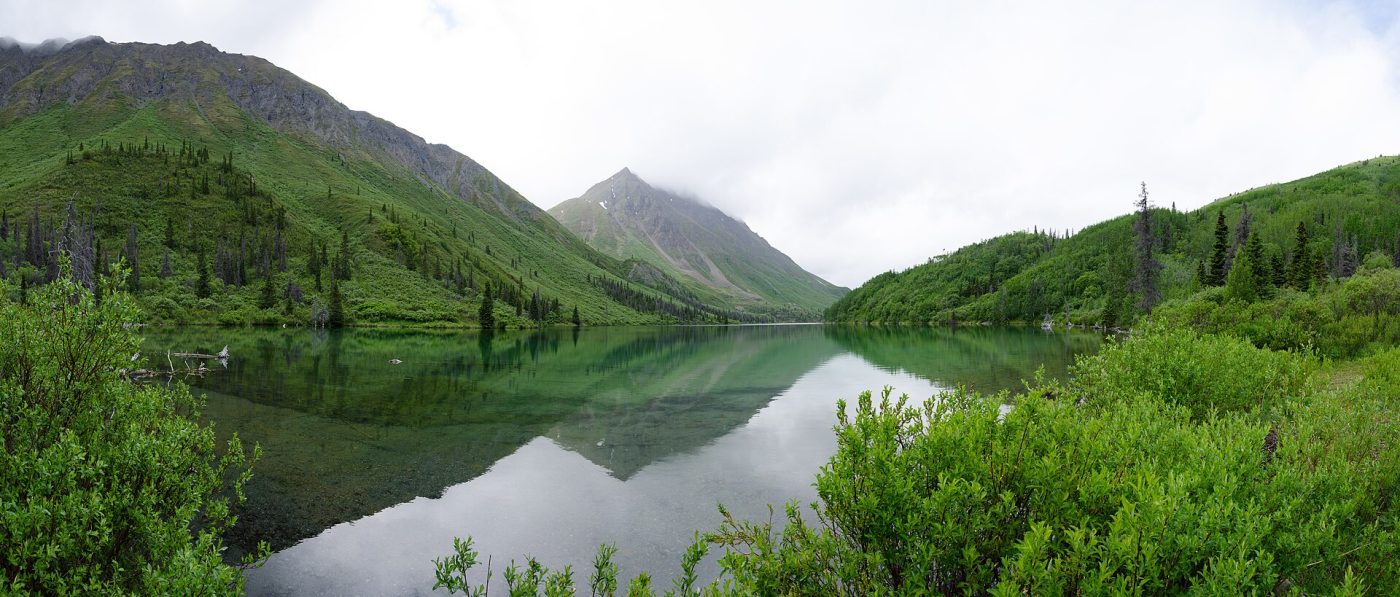
Photo: Kantokano, CC BY-SA 4.0
- Type
- Glacier Park
- Area
- 21 980 km²
- Founded
- 1972
- Visitors
- 47 098 a year (2022)
- Elevation
- 5 959 m above sea level
- UNESCO
- World Heritage Site
- Tickets
- 2 tickets and tours
Kluane National Park and Reserve tickets and tours: which one to book
Kluane occupies the south-western corner of the Yukon, against the Alaskan border, and its gateway is the village of Haines Junction, 160 kilometres, an hour and three quarters, west of the territorial capital Whitehorse along the Alaska Highway, which then runs for a further hundred kilometres along the park's north-eastern edge and the shore of Kluane Lake. The first thing to understand is that the great icefields and the giant mountains, which are what the park is famous for, cannot be seen from the road: they are hidden behind a front range of peaks of two to two and a half thousand metres, fine in themselves, and the only ways to reach them are on foot over several days, or by air. Flightseeing is accordingly the great experience of Kluane. Small aircraft, some fitted with skis, fly from the airstrips at Haines Junction, Silver City on Kluane Lake and Burwash Landing, on trips of one to two hours over the Kaskawulsh and Lowell glaciers and, weather permitting, to within sight of Mount Logan, with an optional landing on the icefield;
they are expensive and entirely at the mercy of the weather. The day tours from Whitehorse drive the highway, visit the Da Ku cultural centre in Haines Junction, which houses the Parks Canada visitor centre, and Kathleen Lake, the only place where a road enters the park, with a campground, a boardwalk and a day-use area. Day hikes start from the highways: King's Throne, a steep climb to a cirque above Kathleen Lake; the Auriol trail, a loop of fifteen kilometres; Sheep Creek and the Tachal Dhal visitor centre, where Dall sheep are watched through telescopes; and Rock Glacier. Backpackers take the Slims West route to Observation Mountain, overlooking the Kaskawulsh, registering first and carrying bear canisters. Rafting trips descend the Alsek and Tatshenshini.
2 tickets and tours for Kluane National Park and Reserve
Live dates and prices from GetYourGuide. Free cancellation on most tickets.
Visiting Kluane National Park and Reserve: what you will see
Kluane was set aside in 1972, originally as a national park reserve pending the settlement of land claims, the eastern portion becoming a full national park after agreements with the Champagne and Aishihik and the Kluane First Nations, who now share its management; it had been a game sanctuary since 1943, created when the building of the Alaska Highway brought soldiers and hunters, from which the native people were themselves excluded for decades. It covers about 22,000 square kilometres, and in 1979, together with Wrangell-St Elias in Alaska, to which Glacier Bay and the Tatshenshini-Alsek park of British Columbia were later added, it became a World Heritage Site, the largest internationally protected area on earth. More than four fifths of it is ice and rock. The St Elias mountains, the highest coastal range in the world, rise here within sight of the Pacific, which feeds them with enormous snowfalls, to Mount Logan, 5,959 metres, the highest mountain in Canada, second only to Denali in North America, and by the circumference of its base reckoned the most massive mountain on the planet, with seventeen of the country's twenty highest summits round it.
Among them lies the largest non-polar icefield in the world, up to a kilometre thick, from which flow valley glaciers of great length, the Kaskawulsh, the Lowell, the Donjek and the Hubbard, seventy and more kilometres long. Several are surging glaciers, which advance suddenly every few decades: the Lowell has repeatedly dammed the Alsek river, creating a lake that reached the site of Haines Junction and then burst in catastrophic floods remembered in the oral history of the southern Tutchone. In 2016 the retreating Kaskawulsh glacier produced the first case of river piracy observed in modern times: within four days its meltwater abandoned the Slims river, which flowed north to Kluane Lake and the Bering Sea, for the Alsek and the Pacific, leaving the Slims a dusty flat and the lake falling. In the narrow green belt live the densest and most genetically diverse population of grizzly bears in Canada, the largest concentration of Dall sheep, mountain goats, moose, wolves, wolverines, lynx, a small herd of caribou and golden eagles.
Kluane National Park and Reserve: best time to go, seasons and hours
The park is open all year, but the visitor centres operate from about mid-May to mid-September, and that is the practical season. June and July have almost continuous daylight, wild flowers, snow lingering on the higher trails until late June, and mosquitoes; August is the most settled month for hiking and flying, with the first autumn colours on the tundra by the end of it; early September is brilliant with red and gold, cold at night, with a chance of the northern lights;
winter is for experienced ski tourers only. The weather is mountain weather, changeable and often poor, so allow spare days if a flight matters. All hikers must carry bear spray and know how to behave; overnight parties register and use bear-resistant canisters. Allow two to three days. Whitehorse is an hour and three quarters away, Haines, in Alaska, three hours down a magnificent road, and Kluane Lake and Burwash Landing to the north-west.
More tours and activities in Yukon
Before you go
Can I book a tour or safari in Kluane National Park and Reserve online?
Yes. GetYourGuide lists 2 tickets and tours for Kluane National Park and Reserve, with live dates and prices and free cancellation on most of them.
When is Kluane National Park and Reserve open?
The park is open all year, but the visitor centres operate from about mid-May to mid-September, and that is the practical season.
How many days do you need in Kluane National Park and Reserve?
Allow two to three days.
How big is Kluane National Park and Reserve?
Kluane National Park and Reserve covers 21 980 km².
When was Kluane National Park and Reserve founded?
Kluane National Park and Reserve was established in 1972.
How many people visit Kluane National Park and Reserve?
Kluane National Park and Reserve receives about 47 098 a year (2022).
Where is Kluane National Park and Reserve?
Kluane National Park and Reserve is in Yukon, Canada. The map on this page shows the exact spot.