Lake Malawi National Park
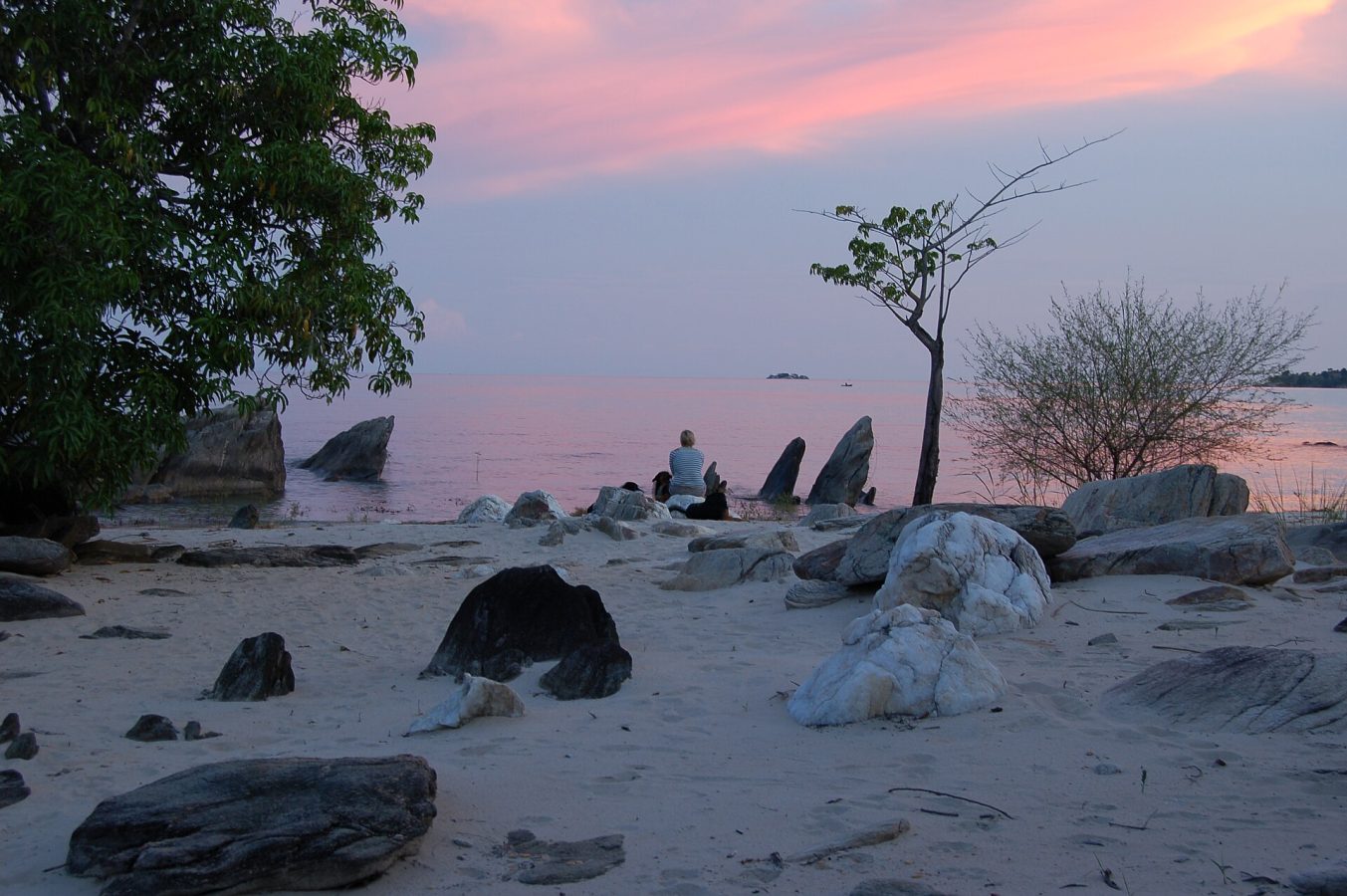
Photo: Joachim Huber from Switzerland, CC BY-SA 2.0
- Type
- Marine Park
- Where
- Malawi
- Area
- 94 km²
- Founded
- 1980
- Elevation
- 1 143 m above sea level
- UNESCO
- World Heritage Site
- Tickets
- 7 tickets and tours
Lake Malawi National Park tickets and tours: which one to book
Lake Malawi National Park is the rocky southern tip of the lake around the village of Cape Maclear, about four hours by road from Lilongwe or from Blantyre, the last stretch on a rough road over the hills from Monkey Bay, and it reaches most visitors as the beach chapter at the end of a Malawi tour. The packages sold from Lilongwe, three days to ten, combine it with safaris at Liwonde or Majete, where the big animals are, and sometimes the Zomba plateau or Mount Mulanje, with the transport, a guide and lodging included; on the shorter ones the lake stop may be at Senga Bay or Mangochi, which are outside the park, so check that Cape Maclear is named.
Once there, everything is booked at the lodges or with the local guides' association on the beach: the boat trip to Thumbi West island to snorkel among the cichlids and watch fish eagles take fish thrown by the boatman, sunset cruises, kayak rental, the guided paddles with nights at the tented camps on Domwe and Mumbo islands, which are the finest way to see the park, scuba diving and courses with the dive schools, which are among the cheapest freshwater courses anywhere, and the hike up Nkhunguni peak with a guide. The park entrance fee is paid per person per day at the gate on the way into Chembe village and again for the islands. Ask your doctor about bilharzia, which is present in the lake's shallows near villages; most visitors swim and take the treatment afterwards.
7 tickets and tours for Lake Malawi National Park
Live dates and prices from GetYourGuide. Free cancellation on most tickets.
Visiting Lake Malawi National Park: what you will see
The park was established in 1980, the first in the world created to protect freshwater fish, and listed as a World Heritage Site in 1984; it covers about 95 square kilometres of the Nankumbu peninsula, which ends at Cape Maclear, thirteen islands and a band of water only a hundred metres wide around their shores, a minute fraction of a lake that is 580 kilometres long and up to 700 metres deep. The lake holds more species of fish than any other on earth, between 700 and 1,000, nearly all of them cichlids found nowhere else, and the rock-dwelling mbuna of these shores are the showpiece: small, brilliantly coloured fish, blue, yellow, orange and striped, that have evolved into hundreds of species, each tied to its own stretch of rock and its own way of feeding, some scraping algae, some eating scales or the eyes of other fish, most brooding their young in their mouths, a radiation as important to the study of evolution as the finches of the Galápagos.
In water of glassy clarity over granite boulders they swarm around a snorkeller and feed from the hand at Otter Point and Thumbi West. The land is steep, wooded granite hills rising to Nkhunguni at 1,143 metres, with baobabs on the shore, yellow baboons, vervet monkeys, rock hyraxes, klipspringers, the odd leopard, hippos and crocodiles in the quieter bays, spotted-necked otters, and fish eagles at a density rivalled by few places in Africa. David Livingstone named the cape in 1859 after the Astronomer Royal at the Cape, and the graves of the first Livingstonia missionaries, who settled here in 1875 and were defeated by malaria, lie behind the beach. Chembe village, several thousand fishing people whose canoes, drying racks and night-time lamps for catching usipa are the life of the bay, is an enclave within the park.
Lake Malawi National Park: best time to go, seasons and hours
The park is open all year, with the gate staffed in daylight. The dry season from May to October is the time to go: cool and clear from May to August, when the water is calm and the visibility for snorkelling and diving is at its best in the later months, and hot by October; the rains from November to April bring storms, humidity, run-off that clouds the water and the greenest hills.
The mwera, a strong south-easterly, can blow for days in June and July and stop the boats. Evenings on the beach with the fishing lamps strung across the horizon explain the name the lake of stars. Allow three nights. Liwonde National Park is three hours south-east, the Mua mission and its museum are on the road to Lilongwe, and Monkey Bay is the port of the lake steamer Ilala.
More tours and activities in Malawi
Before you go
Can I book a tour or safari in Lake Malawi National Park online?
Yes. GetYourGuide lists 7 tickets and tours for Lake Malawi National Park, with live dates and prices and free cancellation on most of them.
How much is the entrance fee for Lake Malawi National Park?
The park entrance fee is paid per person per day at the gate on the way into Chembe village and again for the islands.
When is Lake Malawi National Park open?
The park is open all year, with the gate staffed in daylight.
How big is Lake Malawi National Park?
Lake Malawi National Park covers 94 km².
When was Lake Malawi National Park founded?
Lake Malawi National Park was established in 1980.
Where is Lake Malawi National Park?
Lake Malawi National Park is in Malawi. The map on this page shows the exact spot.