
Great Smoky Mountains National Park
297 km away
The Great Smoky Mountains, on the border of Tennessee and North Carolina, are the most visited national park in the…
9 tickets & tours
Forest Park · Kentucky · United States
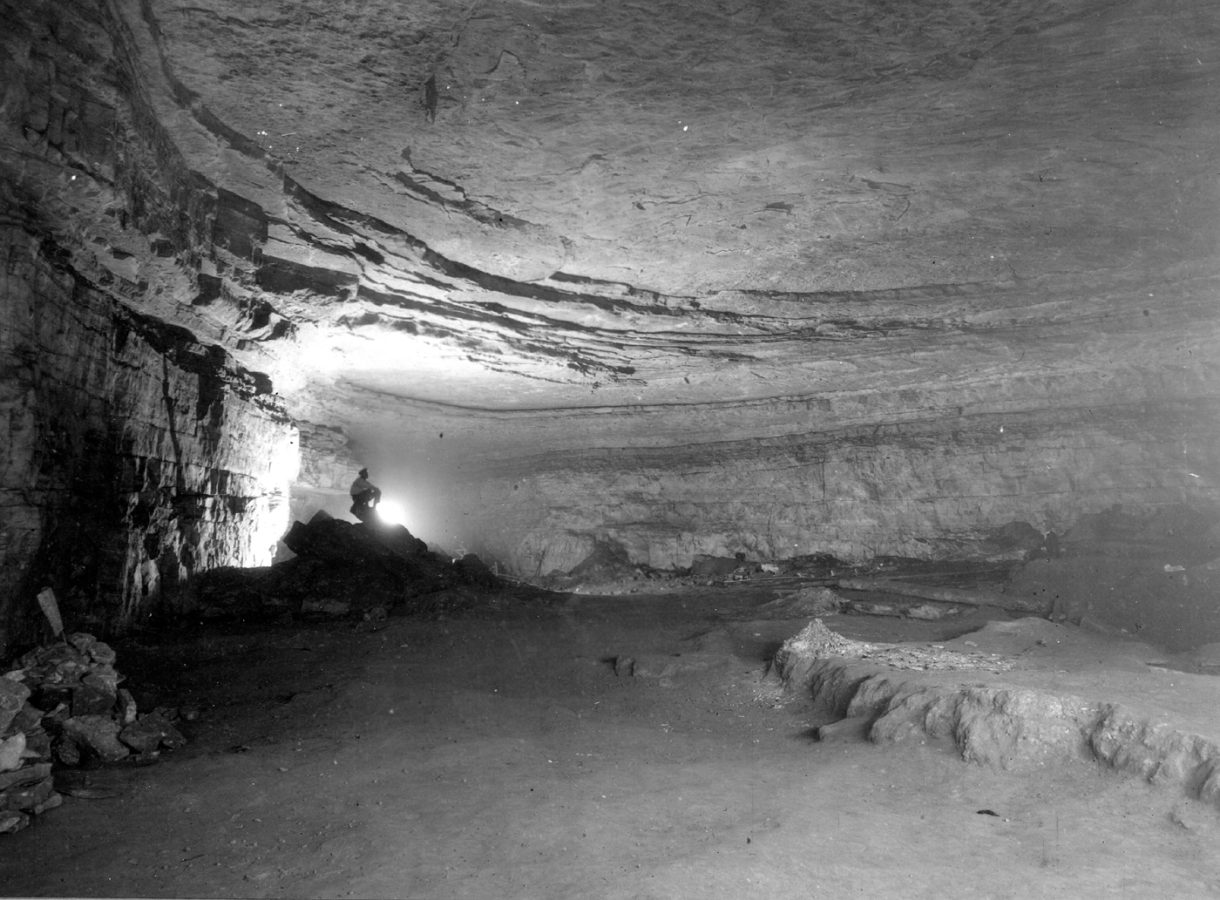
Mammoth Cave lies in the wooded hill country of south-central Kentucky, just off Interstate 65 near the little towns of Cave City and Park City, about an hour and a half by road from both Louisville, to the north, and Nashville, Tennessee, to the south, and a car is the only practical way to get there. There is no charge to enter the park, to walk its surface trails or to see the visitor centre, but the cave can be entered only on a ranger-led tour, and each tour has its own ticket, sold for a fixed time through the national reservation system. In summer, at spring break and on holiday weekends, the popular tours sell out days or weeks ahead, so it is essential to book before coming; it should be noted too that the park keeps Central time, an hour behind Louisville. A dozen or so tours are offered, the list changing with the season.
The Historic tour, two hours and two miles, enters by the great natural mouth and follows the wide passages used since 1816, past the saltpetre works, through the narrow winding canyon called Fat Man's Misery and up a tower of stairs in Mammoth Dome. The Domes and Dripstones tour, reached by bus, descends some three hundred steps through vertical shafts and ends at the Frozen Niagara, the cave's one area of rich flowstone, which can also be seen on its own on a short, easy tour with few steps. The Grand Avenue tour, four hours and four miles, is the most complete; the Violet City tour is made by the light of oil lanterns; an accessible tour uses a lift; and the Wild Cave tour, six hours of crawling and squeezing with helmet and lamp, is for fit adults. Above ground there are more than eighty miles of trails, and canoes and kayaks can be hired for the Green river.
Mammoth Cave was authorised as a national park in 1926 and established on 1 July 1941, covers about 210 square kilometres, and was inscribed as a World Heritage Site in 1981. It is, by an enormous margin, the longest known cave system in the world: more than 680 kilometres of passages have been surveyed, on five levels, and cavers add several kilometres every year, with no end in sight. Its name refers not to any fossil but to its size. The cave exists because of a fortunate arrangement of rocks: thick beds of limestone, laid down in a shallow sea some 330 million years ago, are capped by a layer of hard sandstone and shale, which acts as a roof, shedding the rain to its edges, where the water sinks through holes and flows underground to the Green river, dissolving out long horizontal tubes, and as the river cut its valley deeper, each level of passages was drained and abandoned and a new one formed beneath it. The roof also keeps most of the cave dry, which is why it has great avenues, thirty metres wide in places, and domes and pits where water does break through, but few stalactites. People explored it four thousand years ago, walking miles into the dark by the light of bundles of cane to scrape gypsum and other minerals from the walls, and their torches, sandals, gourds and several naturally preserved bodies have been found.
It was rediscovered about 1798, mined by slaves for saltpetre, for gunpowder, during the war of 1812, and then opened as one of the first tourist attractions in America. Its most celebrated guide was Stephen Bishop, a slave, who from 1838 crossed the Bottomless Pit on a ladder, discovered the underground rivers and their eyeless fish, and drew from memory a remarkably accurate map; he called the cave grand, gloomy and peculiar, and is buried near its entrance. In 1842 a doctor who owned it installed consumptive patients in stone huts deep inside, believing the air would cure them; several died, and two of the huts remain. The early twentieth century brought the cave wars, in which rival landowners competed for tourists with newly opened caves, and in 1925 the death of the explorer Floyd Collins, trapped for two weeks in a nearby crawlway while the newspapers of the nation watched, became one of the great media sensations of its time. In 1972 a team of cavers, squeezing through a flooded passage, proved that the Flint Ridge system and Mammoth Cave were one. The cave is home to more than 130 species of animals, including eyeless fish, a blind shrimp found nowhere else, cave crickets and crayfish, and to bats, whose numbers have been devastated by the fungal disease called white-nose syndrome, on account of which visitors walk across disinfecting mats on leaving.
The park is open all year, and tours run every day except Christmas Day, with the fullest schedule from late May to early September and a reduced one in winter. Because the cave remains at about 12 degrees Celsius whatever the weather above, it is as good a destination in the heat of a Kentucky August as in January, and the real choice is between the crowds of summer, when booking well ahead is essential, and the quieter months, of which April, May, September and October are the most pleasant above ground, with wild flowers in spring and fine colours in late October.
Heavy rain occasionally floods the lower levels and alters the tours. Bring a light jacket or jumper and shoes with a good grip, since the paths are uneven and sometimes wet, and note that large bags, tripods and pushchairs are not allowed underground. Allow a day for one or two tours. Cave City is ten minutes away, the Corvette museum at Bowling Green half an hour, Lincoln's birthplace at Hodgenville forty-five minutes, and Louisville and Nashville an hour and a half.
297 km away
The Great Smoky Mountains, on the border of Tennessee and North Carolina, are the most visited national park in the…
9 tickets & tours
No online tour for Mammoth Cave National Park is listed on GetYourGuide; entry, where it is charged, is paid at the gate or through the park authority. Nearby parks with bookable tours are listed on this page.
The park is open all year, and tours run every day except Christmas Day, with the fullest schedule from late May to early September and a reduced one in winter.
Allow a day for one or two tours.
Mammoth Cave National Park covers 212 km².
Mammoth Cave National Park was established in 1941.
Mammoth Cave National Park receives about 747 042 a year (2024).
Mammoth Cave National Park is in Kentucky, United States. The map on this page shows the exact spot.