Cinque Terre National Park
Liguria, Italy
Cinque Terre National Park protects the five fishing villages and terraced cliffs of the Ligurian coast between Levanto…
211 tickets & tours
Marine Park · Liguria · Italy
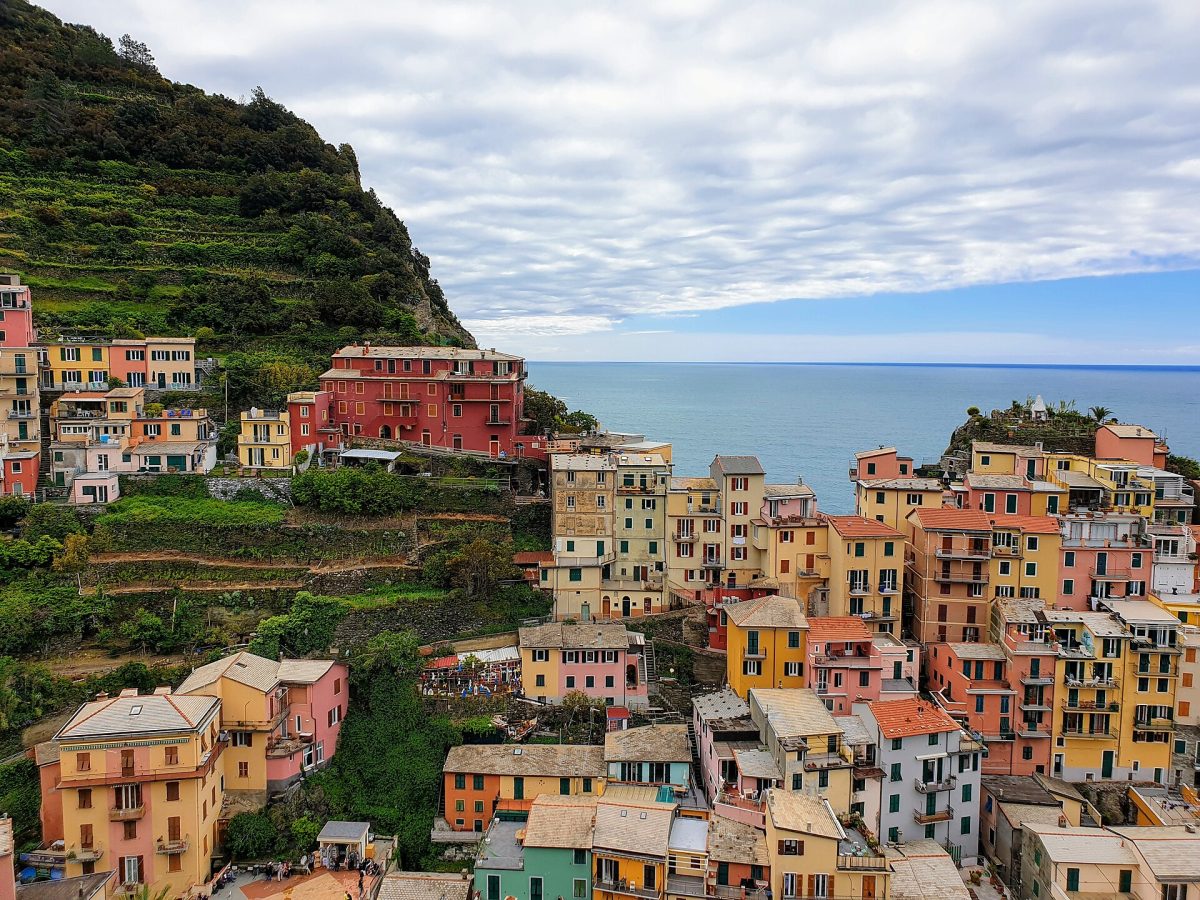
Photo: Misaochan2, CC BY-SA 4.0
Porto Venere is a fishing town of tall, painted tower-houses on a rocky promontory at the western entrance to the Gulf of La Spezia, in Liguria, immediately south of the Cinque Terre, with which it shares a place on the World Heritage list, and its regional park covers the headland, the three small islands off it and the sea around them. It is reached from the city of La Spezia, which is on the main railway line from Genoa to Pisa, by bus number 11 or P in about half an hour along a winding coast road, or, much more agreeably, by the passenger boats that run from La Spezia, Lerici and, in season, from the villages of the Cinque Terre; parking in the town is scarce and expensive in summer.
From the quay, small ferries cross the narrow channel to the island of Palmaria in five minutes, landing at Terrizzo or, in summer, at the beach of Pozzale on the far side, and boats make a tour of the three islands in about forty minutes, which is the only way most people will see Tino and Tinetto. The guided hikes sold in La Spezia take the ferry over and walk the circuit of Palmaria, about seven kilometres and three to four hours of rough, steep and partly exposed path round the whole island, with swimming stops; the long-distance trekking tours start or finish here, since Porto Venere is the southern end of the high coastal trail that runs above the Cinque Terre to Levanto, of which the first stage, to the village of Campiglia, is a steep and splendid half-day. Snorkelling and diving trips run from Le Grazie, Lerici and San Terenzo to the protected waters round the islands. There is no entrance fee.
Live dates and prices from GetYourGuide. Free cancellation on most tickets.
The Parco Naturale Regionale di Porto Venere was created in 2001 and covers about 400 hectares of land, with a marine protected zone around the islands; since 1997 the whole has formed part of the UNESCO World Heritage Site named Portovenere, Cinque Terre, and the Islands. The promontory ends in a bare rock on which stands the church of San Pietro, consecrated in 1198, built by the Genoese in bands of black and white stone over an early Christian chapel and, it is said, a Roman temple of Venus, from which the town, Portus Veneris, takes its name; beneath it is the sea cave known as Byron's Grotto, from which, according to a plaque and a doubtful tradition, the poet swam across the gulf to visit Shelley at San Terenzo in 1822. Above the town rise the walls and bastions of the Doria castle, a Genoese fortress of the twelfth to the seventeenth centuries, guarding what was for centuries the republic's frontier against Pisa, and along the quay runs the Palazzata, the continuous wall of narrow, brightly coloured houses, each seven or eight storeys high, which was itself part of the fortifications.
Palmaria, the largest island, of 1.6 square kilometres, is triangular, green and gently sloping on the side that faces the town, and falls on its western side in vertical white cliffs nearly two hundred metres high, pierced by caves: the Grotta Azzurra, entered by boat, and the Grotta dei Colombi, reached only by rope, in which the bones of Palaeolithic people and of ice-age animals were found. Its abandoned quarries yielded portoro, a black marble veined with gold that was prized from Versailles to the Art Deco hotels of New York, and its hilltops carry forts and gun batteries built from Napoleon's time to the Second World War, when the gulf was Italy's chief naval base. Tino, beyond it, is a military zone, open to visitors only on 13 September, the feast of San Venerio, a hermit of the seventh century and patron of lighthouse keepers, and the Sunday after; it has the ruins of an eleventh-century abbey and a lighthouse. Tinetto is a bare rock with the remains of a sixth-century oratory. The islands shelter a leaf-toed gecko, peregrines, shags and rich Mediterranean scrub.
The town and park are open at all times. April to June and September to October are the best months, warm, clear and bearable; July and August are crowded, hot and expensive, with day-trippers arriving by boat from the Cinque Terre from mid-morning, so that early morning and evening, when they have gone, are the hours to enjoy the place.
Boats are suspended in rough seas, which are common outside summer. The path round Palmaria is unshaded on the cliff side and has no water, and its western section should be avoided in wet or windy weather. Allow a full day. La Spezia is half an hour away, the Cinque Terre a boat ride north, Lerici and the Gulf of Poets across the bay, and the marble quarries of Carrara forty-five minutes.
Yes. GetYourGuide lists 3 tickets and tours for Porto Venere Regional Natural Park, with live dates and prices and free cancellation on most of them.
There is no entrance fee.
There is no entrance fee.
The town and park are open at all times.
April to June and September to October are the best months, warm, clear and bearable; July and August are crowded, hot and expensive, with day-trippers arriving by boat from the Cinque Terre from mid-morning, so that early morning and evening, when they have gone, are the hours to enjoy the place.
Porto Venere Regional Natural Park covers 4 km².
Porto Venere Regional Natural Park was established in 2001.
Porto Venere Regional Natural Park is in Liguria, Italy. The map on this page shows the exact spot.
Liguria, Italy
Cinque Terre National Park protects the five fishing villages and terraced cliffs of the Ligurian coast between Levanto…
211 tickets & tours
Liguria, Italy
The Portofino park is a squarish, rocky headland that projects four kilometres into the Ligurian Sea on the Italian…
2 tickets & tours