
Zingaro Nature Reserve
Sicily, Italy
Zingaro is the seven-kilometre stretch of wild coast between Scopello and San Vito lo Capo in north-western Sicily, the…
33 tickets & tours
Wetland Park · Sicily · Italy
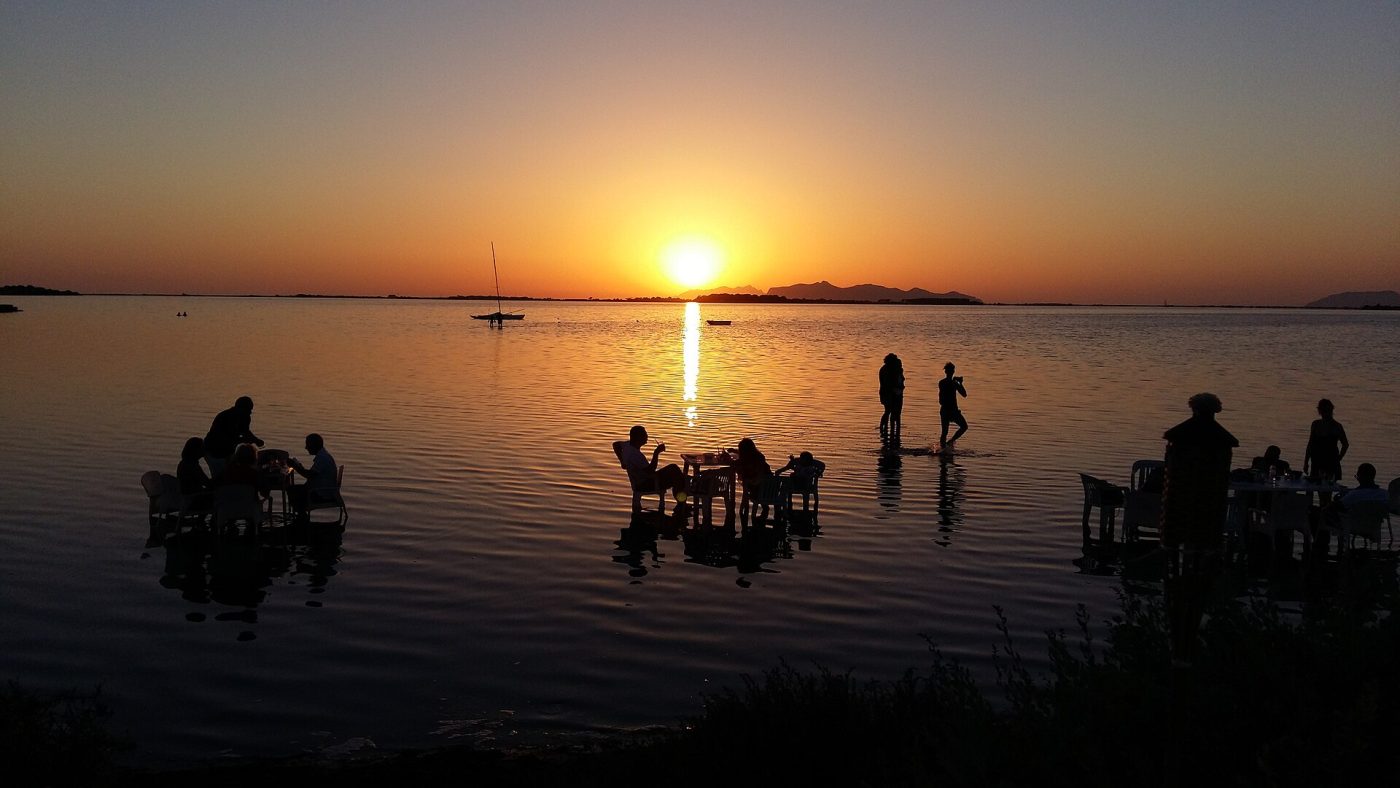
Photo: Luigi Cannella, CC BY-SA 4.0
The Stagnone is a large, shallow lagoon on the westernmost coast of Sicily, between the wine town of Marsala, ten minutes' drive to the south, and Trapani, twenty-five minutes to the north, with Trapani's airport at Birgi on its northern shore, and it combines, within a few square kilometres, salt pans with windmills, an island covered with Phoenician ruins, and some of the most celebrated sunsets in Italy. The reserve is free and unfenced, and a road follows the landward shore, the contrada Spagnola, along which everything is found. The essential visit is to the island of Mozia, also called San Pantaleo, reached by small passenger boats that leave throughout the day from two jetties, one beside the Ettore and Infersa salt works and one a little to the south, for a crossing of ten minutes;
on the island, which is private property belonging to a foundation, an entrance ticket covers the museum and the archaeological area, and a path round the shore, about two and a half kilometres, takes in the excavations among vineyards and pines in an hour and a half to two hours. There is a small cafe. Guided tours of the reserve, sold in Marsala, combine the boat, the island and the salt works with a guide, and other boats make a longer circuit of the lagoon, passing the islets of Schola and Santa Maria and the long barrier island. On the mainland side, the salt works of Ettore and Infersa can be visited, with a working windmill that houses a small museum of salt, walks along the banks between the pans, tastings, and, in summer, the chance to join the harvest or float in a brine pool. The lagoon is also one of the great kitesurfing schools of Europe, with a score of centres along the northern shore. Bars on the waterfront set out chairs for the sunset.
Live dates and prices from GetYourGuide. Free cancellation on most tickets.
The regional nature reserve of the islands of the Stagnone of Marsala was established in 1984 and covers about two thousand hectares, the largest lagoon in Sicily, some eleven kilometres long and three wide, separated from the open sea by the Isola Grande, or Isola Lunga, a low, narrow island formed by the joining of several islets, which leaves one wide mouth to the south and a narrow one to the north. The water is nowhere more than two or three metres deep and over most of its area barely one, so that it warms quickly, is saltier than the sea, and is floored with meadows of seagrass, including posidonia growing, unusually, in rings and ridges that reach the surface, which make it a nursery for sea bream, mullet, bass and cuttlefish. It was this shallowness and the shelter of the outer island that attracted the Phoenicians, who in the eighth century BC founded on the little round island of Motya, forty-five hectares, one of their chief colonies in the western Mediterranean, a trading station on the routes between Tyre, Carthage, Sardinia and Spain. It grew into a rich, densely built city ringed by walls with towers and gates, with a sanctuary, an industrial quarter for purple dye and pottery, a small rectangular basin cut in the rock, the cothon, long taken for a dry dock and now thought to be a sacred pool, and a tophet, an open-air precinct where urns holding the burnt remains of infants and animals were buried beneath carved stelae.
A causeway of stone, nearly two kilometres long, linked it to the mainland at Birgi; it now lies just under the water, and until the 1970s high-wheeled carts crossed it carrying the island's grapes. In 397 BC Dionysius the Elder, tyrant of Syracuse, besieged Motya with siege towers and catapults, the first recorded use of them, took it after desperate fighting from house to house, and massacred the inhabitants; the survivors founded Lilybaeum, the present Marsala, and the island was never rebuilt, which is why it is so precious to archaeologists. It was bought in the first years of the twentieth century by Joseph Whitaker, heir to an English family that had made a fortune in Marsala wine, an ornithologist and amateur archaeologist, who began the excavations and built the villa that is now the museum. Its greatest treasure is the Youth of Motya, a marble statue of a young man in a clinging pleated tunic, a little over life size, found in 1979, a Greek work of the fifth century BC of astonishing quality, whose subject, a charioteer, a magistrate or a god, is still debated. Along the shore, salt has been made by evaporation since Phoenician times: sea water is moved through a series of ever shallower pans, by windmills with canvas sails of a Dutch type introduced in the Middle Ages, until the salt crystallises, is raked into white heaps and covered with terracotta tiles. Flamingos, herons, egrets, stilts, avocets and ducks feed in the pans.
The reserve can be visited all year, and the boats to Mozia run daily, more frequently from April to October, with reduced service in winter. Spring, from April to June, is ideal, with wild flowers on the island, migrating birds and mild weather; July and August are hot, 32 degrees and more, with little shade on Mozia, but this is when the salt is harvested, the white heaps grow beside the pans and the brine turns pink, and when the sunset crowds are largest;
September and October are warm and quieter, with the grape harvest, and winter is mild and empty, with flamingos in the pans. The sunset, behind the Egadi islands across the lagoon, with the windmills in silhouette, is the daily event, for which one should be at the salt works an hour beforehand. Visit Mozia in the morning, before the heat, and bring water and a hat. Allow half a day. Marsala, with its wine cellars and the museum of the Punic ship, is ten minutes away, Trapani and the cable car to Erice half an hour, and the Egadi islands a short ferry ride.
Yes. GetYourGuide lists one ticket or tour for Stagnone Islands Nature Reserve, with live dates and prices and free cancellation on most of them.
Stagnone Islands Nature Reserve covers 20 km².
Stagnone Islands Nature Reserve was established in 1984.
Stagnone Islands Nature Reserve is in Sicily, Italy. The map on this page shows the exact spot.
Sicily, Italy
Zingaro is the seven-kilometre stretch of wild coast between Scopello and San Vito lo Capo in north-western Sicily, the…
33 tickets & tours
Sicily, Italy
Pantelleria is the volcanic island between Sicily and Tunisia, nearer to Africa than to Europe, reached by a short…
13 tickets & tours
Sicily, Italy
The Alcantara gorges lie on the north side of Etna, forty minutes from Taormina and an hour from Catania, and they are…
10 tickets & tours
Sicily, Italy
The Nebrodi are the green mountains of north-eastern Sicily, a long range between the Tyrrhenian coast and the northern…
5 tickets & tours
Sicily, Italy
Pantalica is a limestone plateau ringed by deep river gorges in the Hyblaean hills of south-eastern Sicily, about forty…
2 tickets & tours
Sicily, Italy
Vendicari is a strip of wild coast in the far south-east of Sicily, between the baroque town of Noto, fifteen minutes…
2 tickets & tours


