
Cilento, Vallo di Diano and Alburni National Park
Campania, Italy
The Cilento is the mountainous bulge of coast south of Salerno, in the region of Campania in southern Italy, between…
4 tickets & tours
Volcano Park · Campania · Italy
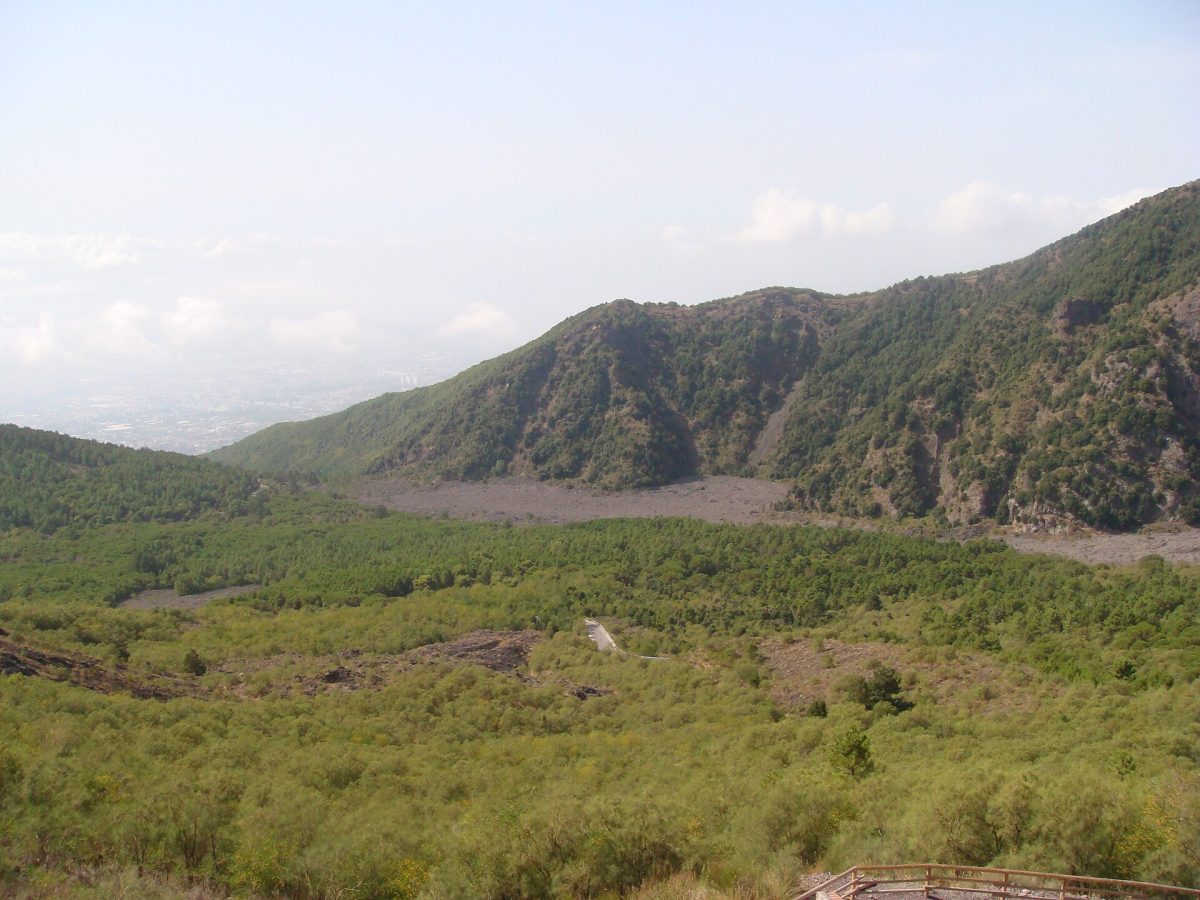
Photo: Lobufalo, CC BY-SA 3.0
Vesuvius stands nine kilometres east of Naples, and the visit that nearly everyone makes is the walk to the rim of the Gran Cono, the summit crater, which has become a matter of booking. Tickets for the crater path are sold only online, for a timed entry, on the national park's official ticketing site, and there is no ticket office on the mountain, where mobile reception is poor, so buy before you leave; in summer the slots sell out days ahead. The road climbs from the Ercolano or Torre del Greco motorway exits to a car park at about 800 metres, from which a shuttle or a walk of two kilometres leads to the gate at 1,000 metres; from there the path, broad, steep and surfaced in loose cinders, climbs to the crater rim in twenty to thirty minutes and continues a little way round it, with guides of the park's volcanological service stationed along the way to explain, included in the ticket.
Buses run to the upper car park from outside Ercolano Scavi station on the Circumvesuviana railway and from Pompei, and the half-day tours from Naples, Sorrento and the cruise port bundle the transport with the timed ticket, usually in combination with the excavations of Pompeii or Herculaneum, which is the natural pairing. The park is far larger than its crater, however, and the better tours know it: guided hikes of three hours on the quieter paths, among them the Valle dell'Inferno and the solidified lava river of 1944, some reached by 4×4 on the old Matrone road from Boscotrecase, and visits with lunch to the wineries on the southern slopes that make Lacryma Christi from vines rooted in ash.
Live dates and prices from GetYourGuide. Free cancellation on most tickets.
The national park was founded in 1995 and covers about 85 square kilometres of the volcano, within thirteen municipalities, at the centre of the most densely populated volcanic region on earth: some 600,000 people live in the red zone that would have to be evacuated before an eruption, and three million within its reach. The mountain is double. Monte Somma, the older volcano, collapsed in great eruptions thousands of years ago, leaving a semicircular ridge, 1,132 metres at Punta Nasone, that now wraps round the northern side; within its caldera grew the younger cone, Vesuvius proper, the Gran Cono, 1,281 metres, separated from Somma by the Valle del Gigante and the Atrio del Cavallo. The eruption of AD 79, described by Pliny the Younger in two letters to Tacitus, which have given volcanology the term Plinian, buried Pompeii, Herculaneum, Oplontis and Stabiae and killed his uncle, the admiral and naturalist. The eruption of 1631 killed several thousand;
from then until 1944 the volcano was almost continuously active, the smoking cone of every painting of the Bay of Naples, and Sir William Hamilton, the British envoy, climbed it dozens of times and made it a stop of the Grand Tour. The last eruption, in March 1944, in the middle of the war, destroyed the village of San Sebastiano and dozens of American aircraft on an airfield at its foot, and removed the summit's plume; the volcano has been quiet since, which is its longest repose in four centuries, and is among the most closely monitored in the world, by the Osservatorio Vesuviano, founded in 1841, the oldest volcano observatory anywhere. The crater is about 450 metres across and 300 deep, with wisps of steam from fumaroles on its inner walls. On the slopes, pioneer lichens colour the lava silver-grey, and broom, brought from Etna, covers them in yellow in May; pine and holm oak woods burned badly in the fires of 2017. Eleven marked trails cross the park.
The crater path is open daily from 9 am, closing between 3 pm in winter and 6 pm in high summer, and shuts in high wind, fog, storms or ice, with tickets refunded or moved. April to June and September to October are the best months, clear and mild; July and August are hot, hazy and crowded, with no shade on the cone; winter days can be brilliantly clear, with snow on the summit now and then, and windy.
The view over the bay, Capri, Ischia and the Sorrento peninsula is clearest in the early morning and after rain. Wear closed shoes, since the cinders fill sandals, and bring a wind jacket, as the rim is ten degrees cooler than Naples. Allow two to three hours on the mountain. Herculaneum is at its foot, Pompeii twenty minutes on, Naples half an hour, and Sorrento an hour.
Yes. GetYourGuide lists 6 tickets and tours for Vesuvius National Park, with live dates and prices and free cancellation on most of them.
The crater path is open daily from 9 am, closing between 3 pm in winter and 6 pm in high summer, and shuts in high wind, fog, storms or ice, with tickets refunded or moved.
Allow two to three hours on the mountain.
April to June and September to October are the best months, clear and mild; July and August are hot, hazy and crowded, with no shade on the cone; winter days can be brilliantly clear, with snow on the summit now and then, and windy.
Vesuvius National Park covers 85 km².
Vesuvius National Park was established in 1995.
Vesuvius National Park is in Campania, Italy. The map on this page shows the exact spot.
Campania, Italy
The Cilento is the mountainous bulge of coast south of Salerno, in the region of Campania in southern Italy, between…
4 tickets & tours