Cairngorms National Park
119 km away
The Cairngorms National Park covers a vast tract of the eastern Scottish Highlands, twice the size of the Lake…
4 tickets & tours
Mountain Park · Scotland · United Kingdom

Photo: Ikiwaner, CC BY-SA 3.0
Beinn Eighe, pronounced roughly ben ay, is a great many-peaked mountain above the southern shore of Loch Maree, in Wester Ross in the north-west Highlands of Scotland, and its reserve, the first national nature reserve declared in Britain, is one of the best places in the country to walk from an ancient pinewood up into truly wild mountain country on a marked path. It lies beside the A832, just north-west of the village of Kinlochewe, about eighty kilometres, an hour and a half by road, west of Inverness, which has the nearest airport and railway connections, and the road is part of the much-driven circuit of the northern coast, so that many visitors stop here in passing; there is hardly any public transport. Everything is free. A small visitor centre, a kilometre north of Kinlochewe, open from about Easter to October, has displays, short, easy paths through the woods suitable for children and wheelchairs, and picnic tables.
The two principal trails start three kilometres further on, from the Coille na Glas Leitir car park on the lochside. The woodland trail, about a kilometre and a half, an hour, climbs through the old pines to a viewpoint over the loch and returns. The mountain trail, six and a half kilometres and three to four hours, is a different matter: it climbs steeply, by rough stone steps and bare rock, some 550 metres to a plateau of shattered quartzite, studded with small lochs, at the foot of the main peaks, and descends by a gorge, and although it is marked by cairns throughout, it needs boots, waterproofs and a clear day. The summit ridge, with its two Munros, is a long, serious hill walk, usually begun from the Glen Torridon road, as is the walk of four or five hours, there and back, round the back of the mountain to Coire Mhic Fhearchair, one of the finest corries in Scotland.
Live prices from GetYourGuide for tours whose route includes this park. Free cancellation on most of them.
The reserve was declared in 1951, when the newly founded Nature Conservancy bought the pinewood of Coille na Glas Leitir, the wood of the grey slope, for four thousand pounds, acquiring the mountain above it almost as an afterthought; it now covers about forty-eight square kilometres, from the shore of the loch, a few metres above the sea, to the summit of Ruadh-stac Mor at 1,010 metres, and it lies at the centre of the Wester Ross biosphere reserve. The mountain is a lesson in geology. Its base is of Lewisian gneiss, up to three thousand million years old, among the oldest rocks in Europe; on this lie thick, dark red, horizontally bedded layers of Torridonian sandstone, laid down by rivers some eight hundred to a thousand million years ago, which form the terraced lower slopes; and on top is a cap of hard, pale grey Cambrian quartzite, which has shattered into immense screes, so that the upper part of the mountain looks permanently dusted with snow. The name means file mountain, from the serrated outline of the main ridge, which runs for several kilometres over seven tops. On its northern side, Coire Mhic Fhearchair holds a lochan beneath the Triple Buttress, three great towers of quartzite on a plinth of sandstone, three hundred metres high, and in the scree at their foot lie the engines and wreckage of a Lancaster bomber that flew into the cliff in March 1951, killing its crew of eight.
The pinewood is a fragment of the great wood of Caledon, the forest of Scots pine, birch, rowan and juniper that covered much of the Highlands after the ice age, of which about one per cent survives. The oldest trees here are more than 350 years old, broad-crowned and deeply fissured, and genetic studies have shown that the pines of Wester Ross differ from those of the eastern Highlands, having perhaps survived the ice age in a separate refuge to the west, so that only seed from these trees is used in the reserve's long programme of restoration, carried on since the 1950s behind deer fences and by reducing the number of red deer. The extreme wetness and mildness of this coast make the wood a temperate rainforest, its trunks, boulders and banks covered with mosses, liverworts and lichens of oceanic species found in few other places in Europe, and the mountain heaths above are of international importance for the same reason. Pine martens, red deer, mountain hares, wildcats, otters on the loch shore, golden eagles, white-tailed eagles, which were reintroduced to the west coast and nest near by, ptarmigan on the tops, crossbills in the pines, and black-throated divers, which breed on the islands of Loch Maree, are all present, together with some rare dragonflies. Loch Maree itself, twenty kilometres long and studded with wooded islands, is regarded by many as the most beautiful loch in the Highlands.
The reserve is open at all times. May and June are generally the driest and sunniest months in the north-west, with long days and few midges, and are the best time to come; from late June to early September the biting midge makes still, damp mornings and evenings a trial, and repellent or a head net is needed; September and October bring the colours of birch, bracken and deer grass, the roaring of the stags, and unsettled weather.
Winter is short of daylight, wet and stormy, and the upper part of the mountain trail and everything above it are then a matter for equipped winter mountaineers. Rain and low cloud can arrive at any season, and the quartzite is slippery when wet. From August to February deer stalking may take place on neighbouring estates, and walkers heading beyond the reserve should check locally. Carry a map and compass on the mountain trail. Allow one to four hours. Torridon village is twenty minutes away, Gairloch and the Inverewe gardens forty-five, and Inverness an hour and a half.
119 km away
The Cairngorms National Park covers a vast tract of the eastern Scottish Highlands, twice the size of the Lake…
4 tickets & tours
319 km away
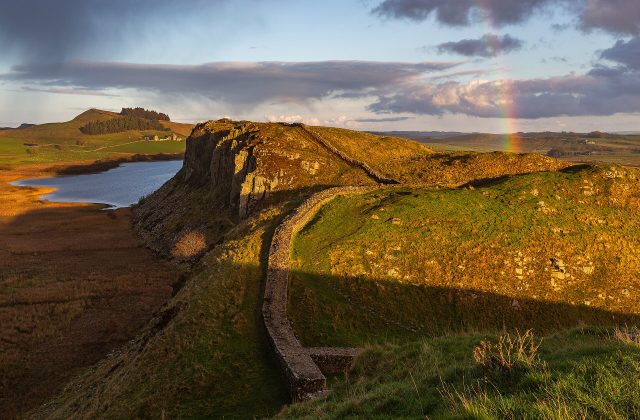
Northumberland National Park occupies the empty uplands of England's northernmost county, stretching for some…
12 tickets & tours
328 km away
Glenveagh is a remote glen with a lake, a castle and a great deal of empty mountain, in the north-west of County…
2 tickets & tours
Yes. GetYourGuide sells tickets and guided tours whose route includes Beinn Eighe National Nature Reserve; live prices are shown on this page.
A small visitor centre, a kilometre north of Kinlochewe, open from about Easter to October, has displays, short, easy paths through the woods suitable for children and wheelchairs, and picnic tables.
Allow one to four hours.
Beinn Eighe National Nature Reserve covers 48 km².
Beinn Eighe National Nature Reserve was established in 1951.
Beinn Eighe National Nature Reserve is in Scotland, United Kingdom. The map on this page shows the exact spot.
Scotland, United Kingdom
The Cairngorms National Park covers a vast tract of the eastern Scottish Highlands, twice the size of the Lake…
4 tickets & tours