Monfrague National Park
135 km away
Monfrague is a park of rocky ridges and river gorges in the province of Caceres, in Extremadura, in the west of Spain,…
1 ticket or tour
Forest Park · Castilla-La Mancha · Spain
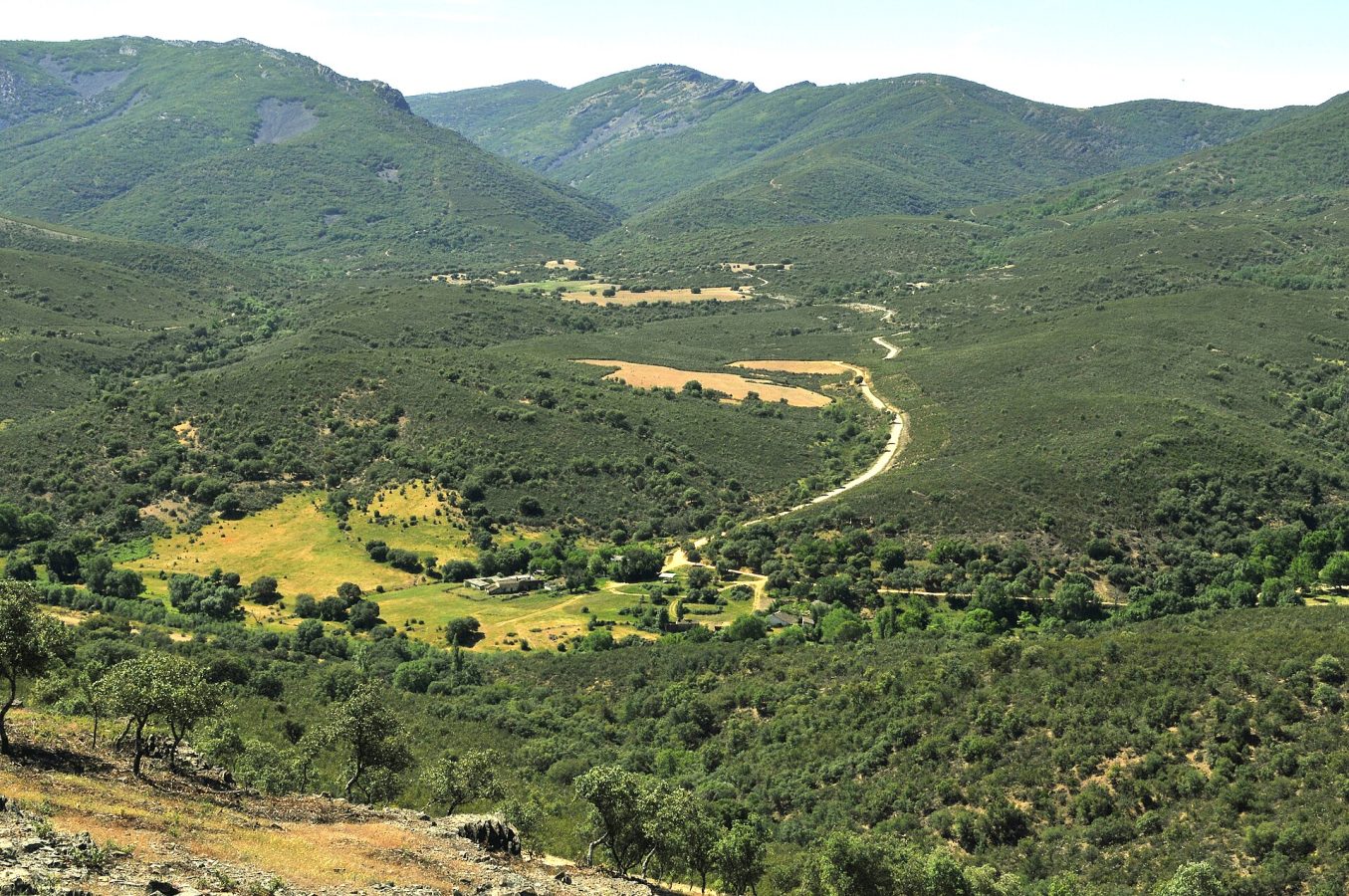
Photo: LBM1948, CC BY-SA 4.0
Cabaneros lies in the Montes de Toledo, the low, ancient ranges that rise from the plateau of central Spain between the rivers Tagus and Guadiana, in the provinces of Ciudad Real and Toledo, and it is the best surviving example of the Mediterranean forest and open oak savanna of the Iberian interior, often called, with some exaggeration, the Spanish Serengeti. It is about two to two and a half hours by road from Madrid, an hour and a half from Toledo and an hour from Ciudad Real, and there is no useful public transport. The visitor must understand one peculiarity: a large part of the park consists of private estates, and the great plain for which it is famous is not open to free access, so that it is seen only on guided excursions in four-wheel-drive vehicles, run by a company under concession from the park, which leave from the villages of Horcajo de los Montes and Retuerta del Bullaque and from the Casa Palillos visitor centre, last three to four hours, and should be reserved in advance, above all in the autumn.
They drive across the plain and the foothills, stopping to watch herds of deer, vultures and eagles with telescopes. The rest is seen on foot, on some twenty marked trails, which are free, a few requiring a booking. The favourite is the Boqueron del Estena, from the village of Navas de Estena, an easy path of three to four kilometres each way along a clear river through a rocky gorge, where signs point out fossil traces on the slabs. The finest is the route from Los Navalucillos, on the northern side, up a wooded valley to the Chorro waterfall and on, for the fit, to the summit of Rocigalgo. The main visitor centre, modern and well presented, is at Horcajo de los Montes.
Cabaneros was declared a natural park by the regional government in 1988 and a national park in 1995, and covers about 409 square kilometres. It owes its protection to a fight. In the early 1980s the Spanish ministry of defence bought an estate here with the intention of creating a bombing and gunnery range for the air force, and the campaign against it, by local people, scientists and conservationists from all over the country, became one of the founding battles of the Spanish environmental movement, ending in the abandonment of the project. The name comes from the cabanas, conical huts of branches and brushwood thatched with broom, in which charcoal burners, shepherds and beekeepers lived for part of the year while working in these hills. The park has two landscapes. The rana is a broad, nearly level plain of stony red earth at the foot of the hills, deposited by torrents some three million years ago, which was cleared for wheat in the 1960s and has since reverted to a grassland dotted with holm oaks and cork oaks, an open parkland on which herds of red deer, hundreds strong, graze in full view, with wild boar, roe deer, hares, great bustards, little bustards, stone curlews and cranes in winter; it is this African-looking scene that the vehicle tours are designed to show.
The sierras, of quartzite and slate, rising to 1,448 metres at Rocigalgo, the highest point of the Montes de Toledo, are covered with a dense and varied Mediterranean woodland, of holm, cork, Pyrenean and Portuguese oaks, strawberry trees, wild olive, mastic, heathers and rock roses, whose white flowers cover the hillsides in April and May, while in the damp, shaded ravines survive pockets of a quite different vegetation, left over from a wetter and warmer age: birches, yews, hollies, and the Portuguese laurel, a relic of the Tertiary laurel forests. The park's birds of prey are its glory. It holds one of the largest colonies in the world of the cinereous or black vulture, more than two hundred pairs, nesting on the crowns of cork oaks, several pairs of the Spanish imperial eagle, together with golden, Bonelli's, short-toed and booted eagles, black storks, which nest in trees here, eagle owls and black-winged kites. The Iberian lynx, the rarest cat in the world, which had vanished from these mountains, has been reintroduced on neighbouring estates since 2014 and is recolonising the park. The slabs of the Estena gorge preserve the burrows of giant marine worms and the trails of trilobites that crawled on the floor of a sea some 475 million years ago.
The park is open all year. The great event is the berrea, the rut of the red deer, from about the middle of September to the middle of October, when the stags roar and clash antlers on the plain at dawn and dusk, the vehicle tours are fully booked weeks ahead and rooms in the villages are scarce. Spring, from March to early June, is the other fine season, with the rock roses, lavender and broom in flower, streams running, migrant birds arriving and the raptors nesting, and temperatures ideal for walking.
Summer, from late June to early September, is very hot and dry, often 38 to 40 degrees, the grass is burnt yellow, animals lie up in the shade by day, and visits should be confined to the first and last hours of light. Winter is cold, with frosts and mist, and quiet, with cranes on the plain. Bring binoculars, water and sun protection. Allow a day or two. The windmills of Consuegra are an hour and a quarter away, Toledo an hour and a half, and the wetlands of Las Tablas de Daimiel, another national park, an hour and a half to the east.
135 km away
Monfrague is a park of rocky ridges and river gorges in the province of Caceres, in Extremadura, in the west of Spain,…
1 ticket or tour
160 km away
The Sierra de Guadarrama is the wall of granite mountains on the northern horizon of Madrid, an hour from the city, the…
7 tickets & tours
284 km away
Serra da Estrela is the highest range in mainland Portugal, in the centre of the country about three hours from Lisbon…
30 tickets & tours
No online tour for Cabaneros National Park is listed on GetYourGuide; entry, where it is charged, is paid at the gate or through the park authority. Nearby parks with bookable tours are listed on this page.
The park is open all year.
Cabaneros National Park covers 409 km².
Cabaneros National Park was established in 1995.
Cabaneros National Park is in Castilla-La Mancha, Spain. The map on this page shows the exact spot.