Cotopaxi National Park
Ecuador
Cotopaxi is the perfect snow cone south of Quito, two hours from the capital, and it is Ecuador's most visited…
26 tickets & tours
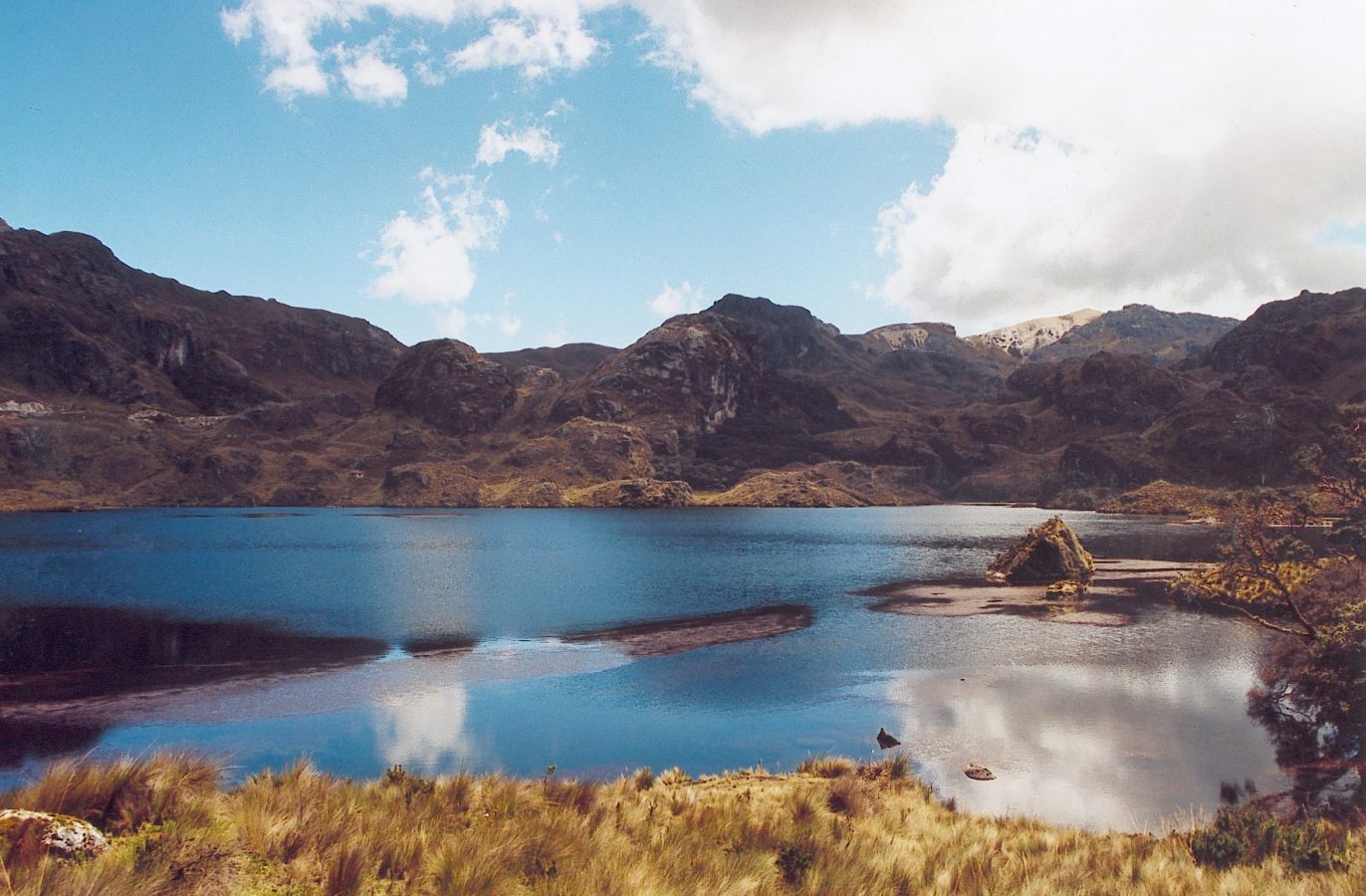
Photo: Delphine Ménard (notafish }<';>), CC BY-SA 2.0 fr
El Cajas is the high, wet, lake-strewn moorland above the colonial city of Cuenca in southern Ecuador, thirty to forty-five minutes away on the paved highway that crosses the park on its way down to Guayaquil, and it is the standard day out for anyone staying in Cuenca. Entry is free, as in all mainland Ecuadorian parks; walkers register with their passport at the Toreadora ranger station beside the road, at 3,900 metres, where there is a visitor centre, a café and the start of the most popular trails. The half-day and full-day tours from Cuenca, in small groups with a bilingual naturalist guide, usually combine two short walks, the circuit of Laguna Toreadora, about two hours, and a second through the polylepis forest or down from the Tres Cruces pass on the continental divide, or in the lower, gentler Llaviucu valley, a glacial lake in cloud forest at 3,100 metres that suits those who feel the altitude;
they generally end with a lunch of trout at one of the roadside inns. The birdwatching tours, starting at dawn, go for the park's specialities. A guide is not obligatory on the short signed routes, and any Guayaquil-bound bus from Cuenca's terminal will drop walkers at Toreadora and another can be flagged down for the return; but for anything longer a guide is strongly advised and for overnight treks required, because the paths are faint, the landmarks identical, and fog arrives in minutes, which is how visitors get lost here every year. Cuenca stands at 2,500 metres, and a day or two there first makes the walk far more pleasant.
Live dates and prices from GetYourGuide. Free cancellation on most tickets.
The park was created as a recreation area in 1977 and became a national park in 1996; it covers about 285 square kilometres of the western cordillera between 3,100 and 4,450 metres, and is the core of the Macizo del Cajas biosphere reserve, declared in 2013, and a Ramsar wetland. Its name is explained either from the Quichua cassa, a gateway to the snowy mountains, or caxa, cold, or from the Spanish for boxes, after the way its lakes sit in rocky hollows. The landscape was made by ice: glaciers scoured the hard volcanic rock into a jagged, knobbly relief of U-shaped valleys and basins, which now hold some 270 lakes and ponds of any size and several hundred more pools, strung together by streams, the largest, Luspa, of about 78 hectares. This sponge of lakes and waterlogged páramo soils supplies most of Cuenca's drinking water and feeds rivers flowing to both the Pacific and the Amazon, since the continental divide runs through the park at Tres Cruces, 4,167 metres, where three crosses commemorate travellers who died of cold on the old mule road to the coast;
a stretch of an Inca road, the Ingañán, crosses the park too. The vegetation is páramo, tussocks of straw-coloured grass, cushion plants, gentians, lupins and the furry, orange-flowered chuquiragua, with, in sheltered hollows, dense little woods of polylepis, the paper tree, a gnarled tree with flaking, cinnamon-red bark that grows at higher altitudes than almost any other on earth, mossy and twisted like an illustration to a fairy tale. Among 157 bird species are the Andean condor, now very rare here, the giant hummingbird, the largest in the world, the violet-throated metaltail, a hummingbird found only in and around the park, the tit-like dacnis and the giant conebill in the polylepis. Spectacled bears, pumas, páramo wolves, white-tailed deer and the Cajas water mouse are present and mostly invisible; llamas and alpacas have been reintroduced.
The park is open daily from about 8 am to 4.30 pm. It can rain, sleet or fog over at any hour of any day; the driest and clearest months are from August to January, with the coldest nights, below freezing, in July and August, and the wettest are from February to May. Mornings are much the most reliable, and by early afternoon cloud usually rolls up from the coast. Dress for four seasons in a day, with a waterproof, hat, gloves and boots for bog, and walk slowly. Allow a half-day to a full day. Cuenca's old town, a World Heritage Site, is forty minutes away, the Inca site of Ingapirca two hours north, and the craft villages of Gualaceo and Chordeleg an hour east.
Yes. GetYourGuide lists 5 tickets and tours for El Cajas National Park, with live dates and prices and free cancellation on most of them.
Entry is free, as in all mainland Ecuadorian parks; walkers register with their passport at the Toreadora ranger station beside the road, at 3,900 metres, where there is a visitor centre, a café and the start of the most popular trails.
The park is open daily from about 8 am to 4.30 pm.
Allow a half-day to a full day.
El Cajas National Park covers 288 km².
El Cajas National Park was established in 1996.
El Cajas National Park is in Ecuador. The map on this page shows the exact spot.
Ecuador
Cotopaxi is the perfect snow cone south of Quito, two hours from the capital, and it is Ecuador's most visited…
26 tickets & tours
Ecuador
The Galápagos are a thousand kilometres out in the Pacific from mainland Ecuador, reached only by air, from Quito or…
3 tickets & tours
Ecuador
Sangay is a large and wild park in the central Andes of Ecuador, stretching from the glaciers of three great volcanoes…
No online ticket
Ecuador
Yasuni lies in the Amazonian lowlands of eastern Ecuador, between the Napo and Curaray rivers, and it has a good claim…
No online ticket