
Sa Dragonera Natural Park
Balearic Islands, Spain
Sa Dragonera is a long, narrow, uninhabited island lying a few hundred metres off the south-western tip of Mallorca,…
3 tickets & tours
Marine Park · Balearic Islands · Spain
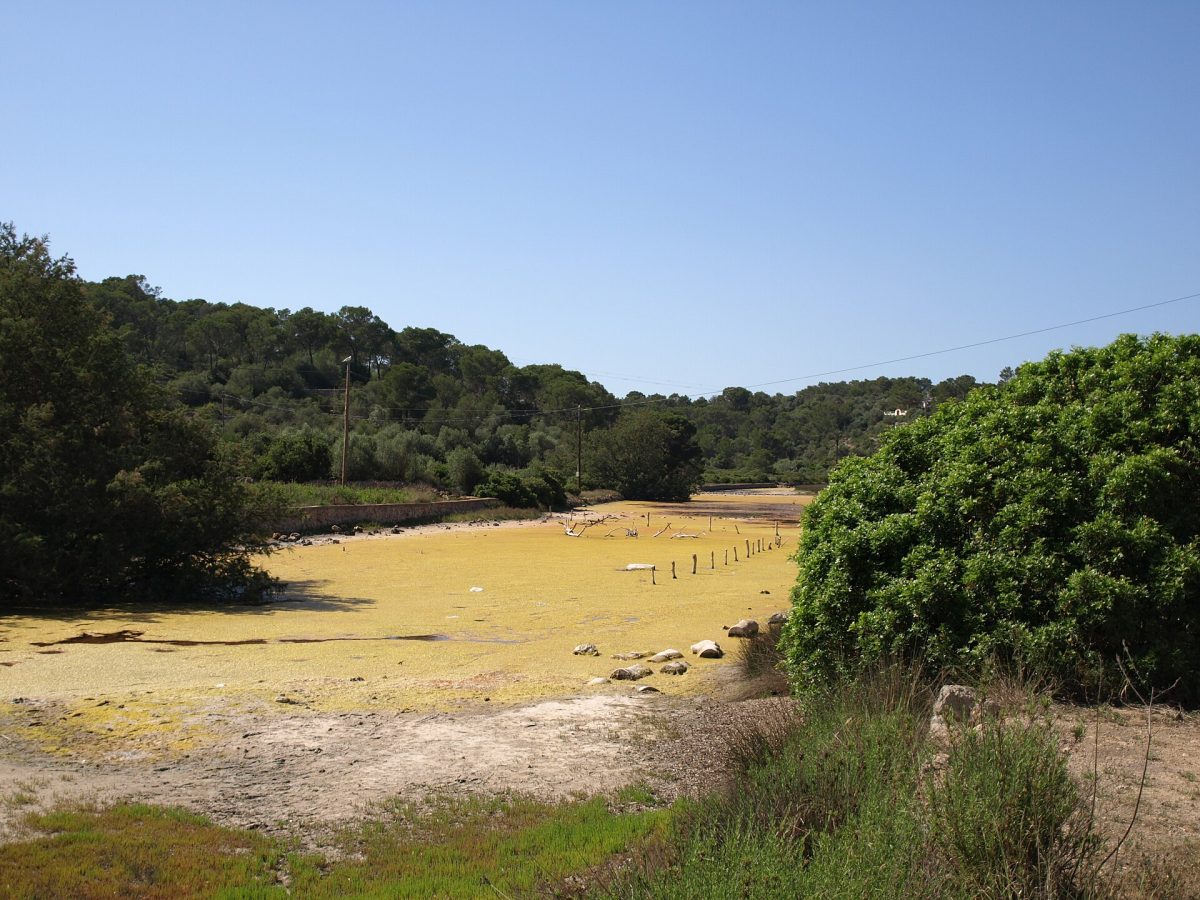
Photo: CC BY-SA 3.0
Mondragó is a small natural park on the south-eastern coast of Mallorca, in the municipality of Santanyí, about an hour's drive from Palma and ten minutes from the resort of Cala d'Or, and what draws people to it are its two beaches, which are regularly counted among the most beautiful on the island and owe their survival, unbuilt, to the park. There is no entrance fee; the cost is the parking. Two pay car parks serve the park, one at Ses Fonts de n'Alis, behind the first beach, reached from the village of S'Alqueria Blanca or from Portopetro, which is where the information centre stands, and one above S'Amarador, reached by a separate road from Santanyí; both fill by mid-morning in July and August, when cars are turned away, and a seasonal bus runs from Cala d'Or and Portopetro.
The two beaches are joined by a paved path along the rocks, five to ten minutes on foot. S'Amarador is the larger and the quieter, a broad crescent of fine white sand backed by dunes and pines, with a single seasonal kiosk; Cala Mondragó, properly Sa Font de n'Alis, is smaller, with a couple of restaurants and small hotels just behind it and sunbeds for hire. The water in both is shallow, calm and of an improbable turquoise, ideal for children and for snorkelling along the rocky sides. Four short, signed walking routes of half an hour to an hour each, which almost nobody uses, lead along the cliffs and through the woods and fields. The boat excursions from Cala Figuera, Cala d'Or and Portopetro cruise this coast, stopping to swim in the coves, and jet-ski tours pass by, though motor craft are kept outside the buoyed bathing areas.
Live dates and prices from GetYourGuide. Free cancellation on most tickets.
The Parc Natural de Mondragó was declared in 1992 by the Balearic government, after a long campaign by the islands' conservation group, the GOB, against plans to develop the coves as a resort, a campaign that ranks with the saving of Es Trenc and Sa Dragonera in the history of Mallorcan environmentalism; it covers about 766 hectares of land, together with a marine area, and the great majority of it, nearly nine tenths, remains private farmland. It is a place of small scale and subtle interest. Two torrents, dry for most of the year, have cut shallow ravines through the flat limestone platform of the Migjorn, the island's southern plain, and reach the sea in a forked inlet with the two beaches at its heads; behind each lies a small brackish pool, the Estany de sa Font de n'Alis and the Estany de s'Amarador, fringed with reeds, tamarisk and rushes, where coots, moorhens, mallard, little grebes, herons and egrets are seen, and where the stripeless tree frog and the viperine snake live.
The low cliffs on either side are clothed in the wind-clipped coastal scrub of juniper, lentisk and sea fennel, behind which are woods of Aleppo pine and wild olive, rich in orchids in spring, more than twenty species, and then a patchwork of small fields enclosed by dry-stone walls, with almond, carob and fig trees, in which the traditional unirrigated farming of the island's south continues. Scattered through it are the relics of that life: barraques de roter, the round stone huts of the poor smallholders who cleared marginal land, lime kilns, waterwheels, threshing floors, sheepfolds and the little stone slipways of fishermen's boat-sheds in the coves. Hoopoes, Sardinian warblers, stone curlews, Audouin's gulls, shags and peregrines, Hermann's tortoises, which are common here, hedgehogs, genets and pine martens are among the inhabitants, and under water are meadows of posidonia seagrass, the source of the sand and of the clarity.
The park is open at all times, with the information centre keeping morning hours. May, June, September and early October are the ideal months, with warm water, room on the sand and flowers or migrating birds; in July and August the beaches are packed by eleven, the car parks close, and the only sensible times are before ten or after five.
After storms, particularly in autumn, dead posidonia leaves pile up on the beaches, which is natural and protective and is left in place out of season. There is little shade on S'Amarador. Allow a half-day. The fishing port of Cala Figuera and the market town of Santanyí are ten minutes away, the beaches of Es Trenc and the salt pans half an hour west, Cala d'Or ten minutes north, and the Cabrera archipelago is reached by boat from Colònia de Sant Jordi.
Yes. GetYourGuide lists one ticket or tour for Mondragó Natural Park, with live dates and prices and free cancellation on most of them.
There is no entrance fee; the cost is the parking.
There is no entrance fee; the cost is the parking.
The park is open at all times, with the information centre keeping morning hours.
Mondragó Natural Park covers 7.5 km².
Mondragó Natural Park was established in 1992.
Mondragó Natural Park is in Balearic Islands, Spain. The map on this page shows the exact spot.
Balearic Islands, Spain
Sa Dragonera is a long, narrow, uninhabited island lying a few hundred metres off the south-western tip of Mallorca,…
3 tickets & tours