Montserrat Natural Park
Catalonia, Spain
Montserrat is the serrated mountain an hour north-west of Barcelona with the Benedictine abbey on its flank, and the…
14 tickets & tours
Wetland Park · Catalonia · Spain
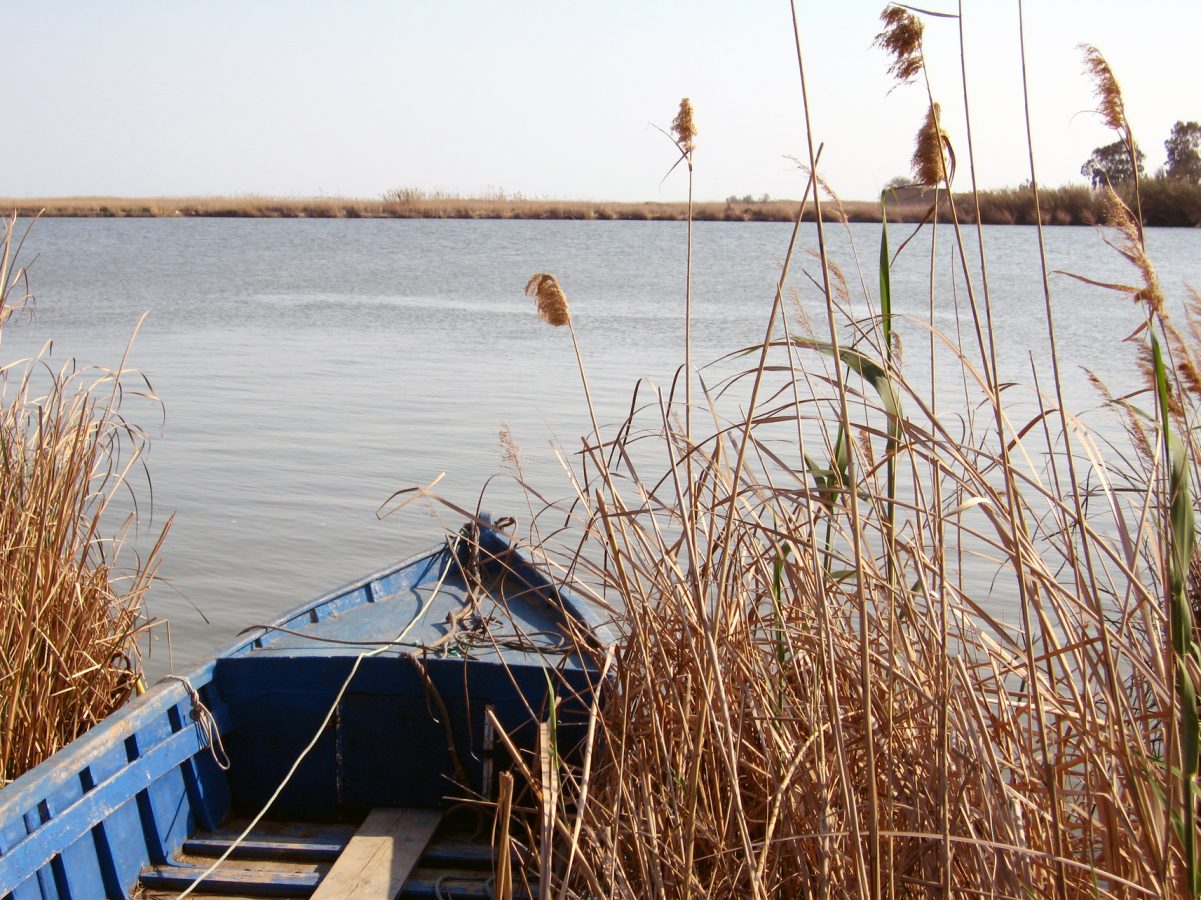
Photo: Till F. Teenck, CC BY-SA 2.5
The Ebro Delta is the great flat triangle of rice fields, lagoons and empty beaches that the longest river wholly within Spain has built into the Mediterranean at the southern end of Catalonia, about two hours by road south of Barcelona and an hour from Tarragona, with trains to the station of L'Aldea-Amposta, and it is protected as a natural park, not a national one, without gates or fees. It is inhabited, farmed country, dead flat, laid out in a grid of lanes and irrigation canals, and the best way of seeing it is by bicycle, which can be hired in the delta towns of Deltebre, Sant Jaume d'Enveja, Poblenou del Delta and Amposta, or by car from one lookout to the next. The park's information centre and Ecomuseum are in Deltebre, and a second centre, the Casa de Fusta, a wooden hunting lodge, stands beside the Encanyissada lagoon.
The guided offerings are small and local: kayaking on the river or the lagoons, combined with a drive round the viewpoints; horse riding along the beaches near Riumar; boat trips from Deltebre and Riumar down the last kilometres of the river to its mouth; birdwatching with specialist guides and telescopes, for which the delta is one of the best sites in Spain; visits to rice farms, where in season visitors can try planting or reaping by hand, and to the mussel and oyster rafts in the Fangar and Alfacs bays, with a tasting on the platform; and traditional punting in flat-bottomed boats on the canals. The food is a reason in itself: rice dishes of every kind, eel, duck, mussels, oysters and razor clams.
Live dates and prices from GetYourGuide. Free cancellation on most tickets.
The delta covers some 320 square kilometres, of which about 78 are protected as the Parc Natural del Delta de l'Ebre, declared in 1983 and enlarged in 1986; it is a Ramsar wetland, part of the Terres de l'Ebre biosphere reserve, and, after the Camargue and Doñana, the most important wetland of the western Mediterranean. It is geologically very young: most of it has been built in the last few centuries from sediment washed down after the forests of the river's basin were cleared, and it projects more than twenty kilometres into the sea in the shape of an arrowhead, with two long sandspits curving back from its tip to enclose shallow bays, the Punta del Fangar in the north, a miniature desert of dunes with a lighthouse, where mirages are common, and the Punta de la Banya in the south, joined to the delta by the Trabucador, a bar of sand five kilometres long and barely a hundred metres wide with the open sea on one side and the bay on the other.
Rice, introduced on a large scale in the 1860s with the digging of the canals, occupies about two thirds of the land, some 20,000 hectares, and its calendar governs the look of the place: flooded mirrors in April and May, brilliant green through the summer, gold in September, stubble and mud in autumn and winter. Around the fields lie the lagoons, the Encanyissada, the Tancada, the Garxal, the Canal Vell and others, reedbeds, salt pans and salt marsh. More than 340 species of birds have been recorded, about 95 of them breeding: the delta holds the largest colony in the world of Audouin's gull, once among the rarest gulls on earth, at the Punta de la Banya, along with the only regular breeding colony of greater flamingos in Catalonia, several thousand birds, glossy ibis, purple herons, squacco herons, little bitterns, purple swamphens, collared pratincoles, terns of several kinds, and in winter tens of thousands of ducks and coots. The dams built upstream in the 1960s trap nearly all the river's sediment, so that the delta is now sinking and being eaten by the sea; storm Gloria, in January 2020, flooded thousands of hectares and broke through the Trabucador.
The park is open at all times, and its information centres daily, with a break at midday. April to June is the best period, with the rice fields flooded, the breeding colonies active and spring migrants passing; September and October bring the rice harvest, the autumn migration, warm days and fewer mosquitoes; winter is mild and excellent for wildfowl, flamingos and raptors, with a cold north-westerly wind, the mestral, on many days;
July and August are hot, humid and plagued by mosquitoes at dawn and dusk, though the beaches are wide and uncrowded. Repellent is essential from May to October. Allow two days. Deltebre and Poblenou are the bases, Tortosa and its castle half an hour inland, the mountains of Els Ports an hour, and Peñíscola to the south.
Yes. GetYourGuide lists 3 tickets and tours for Ebro Delta Natural Park, with live dates and prices and free cancellation on most of them.
The park is open at all times, and its information centres daily, with a break at midday.
Ebro Delta Natural Park covers 78 km².
Ebro Delta Natural Park was established in 1983.
Ebro Delta Natural Park is in Catalonia, Spain. The map on this page shows the exact spot.
Catalonia, Spain
Montserrat is the serrated mountain an hour north-west of Barcelona with the Benedictine abbey on its flank, and the…
14 tickets & tours
Catalonia, Spain
This natural park on the Costa Brava, in Catalonia, about an hour and three quarters north of Barcelona and forty-five…
3 tickets & tours
Catalonia, Spain
Aiguestortes i Estany de Sant Maurici, the only national park in Catalonia, lies in the highest part of the central…
No online ticket
Catalonia, Spain
La Garrotxa is a district of green, wooded hills in the north of Catalonia, in the foothills of the Pyrenees, and its…
No online ticket
Catalonia, Spain
The Montseny is a wooded mountain massif that rises abruptly from the plains of Catalonia about fifty kilometres…
No online ticket