El Boquerón National Park
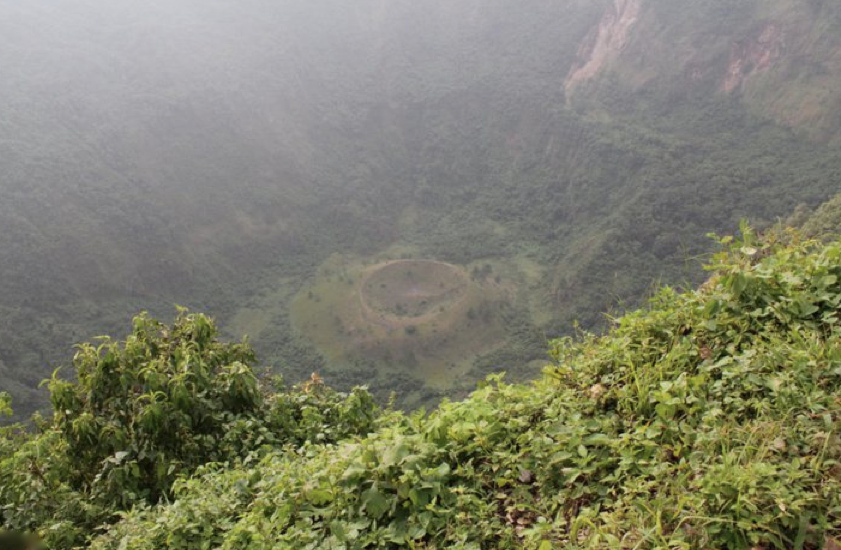
Photo: House1090, CC BY-SA 2.0
- Type
- Volcano Park
- Where
- El Salvador
- Area
- 2 km²
- Elevation
- 1 893 m above sea level
- Tickets
- 2 tickets and tours
El Boquerón National Park tickets and tours: which one to book
El Boquerón is the crater of the San Salvador volcano, which looms directly over the capital of El Salvador, and the park at its rim is one of the easiest volcano visits anywhere: a paved road climbs from the suburb of Santa Tecla to the entrance, at about 1,800 metres, in thirty to forty minutes from the city centre, and from the car park it is a walk of ten minutes on broad, stepped paths to the first of several lookouts over the crater. It should not be confused with the Quebrada Boquerón, a ravine walk near Medellín in Colombia that appears beside it in searches. The entrance fee is a couple of dollars, slightly more for foreigners, paid at the gate, and there is a small visitor centre with displays on the volcano. No guide is needed for the rim, where the paths make a loop of about forty-five minutes among flowers and cypress;
descending into the crater, on a steep, rough and unmaintained track, is another matter, two to three hours down and back up, to be done only with a local guide and in company. The half-day city tours of San Salvador sold by local operators nearly all include the crater, along with the historic centre, the cathedral with the tomb of Archbishop Romero, the national palace and the striking modernist church of El Rosario, sometimes the botanical garden at the foot of the volcano, and a tasting of pupusas, the national dish of stuffed maize tortillas. The road up is lined with restaurants and coffee-shops with terraces looking out over the city or the crater, which are full of Salvadoran families at weekends and are half the reason for the excursion.
2 tickets and tours for El Boquerón National Park
Live dates and prices from GetYourGuide. Free cancellation on most tickets.
Visiting El Boquerón National Park: what you will see
The San Salvador volcano, Quezaltepeque in the old Nahuat name, is a massive, complex stratovolcano on whose southern and eastern skirts the capital and its suburbs have grown. Its ancient summit collapsed in a great eruption, leaving two remnants on the rim of the old caldera, El Picacho, 1,960 metres, the pointed peak that dominates the city's skyline, and El Jabalí; within the ruin grew the present cone, whose crater is El Boquerón, the big mouth: an almost perfectly round pit about a kilometre and a half across and 558 metres deep, with steep, densely forested walls. At the bottom, in the middle, sits a tiny, neat cinder cone, the Boqueroncito, about thirty metres high, which is the souvenir of the last eruption. Until 1917 the crater held a lake. In June of that year, after strong earthquakes that wrecked much of the capital, the volcano erupted through fissures on its north-western flank, sending a river of lava several kilometres towards the town of Quezaltepeque, where it can still be seen as a black field beside the highway, called El Playón;
the lake boiled away within days, and the little cone formed on the crater floor. The volcano has been quiet since, and is closely monitored. The park proper is tiny, a few hectares at the rim, within a larger protected area covering the upper volcano, and its cool, damp climate, often ten degrees below that of the city, supports pines, cypresses, oaks, tree ferns and a profusion of flowers, wild and planted: hydrangeas, begonias, calla lilies, which Salvadorans call cartuchos, busy lizzies and orchids. Armadillos, raccoons, agoutis, grey foxes, white-tailed deer, squirrels and the torogoz, the turquoise-browed motmot that is the national bird, live in the forest. From the lookouts the view takes in, on the far side, Lake Ilopango, itself a caldera, the twin peaks of the San Vicente volcano and, westwards, Izalco and Santa Ana. The slopes below are planted with coffee.
El Boquerón National Park: best time to go, seasons and hours
The park is open daily from 8 am to 5 pm. The dry season, from November to April, gives the clearest views, above all in the early morning, with cold, windy conditions at the rim from December to February, when a jacket is welcome; in the rainy season, from May to October, cloud commonly fills the crater by late morning and afternoon downpours are the rule, so come early. Sundays and holidays are crowded and the road slow.
Do not leave valuables visible in parked cars, and take the usual big-city care. Allow two hours, a half-day with lunch on the way down. San Salvador's centre is forty minutes away, the archaeological site of Joya de Cerén, a village buried by ash, the Pompeii of the Americas, thirty minutes to the north-west, and the Ruta de las Flores and the Santa Ana volcano an hour and a half west.
More tours and activities in El Salvador
Before you go
Can I book a tour or safari in El Boquerón National Park online?
Yes. GetYourGuide lists 2 tickets and tours for El Boquerón National Park, with live dates and prices and free cancellation on most of them.
How much is the entrance fee for El Boquerón National Park?
The entrance fee is a couple of dollars, slightly more for foreigners, paid at the gate, and there is a small visitor centre with displays on the volcano.
When is El Boquerón National Park open?
The park is open daily from 8 am to 5 pm.
How many days do you need in El Boquerón National Park?
Allow two hours, a half-day with lunch on the way down.
How big is El Boquerón National Park?
El Boquerón National Park covers 2 km².
Where is El Boquerón National Park?
El Boquerón National Park is in El Salvador. The map on this page shows the exact spot.