Ivindo National Park
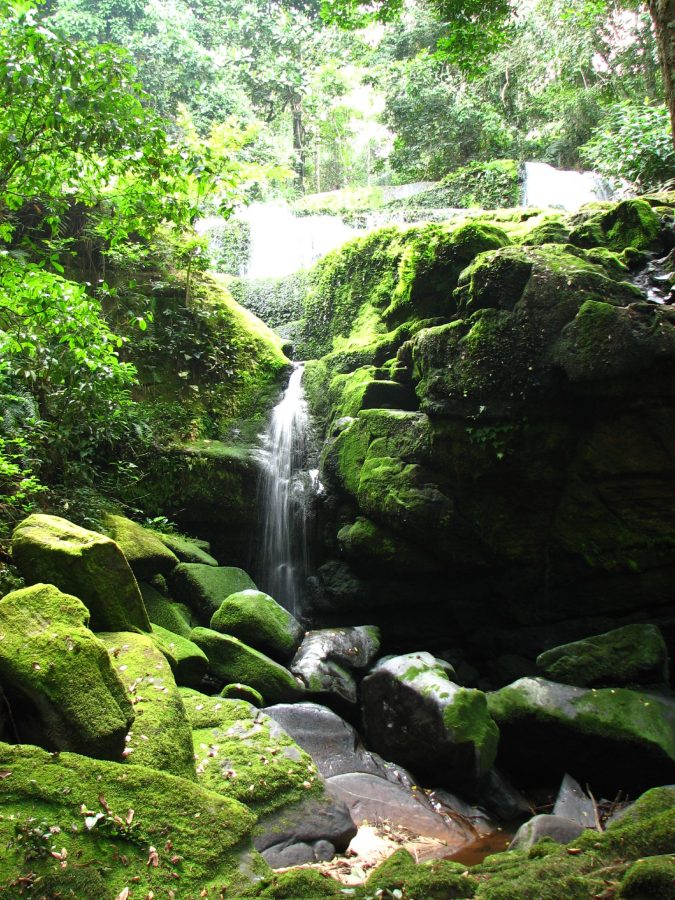
Photo: Jefe Le Gran, CC BY 2.0
- Type
- Rainforest Park
- Where
- Gabon
- Area
- 3 000 km²
- Founded
- 2002
- UNESCO
- World Heritage Site
- Tickets
- No online ticket listed
Ivindo National Park tickets and tours: which one to book
Ivindo lies on the equator in the east-central part of Gabon, in the heart of the Congo basin rainforest, and it holds two of the great natural sights of Central Africa, the Kongou falls and the forest clearing of Langoue, where elephants and gorillas gather. It is a remote and expensive destination, visited by a few hundred people a year, almost always through one of the handful of tour operators in Libreville, the capital, who arrange permits from the national parks agency, transport, guides, food and camping, and travellers should in any case consult the current advice of their own governments on Gabon before planning a journey. There are two separate trips, which start from different places. The falls are reached from the provincial town of Makokou, on the Ivindo river at the park's north-eastern corner, which is ten to twelve hours by road from Libreville or is approached by the Trans-Gabon railway to Booue and then by road;
from Makokou a motorised dugout canoe descends the river for three to four hours, through rapids, between walls of forest, to a simple camp of wooden cabins on an island above the falls, run with guides from a local conservation association, where visitors spend two or three nights, walking forest trails to viewpoints over the different cataracts and swimming in calm pools. Langoue is reached from the little railway halt of Ivindo, on the park's southern edge, some seven to ten hours by overnight train from Libreville: a four-wheel-drive vehicle carries visitors along old logging tracks, and the last stretch, several hours, is covered on foot through the forest to a research camp run with an international conservation society, from which one walks each morning to an observation platform at the edge of the clearing and sits in silence for the day. Places at both camps are few and must be reserved months ahead. The old research station of Ipassa, near Makokou, can also be visited.
Visiting Ivindo National Park: what you will see
Ivindo was one of thirteen national parks created at a stroke in 2002 by President Omar Bongo, covering a tenth of the territory of Gabon, after the American ecologist Mike Fay had walked for fifteen months across the forests of the Congo basin and shown the president his photographs; it covers about 3,000 square kilometres and was inscribed as a World Heritage Site in 2021. The park is a plateau of ancient rock at four to seven hundred metres, covered almost entirely with primary rainforest of a type rich in great leguminous trees, some of which have never been logged, and drained by the Ivindo, a blackwater river, the colour of strong tea, which flows wide and slow through the northern part and then, meeting harder rock, breaks into a labyrinth of channels, islands and rapids and drops over a series of falls. Kongou, the greatest of them, is a complex of cataracts spread across a front of more than three kilometres, with drops of up to fifty-six metres, the forest growing to the very lip and on the islets between the chutes, which many travellers have called the most beautiful waterfalls in Central Africa; Mingouli and Djidji, further downstream, are scarcely less impressive and even harder to reach.
In 2007 a plan, linked to a Chinese concession for the iron ore of Belinga to the north, to build a hydroelectric dam at Kongou, with a road already cut into the park, provoked a campaign by Gabonese environmentalists, whose leader was awarded an international prize, and the project was suspended. The rapids have isolated the fish of the upper river, many species of which occur nowhere else, and the spray zones carry specialised plants. Langoue Bai was unknown to science until Fay came upon it in 2000. A bai is a natural clearing in the forest, a marshy meadow kept open by the animals themselves, which come to it for the mineral salts in its soil and water and for its sedges, and this one, about a kilometre long, is visited by forest elephants in dozens, including great tusked bulls, by families of western lowland gorillas, by forest buffalo, sitatunga, red river hogs and giant forest hogs; because no hunters had ever reached the place, the animals at first showed no fear of people. The park also shelters chimpanzees, mandrills, several guenons and colobus monkeys, leopards, golden cats, the giant pangolin, the slender-snouted crocodile, and more than 430 species of birds, among them grey parrots, which gather at the clearings in flocks of hundreds. At Ipassa, French scientists established in the 1960s one of the first research stations in the African rainforest, and much of what is known of its ecology was learned there.
Ivindo National Park: best time to go, seasons and hours
Gabon has two dry seasons, a long one from about June to September, which is overcast, relatively cool, 22 to 27 degrees, and the easiest for travel on the tracks and for walking, and a short one from mid-December to January; the rains fall from October to mid-December and from February to May, with the heaviest in November and in March and April, when the forest roads become very difficult, though the falls are then at their fullest and most thunderous, the river at Kongou being lowest and least impressive in August and September.
Elephants and gorillas use the clearing of Langoue throughout the year. It is hot and extremely humid at all times. A certificate of vaccination against yellow fever is required to enter the country, protection against malaria is essential, and there are biting flies, sweat bees and ants in plenty. Bring light long-sleeved clothing in dull colours, waterproof bags, a head torch and binoculars. Allow a week for one of the two trips, ten days or more for both, from Libreville.
Before you go
Do I need to book Ivindo National Park in advance?
No online tour for Ivindo National Park is listed on GetYourGuide; entry, where it is charged, is paid at the gate or through the park authority. Nearby parks with bookable tours are listed on this page.
How many days do you need in Ivindo National Park?
Allow a week for one of the two trips, ten days or more for both, from Libreville.
How big is Ivindo National Park?
Ivindo National Park covers 3 000 km².
When was Ivindo National Park founded?
Ivindo National Park was established in 2002.
Where is Ivindo National Park?
Ivindo National Park is in Gabon. The map on this page shows the exact spot.