Wetland Park · Louisiana · United States
Jean Lafitte National Historical Park and Preserve
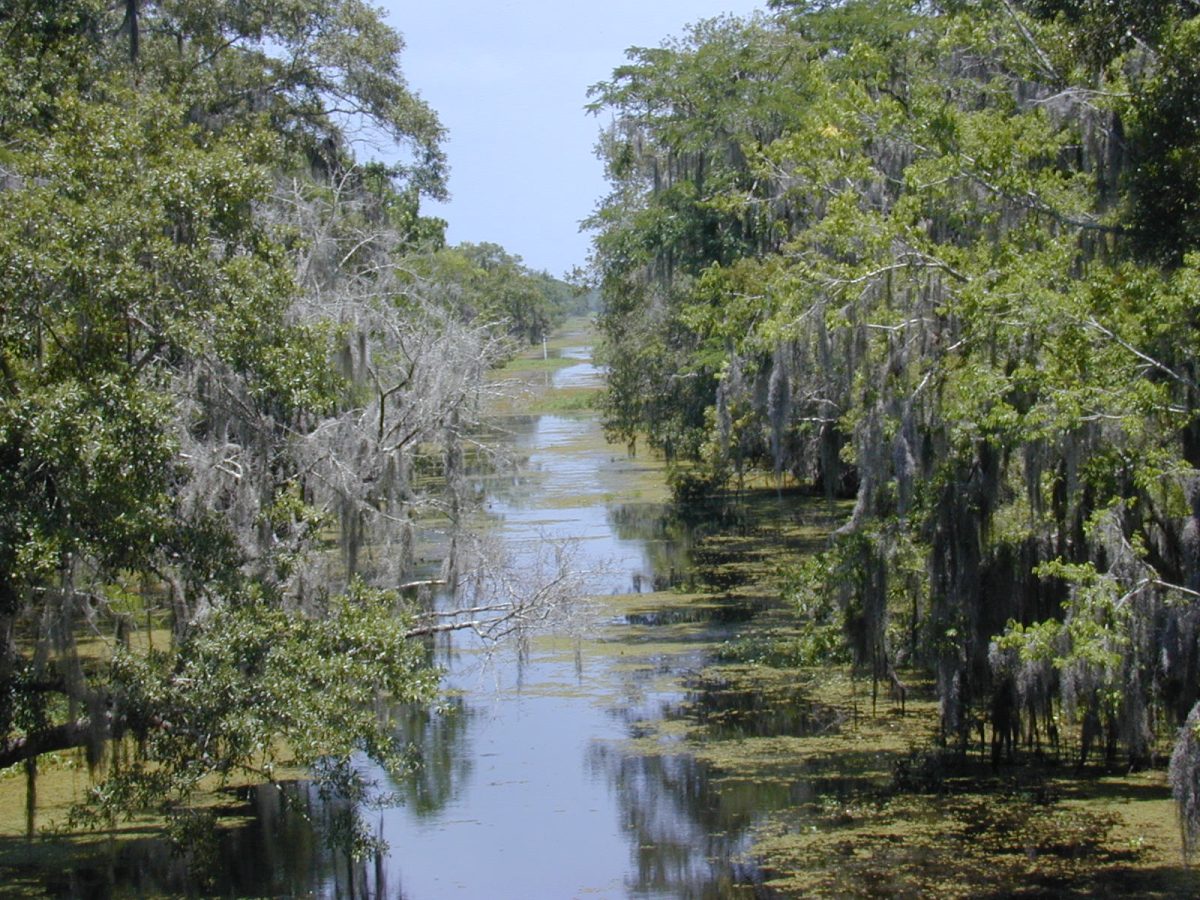
Photo: No machine-readable author provided. Jan Kronsell assumed (b, CC BY-SA 3.0
- Type
- Wetland Park
- Where
- Louisiana, United States
- Founded
- 1978
- Tickets
- Tours that include it
- Website
- nps.gov/jela/index.htm
Jean Lafitte National Historical Park and Preserve tickets and tours: which one to book
Jean Lafitte is an unusual unit of the American national park system, a collection of six separate sites scattered across the south of Louisiana, which together tell the story of the Mississippi delta, its wetlands and its peoples, and for the traveller with an interest in nature only one of them matters, the Barataria preserve, which is the easiest place near New Orleans to walk into a real swamp. It lies at Marrero, on the west bank of the Mississippi, about seventeen miles and half an hour by car from the French Quarter, across the river bridge; there is no public transport, and a hired car or a taxi is needed. Entry is free. A visitor centre, with exhibits, a film, a bookshop and rangers who lead guided walks on several mornings a week, stands at the start of a network of trails, some of them raised boardwalks suitable for wheelchairs and pushchairs, which can be seen in two or three hours.
The best is the Bayou Coquille trail and its continuation, the Marsh Overlook trail, a little under a mile each way, which begins on the relatively high, dry ground of an old natural levee, under live oaks hung with Spanish moss, descends through a forest of palmettos into the flooded cypress and tupelo swamp, where the largest tree, a bald cypress some six hundred years old, stands, and ends on a platform looking across the open, floating marsh; alligators are seen along it on most warm days, sometimes lying beside the boardwalk. The park runs no boats. The airboat and pontoon-boat swamp tours advertised everywhere in New Orleans are private businesses, which operate on the bayous just outside the preserve, at Lafitte and Crown Point, and canoes and kayaks can be launched on the preserve's canals. Of the other sites, the battlefield of Chalmette, downriver from the city, and the small visitor centre in the French Quarter are easily added, while the three Acadian cultural centres lie two to three hours to the west.
Tickets and tours that include Jean Lafitte National Historical Park and Preserve
Live prices from GetYourGuide for tours whose route includes this park. Free cancellation on most of them.
Visiting Jean Lafitte National Historical Park and Preserve: what you will see
The park was established by Congress in 1978, incorporating the Chalmette battlefield, which had been a national monument since 1907, and the Barataria preserve, which covers about 26,000 acres, or 105 square kilometres. The preserve is a cross-section of the delta of the Mississippi, a landscape entirely made by the river, which over the last seven thousand years has swung back and forth across the coast, building one lobe of land after another out of its silt. Bayou des Familles, which runs through it, is an abandoned channel of the river, and the low ridges on either side of it are its natural levees, the coarser sediment dropped by the floods when they overtopped the banks, only a metre or two above the surrounding land; in this country a metre is the difference between a forest of oaks, hackberries and maples, and standing water. Away from the ridge the ground sinks into swamp, a flooded forest of bald cypress, whose knobbly knees rise from the water round its buttressed trunk, and water tupelo, the surface green with duckweed, and then into freshwater marsh, a quaking mat of grasses, cattails and arrowhead that floats on the water and stretches to the horizon. In early April the swamp is lit by thousands of wild blue irises. More than two hundred species of birds occur, among them herons and egrets, ibis, the barred owl, the pileated woodpecker and, in spring, the prothonotary warbler, a bird of golden yellow that nests in the cypress holes, and the preserve holds alligators in large numbers, turtles, tree frogs, several kinds of snake, including the venomous cottonmouth, armadillos, swamp rabbits, and the nutria, a large South American rodent brought here for its fur in the 1930s, which has multiplied and eats the marsh down to the mud.
The ancient cypresses were almost all felled by loggers between 1890 and 1930, whose canals still cross the swamp. The park is named after Jean Lafitte, a French-born privateer and smuggler who, in the first years of the nineteenth century, ran from a base on Barataria bay, through this maze of bayous, a lucrative trade in contraband goods and slaves to the merchants of New Orleans. When the British prepared to attack the city in the winter of 1814, they offered him money and a commission; he warned the Americans instead, and supplied Andrew Jackson with gunners, flints and powder, in return for a pardon. On 8 January 1815, on the field of Chalmette, Jackson's mixed force of regulars, militia, free men of colour, Choctaws and Baratarians, behind a mud rampart, cut down in less than an hour a British army of veterans, inflicting some two thousand casualties for a loss of a few dozen, in a battle fought, unknown to both sides, two weeks after peace had been signed. The Acadian centres, at Lafayette, Thibodaux and Eunice, tell of the French settlers expelled from Nova Scotia in 1755 who became the Cajuns. The delta itself is now disappearing: confined by levees, the river no longer spreads its silt over the marshes, which subside, are cut up by the canals of the oil industry and invaded by salt water, so that Louisiana loses an area of wetland equal to a football field in little more than an hour, and the preserve's boardwalks were badly damaged by the hurricanes of 2005 and 2021.
Jean Lafitte National Historical Park and Preserve: best time to go, seasons and hours
The preserve's trails are open daily during daylight, the visitor centre on fewer days, generally from Wednesday to Sunday. The best seasons are spring, from March to May, when the irises bloom, the alligators bask and the migrant birds pass through, and autumn, from October to November, which is mild and dry. Summer, from June to September, is hot, 32 to 35 degrees, and extremely humid, with mosquitoes, biting flies, thunderstorms almost every afternoon and the threat of hurricanes from August to October, after which trails may be closed for repairs;
walk early in the morning. In winter, from December to February, it is cool, 8 to 17 degrees, quiet and free of insects, but alligators are torpid and seldom seen on cold days. Do not feed or approach the alligators, keep children and dogs close, bring repellent and water, and check which trails are open. Allow half a day. New Orleans is half an hour away, and the fishing village of Jean Lafitte, with the swamp tour docks, fifteen minutes further south.
Before you go
Can I book a ticket or tour for Jean Lafitte National Historical Park and Preserve online?
Yes. GetYourGuide sells tickets and guided tours whose route includes Jean Lafitte National Historical Park and Preserve; live prices are shown on this page.
When is Jean Lafitte National Historical Park and Preserve open?
The preserve's trails are open daily during daylight, the visitor centre on fewer days, generally from Wednesday to Sunday.
When was Jean Lafitte National Historical Park and Preserve founded?
Jean Lafitte National Historical Park and Preserve was established in 1978.
Where is Jean Lafitte National Historical Park and Preserve?
Jean Lafitte National Historical Park and Preserve is in Louisiana, United States. The map on this page shows the exact spot.