Zhangjiajie National Forest Park
China
Zhangjiajie is the park of sandstone pillars in Hunan that inspired the floating mountains of Avatar, and it is sold in…
29 tickets & tours
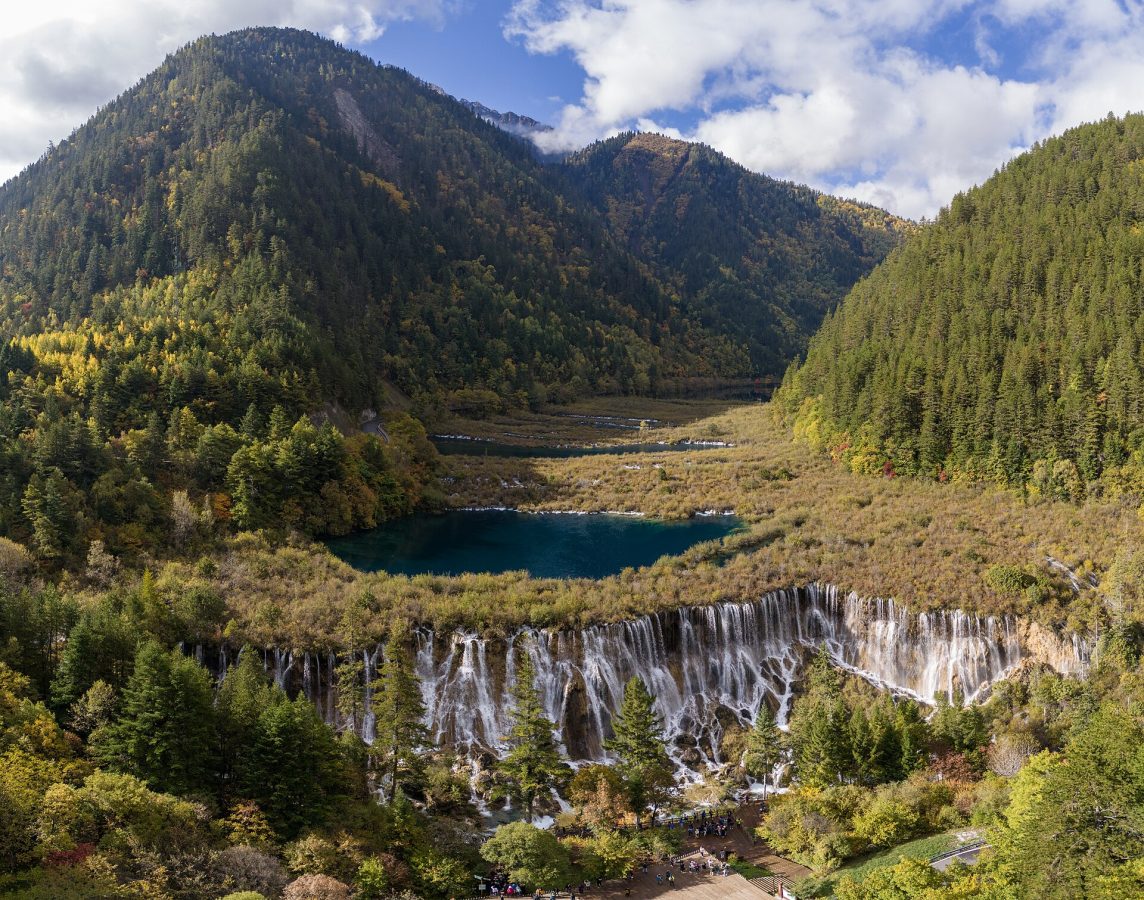
Photo: Chensiyuan, CC BY-SA 4.0
Jiuzhaigou is a valley of coloured lakes and waterfalls in the mountains of northern Sichuan, on the edge of the Tibetan plateau, and the first matter is getting there. By road from Chengdu it used to be eight to ten hours; since 2024 a high-speed railway runs from Chengdu to Huanglongjiuzhai station in under two hours, with a connecting bus of about an hour and a half to the park gate, which has transformed the journey, and Jiuzhai Huanglong airport, at 3,448 metres, has flights from Chengdu and other cities. Tickets are sold with the visitor's passport, by real-name reservation on the park's official platform or through agents, with a daily limit on numbers, and consist of two parts, the entrance and the compulsory sightseeing bus, since the valley is fifty kilometres of road and no private vehicles are allowed;
foreign visitors who cannot use the Chinese booking systems will find an agency ticket or a package a real help. Inside, green buses run up and down both branches of the valley, stopping on request at each sight, and wooden boardwalks link the lakes on the far side of the water from the road. The sensible plan is to ride straight to the top of one branch, the Rize valley to Arrow Bamboo Lake or the Primeval Forest, and walk down the boardwalks, taking a bus between the duller stretches, then do the same on the Zechawa branch to Long Lake and Five-Colour Pool, and finish with the Shuzheng lakes on the way out. The three-day tours from Chengdu add Huanglong, the travertine pools two hours away, and a panda base. The trek in the side valley of Zharu, with a Tibetan guide, is a limited ecotourism programme.
Live dates and prices from GetYourGuide. Free cancellation on most tickets.
Jiuzhaigou, the valley of nine stockaded villages, takes its name from the nine Tibetan hamlets strung along it, and was unknown to the outside world until loggers reached it in the 1970s; it was protected in 1978, made a national park in 1982, and inscribed as a World Heritage Site in 1992 and a biosphere reserve in 1997. It covers 720 square kilometres in the Min mountains of the Aba Tibetan and Qiang prefecture, a Y-shaped system of three glacial valleys, Shuzheng, Rize and Zechawa, rising from about 2,000 metres at the gate to peaks above 4,500. What makes it extraordinary is a combination of limestone geology and high-altitude light. The streams are saturated with calcium carbonate, which precipitates on fallen trees, moss and algae to build travertine dams, shoals and terraces, and these hold back 114 lakes, which the Tibetans call haizi, sons of the sea, of a clarity and colour, turquoise, emerald, jade and cobalt, that depend on depth, minerals, the algae on the bottom and the angle of the sun, with ancient trunks lying perfectly preserved on the pale lakebed.
Five Flower Lake, with its mottled patches of colour, Five-Colour Pool, small, shallow and the most intense of all, Mirror Lake, Panda Lake, Long Lake, the largest and highest, at 3,100 metres, and the Shuzheng chain of nineteen lakes stepped down the lower valley are the best known. Between them the water spills over travertine ledges in broad curtain falls: Nuorilang, 320 metres wide, the widest in China, and Pearl Shoal, where the stream runs in a sheet over a sloping shoal and drops into a gorge. The forests of spruce, fir, birch and maple shelter giant pandas in very small numbers, golden snub-nosed monkeys and takins, none of them seen by visitors. On 8 August 2017 an earthquake of magnitude 7 struck the valley, killing twenty-five people; Sparkling Lake drained through a breached dam and Nuorilang was damaged. The park reopened in stages to 2021, and the features have been restored.
The park is open daily from about 7.30 or 8 am to 5 or 6 pm, earlier closing in winter. The second half of October, when the forests turn red and gold around the blue water, is the most beautiful and the most crowded time, to be booked well ahead; September is nearly as fine; summer is green, rainy, and busy with domestic holidaymakers; spring comes late;
winter, from December to March, is cold, quiet, and lovely in a different way, with frozen waterfalls and blue lakes among snow, and lower ticket prices. Avoid the first week of October absolutely. The altitude, 2,000 to 3,100 metres, is felt by most people, and the air is thin and the sun strong. Allow one full day at the least, better two. Huanglong is two hours away, Songpan's old walled town on the road south, and Chengdu the base.
Yes. GetYourGuide lists 4 tickets and tours for Jiuzhaigou National Park, with live dates and prices and free cancellation on most of them.
The park is open daily from about 7.30 or 8 am to 5 or 6 pm, earlier closing in winter.
Allow one full day at the least, better two.
Jiuzhaigou National Park covers 720 km².
Jiuzhaigou National Park was established in 1978.
Jiuzhaigou National Park is in China. The map on this page shows the exact spot.
China
Zhangjiajie is the park of sandstone pillars in Hunan that inspired the floating mountains of Avatar, and it is sold in…
29 tickets & tours
China
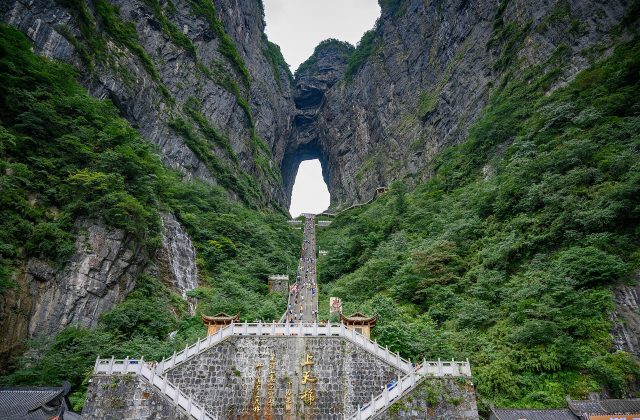
Tianmen Mountain rises directly behind the city of Zhangjiajie in Hunan, and it is a separate site, with a separate…
7 tickets & tours
China
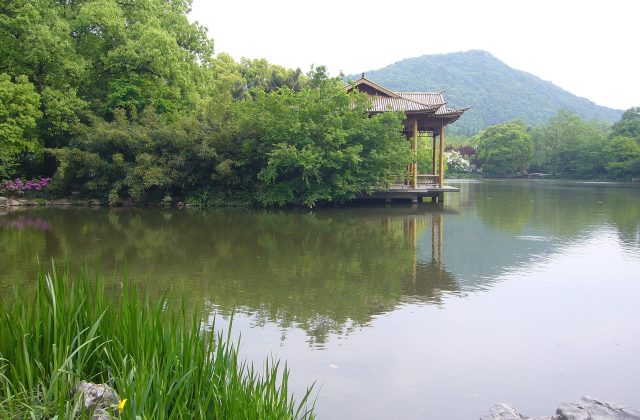
Xixi is a wetland of ponds, canals and wooded dykes in the western suburbs of Hangzhou, the capital of Zhejiang…
2 tickets & tours
China
Wolong, the crouching dragon, is the oldest and most famous of China's giant panda reserves, a great tract of…
1 ticket or tour