
Ranthambore National Park
Rajasthan, India
Ranthambore is India's most famous tiger reserve and the easiest to reach, three hours by train from Jaipur and…
147 tickets & tours
Wetland Park · Rajasthan · India
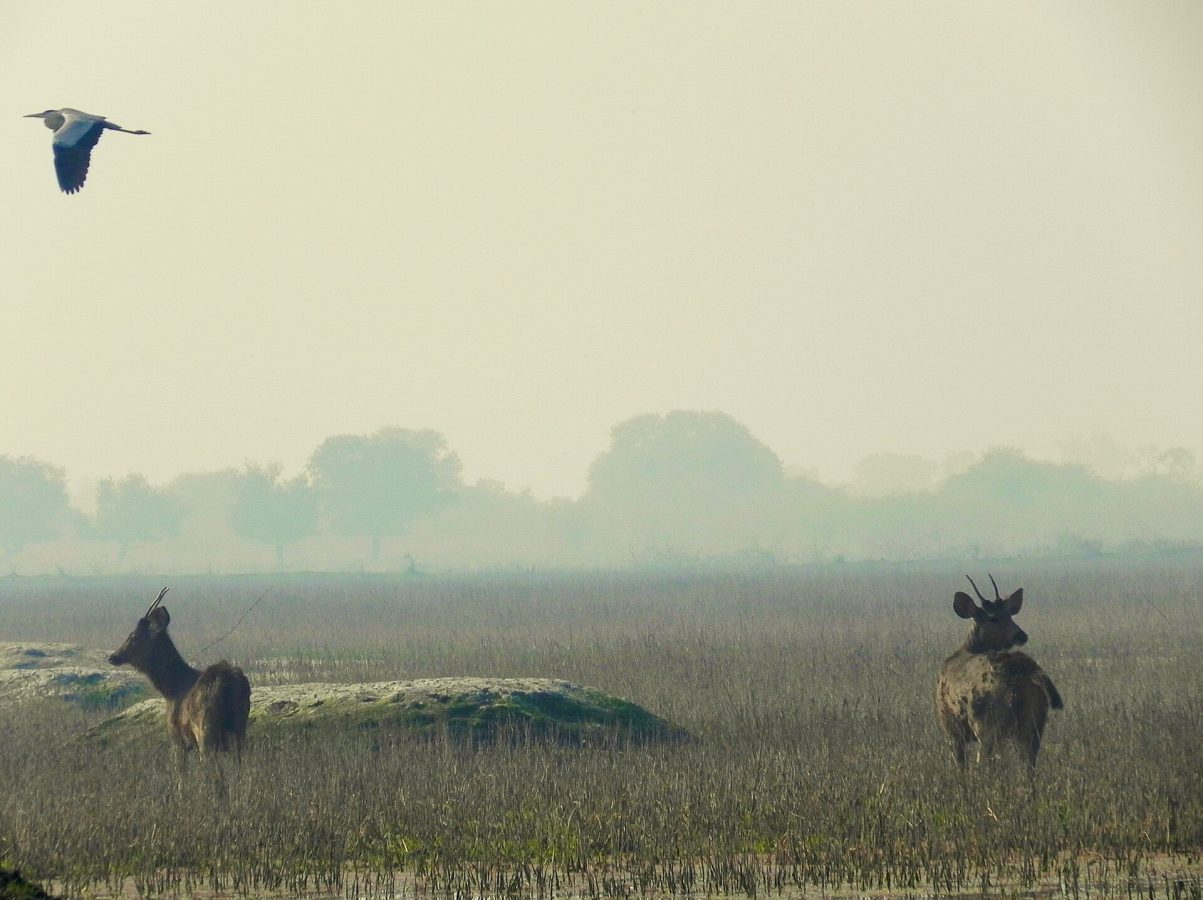
Photo: Nikhilchandra81, CC BY-SA 3.0
Keoladeo, still widely known as the Bharatpur bird sanctuary, lies on the edge of the town of Bharatpur in eastern Rajasthan, on the main road between Agra, an hour and a quarter away, and Jaipur, about four hours, close to Fatehpur Sikri, and it therefore fits neatly into the Golden Triangle as a half-day stop or a night's stay; several of the tours sold are in effect one-way transfers between Agra and Jaipur with two or three hours in the park on the way. The arrangements at the gate are particular. Entrance is by ticket, with a considerably higher price for foreigners, and no motor vehicles are allowed beyond the barrier: visitors walk, hire a bicycle, or take one of the cycle-rickshaws licensed by the park, which charge an official hourly rate. The rickshaw is the way to do it.
The men who pedal them have been trained by the forest department, many have worked here for thirty or forty years, carry binoculars, know every roost and nest and the English names of four hundred birds, and will stop and point out an owl asleep in a tree fork or a python sunning itself that a visitor alone would never find; it is one of the best-value guiding arrangements in Indian wildlife tourism, and a tip is deserved. For serious birdwatchers a licensed naturalist guide with a telescope can be hired in addition, by the hour. In the months when the water is high, small boats are poled along the channels at dawn. Two to three hours cover the central road to the Keoladeo temple and back; a full day, from sunrise, allows the side trails and the drier country in the south.
Live dates and prices from GetYourGuide. Free cancellation on most tickets.
The park covers only 29 square kilometres, a shallow saucer of land at the meeting of the Gambhir and Banganga rivers, and it is almost wholly artificial. In the 1890s the Maharaja of Bharatpur, inspired by duck shoots he had seen in England, had earth dykes and sluices built to hold the monsoon flood in a chain of shallow marshes, and from 1902 the place became the most famous duck shoot in India, to which viceroys, princes and generals were invited; stone tablets near the temple record the bags, the largest being 4,273 birds shot in a single day in November 1938 by the party of the viceroy, Lord Linlithgow. The ornithologist Salim Ali campaigned for its protection; it became a sanctuary in 1956, though the maharaja kept shooting rights until 1972, a national park in 1982, and a World Heritage Site in 1985. About a third of it is wetland, the rest dry grassland, thorn scrub and woodland of babul and kadam trees, and more than 370 species of birds have been recorded.
From about August to October, after the monsoon, the babul trees standing in the water hold one of the great heronries of the world, thousands of nests of painted storks, open-billed storks, spoonbills, white ibis, egrets, herons, cormorants and darters, crowded together and deafening. From October, the wintering birds arrive from central Asia and Siberia: bar-headed geese, which cross the Himalaya, greylags, tens of thousands of ducks of many species, common cranes, pelicans, harriers and eagles, including imperial, steppe and greater spotted. The Siberian crane, the park's most celebrated visitor, came here to winter for centuries; two hundred were counted in the 1960s, and the last pair was seen in 2002. The tall, grey, red-headed sarus crane, the world's tallest flying bird, is resident. Nilgai, sambar, spotted deer, wild boar, golden jackals, rock pythons and a few fishing cats share the park. It depends entirely on water released from a dam and piped in, and in drought years, several in the 2000s, it has dried up almost completely.
The park is open daily from sunrise to sunset, about 6 am to 6 pm in summer and 6.30 am to 5 pm in winter. August to October is the season of the breeding colonies, hot, humid and green; November to February is the peak, for the wintering migrants, with cool, often foggy mornings, when it is best to be at the gate at opening for the light and the activity;
by March the visitors are leaving, and from April to June it is extremely hot, 45 degrees, and much of the water is gone, though resident birds and mammals are easy to see at the remaining pools. Ask about water levels if planning a trip around the park. Allow half a day, or a night in Bharatpur for a dawn start. Fatehpur Sikri is half an hour away, Agra an hour and a quarter, the Deeg palace an hour north, and Ranthambore four hours south.
Yes. GetYourGuide lists 4 tickets and tours for Keoladeo National Park, with live dates and prices and free cancellation on most of them.
The park is open daily from sunrise to sunset, about 6 am to 6 pm in summer and 6.30 am to 5 pm in winter.
Allow half a day, or a night in Bharatpur for a dawn start.
Keoladeo National Park covers 28.7 km².
Keoladeo National Park was established in 1982.
Keoladeo National Park receives about 147 000 a year (2017).
Keoladeo National Park is in Rajasthan, India. The map on this page shows the exact spot.
Rajasthan, India
Ranthambore is India's most famous tiger reserve and the easiest to reach, three hours by train from Jaipur and…
147 tickets & tours
Rajasthan, India
Desert National Park covers a great tract of the Thar desert in the far west of the Indian state of Rajasthan,…
No online ticket
