Safari Park · Central African Republic
Manovo-Gounda St Floris National Park
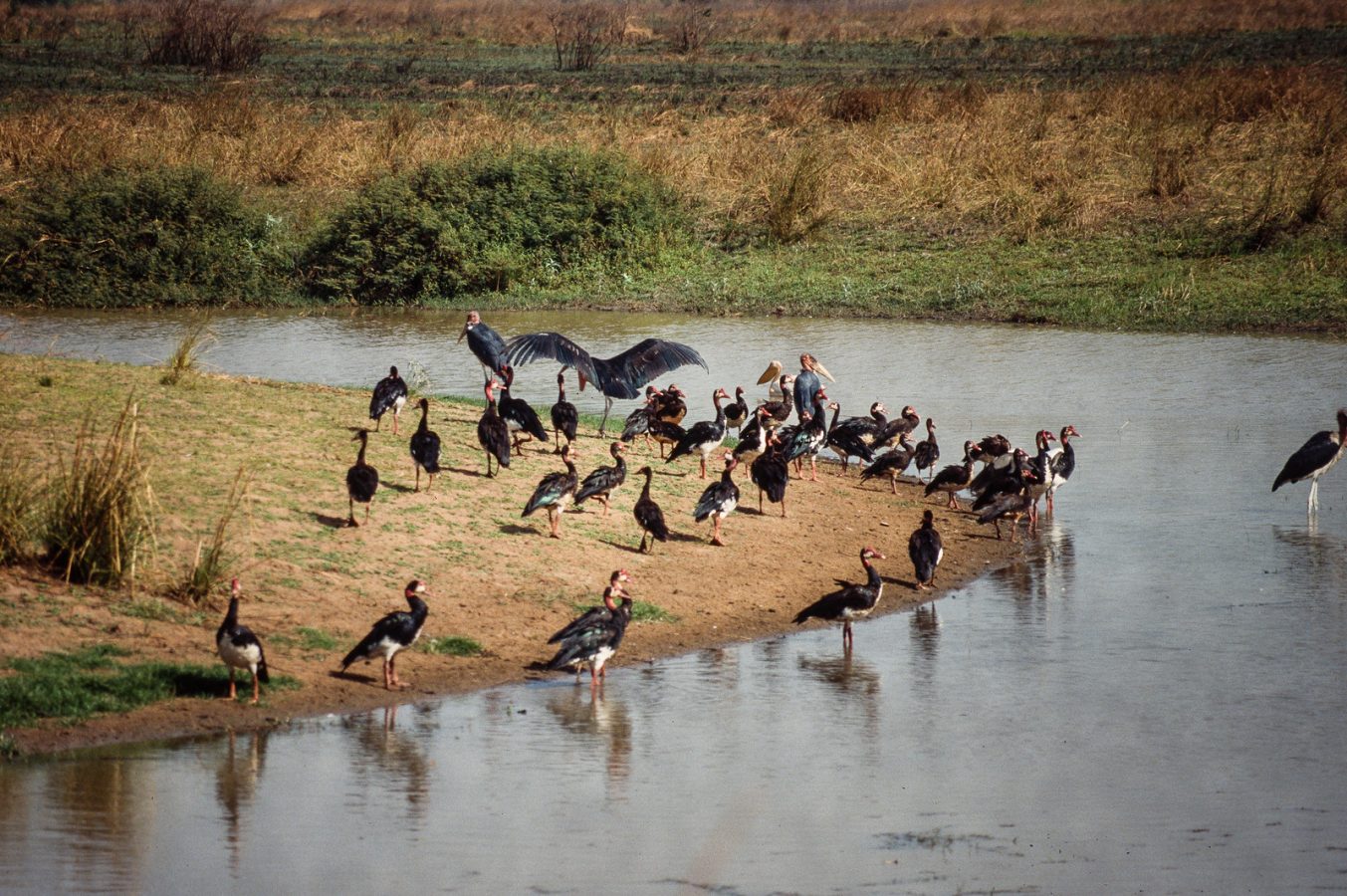
Photo: Garoa larrañeta, CC BY-SA 4.0
- Type
- Safari Park
- Area
- 17 400 km²
- Founded
- 1979
- Elevation
- 425 m above sea level
- UNESCO
- World Heritage Site
- Tickets
- No online ticket listed
Manovo-Gounda St Floris National Park tickets and tours: which one to book
Manovo-Gounda St Floris is a vast park in the far north of the Central African Republic, along the border of Chad, and it has to be described with complete frankness: it cannot, at present, be visited, and it has not been visited by ordinary travellers for many years. The prefecture of Bamingui-Bangoran, in which it lies, has been outside the effective control of the central government for most of the period since the civil war began in 2012, armed groups, highway robbers, heavily armed poachers from neighbouring countries and transhumant herders with their cattle move through it freely, and every foreign government advises in the strongest terms against all travel to the region and, in most cases, to the country as a whole. There are no lodges, no functioning tracks, no guides, no scheduled flights and no tour operators.
In the 1980s and 1990s, when conditions were somewhat better, the park was reached by chartered light aircraft from Bangui, the capital, some eight hundred kilometres to the south, or by a journey of several days by four-wheel-drive vehicle in the dry season to the town of Ndele, and a handful of safari camps operated in and round it, serving mainly the clients of big-game hunting concessions in the adjoining reserves; a development programme financed by the European Union maintained tracks, guard posts and an airstrip. All of that has gone. This entry is therefore included for the sake of completeness, because the park remains on the World Heritage list and is among the largest protected areas in Central Africa, and in the hope that it may one day be accessible again. Those who wish to see the wildlife of the Central African Republic in reasonable safety go instead to the rainforest reserve of Dzanga-Sangha, in the far south-west, which is managed with international support and has a lodge, habituated gorillas and a famous forest elephant clearing.
Visiting Manovo-Gounda St Floris National Park: what you will see
The park was created in 1979, by the merging and extension of older reserves, the St Floris park dating from 1933, covers about 17,400 square kilometres, an area larger than Northern Ireland or the state of Connecticut, and was inscribed as a World Heritage Site in 1988. It takes its name from three rivers, the Manovo, the Koumbala and the Gounda, which, with the Vakaga, flow northwards across it from the sandstone massif of the Bongo, a rugged plateau in the south, through wooded savanna, to the great flood plains of the Bahr Aouk and the Bahr Kameur, on the Chadian border, which are inundated each rainy season and are covered in the dry months with lush grassland, pools and marshes. The park thus spans the transition between the humid savannas of Central Africa and the dry Sahel, and its significance, when it was listed, lay in the wealth of its fauna, which combined the species of East and West Africa as hardly anywhere else: some thousands of elephants, the black rhinoceros, of a western race, giraffes, buffalo in great herds, the giant eland, the largest of all antelopes, roan, hartebeest, topi, kob, waterbuck, reedbuck, hippopotamuses, lions, leopards, cheetahs, wild dogs, and, on the flood plains, a spectacle of water birds, pelicans, storks, the shoebill, cranes and ducks, among some 320 species. What followed is one of the saddest stories in African conservation.
From the 1970s onwards, and with increasing ferocity in the 1980s, the north of the country was invaded each dry season by large, organised, mounted gangs from Sudan and Chad, armed first with spears and then with automatic weapons, who slaughtered the elephants for ivory and the rhinoceroses for horn; the black rhinoceros was exterminated by the mid-1980s, and the elephants, estimated at perhaps thirty-five thousand in the north of the country in the 1970s, were reduced to a few thousand by the 1990s and to a remnant of perhaps a few dozen today. In 1997, after four members of the park's staff had been shot dead and the security of the region had collapsed, UNESCO placed the park on the list of World Heritage in danger, where it has remained ever since. Surveys from the air in 2005, 2010 and 2017 showed that the populations of almost all the large mammals had fallen by three quarters or more, that the giraffe and several antelopes had all but vanished, and that cattle, in hundreds of thousands, driven south by herders from the Sahel in search of grazing, now occupy the plains for half the year, bringing disease, fire and hunters. Since about 2019 an international conservation organisation has worked with the government in a block of the north-east of the country adjoining the park, where wildlife survives in better numbers, and any recovery of Manovo-Gounda will depend on such efforts and on peace.
Manovo-Gounda St Floris National Park: best time to go, seasons and hours
For the record, the climate is that of the Sudanian savanna, with a single rainy season from about June to October, when a metre or more of rain falls, the rivers flood and the country is impassable, and a long dry season from November to May, hot, 30 to 40 degrees, dusty under the harmattan from December to February, during which the grasslands are burned and animals formerly concentrated on the northern flood plains, the months from January to April being those in which the park was visited when that was possible.
None of this has any practical bearing at present. Travellers should not attempt to reach the park. Those interested in its fate can follow the reports of the World Heritage Centre, which reviews its state of conservation each year, and the work of the organisations active in the Chinko area and in the national parks of neighbouring Chad, above all Zakouma, which suffered the same onslaught, was brought back under protection from 2010, and now offers, in safety, the kind of wildlife spectacle that Manovo-Gounda once did.
Before you go
Do I need to book Manovo-Gounda St Floris National Park in advance?
No online tour for Manovo-Gounda St Floris National Park is listed on GetYourGuide; entry, where it is charged, is paid at the gate or through the park authority. Nearby parks with bookable tours are listed on this page.
How big is Manovo-Gounda St Floris National Park?
Manovo-Gounda St Floris National Park covers 17 400 km².
When was Manovo-Gounda St Floris National Park founded?
Manovo-Gounda St Floris National Park was established in 1979.
Where is Manovo-Gounda St Floris National Park?
Manovo-Gounda St Floris National Park is in Central African Republic. The map on this page shows the exact spot.