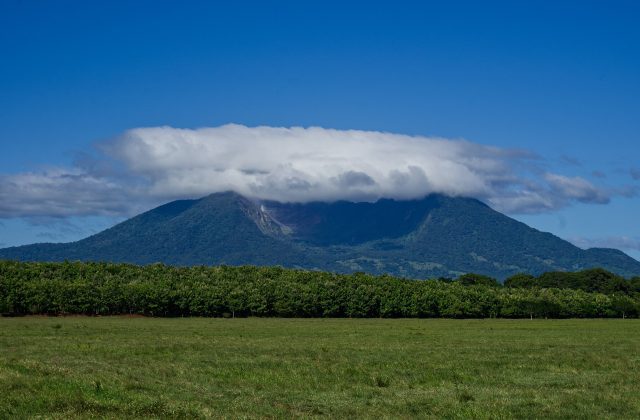
Mombacho Volcano Nature Reserve
Nicaragua
Mombacho is the broad, forested, cloud-capped volcano that stands behind the colonial city of Granada in Nicaragua, its…
7 tickets & tours
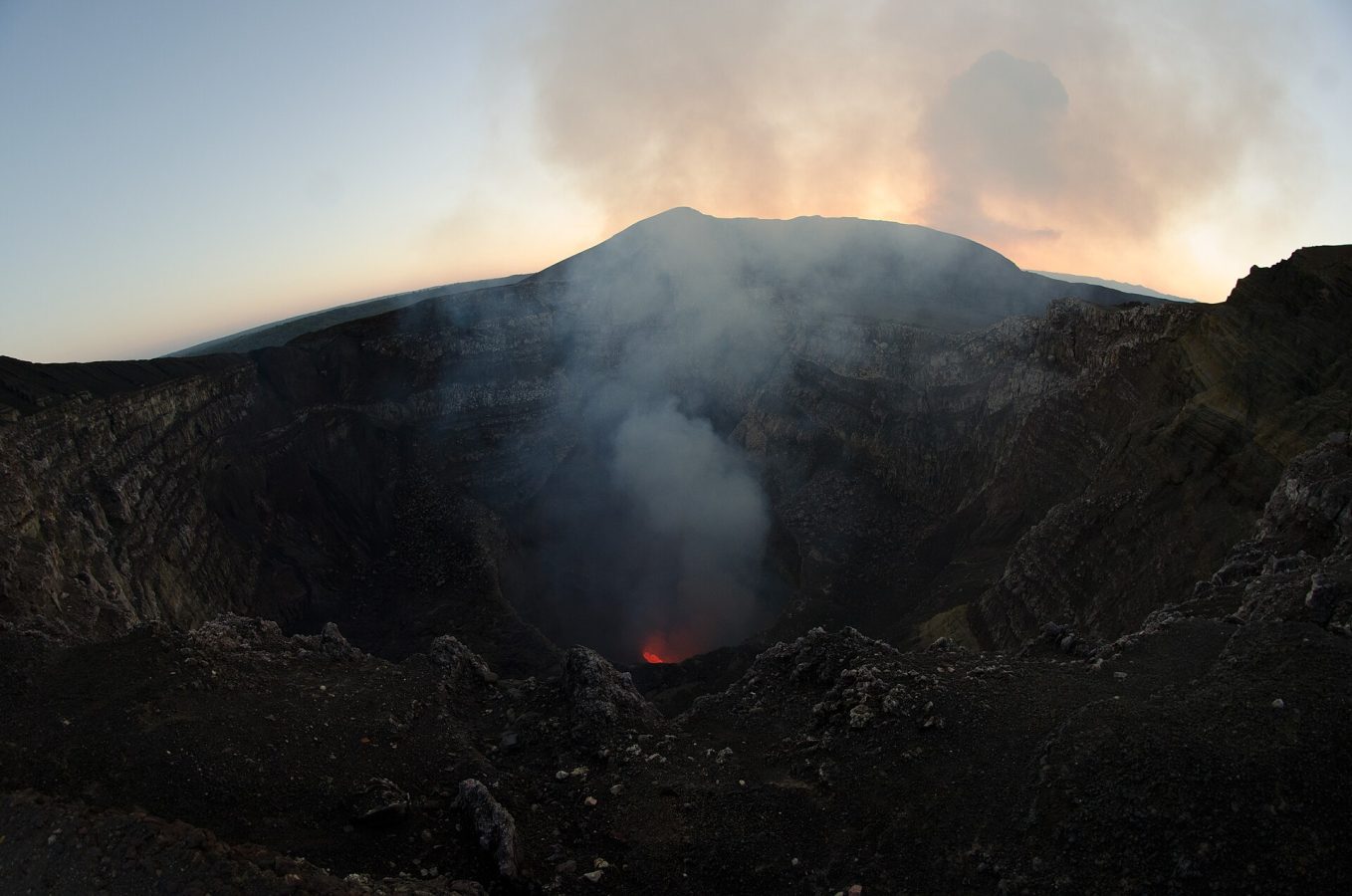
Photo: Acana689, CC BY-SA 4.0
Masaya is one of the very few volcanoes in the world where an ordinary visitor can drive to the edge of an active crater and look down at molten lava, and it stands beside the main highway between Managua, the capital of Nicaragua, about twenty-three kilometres and half an hour to the north-west, and the colonial city of Granada, about the same distance to the south-east. The park's entrance is on the highway, where the fee is paid, higher for foreigners and higher again at night, and from the gate a paved road of about five kilometres climbs through lava fields, past a small, informative museum and visitor centre, to the Plaza de Oviedo, a car park on the very lip of the Santiago crater.
By day, visitors may stay as long as they like, within reason, given the gas, looking into the smoking pit, climbing the steps to the cross on the rim and, when the trails are open, walking with a park guide to the extinct craters nearby or to a lava tube inhabited by bats. The visit for which Masaya has become famous is the night tour: from about 5.30 in the afternoon, cars are admitted in convoy, in strict order of arrival, and each group is allowed about fifteen to twenty minutes at the rim in the dark, when the glow of the lava lake, invisible in daylight, lights up the gas plume and the crater walls in red and orange, and on good nights the churning lava itself can be seen far below. Queues at weekends are long. The tours from Granada and Managua supply the transport and a guide, and the day versions commonly add the craft market of Masaya town, the potters' village of San Juan de Oriente and the viewpoint of Catarina over the Apoyo lagoon.
Live dates and prices from GetYourGuide. Free cancellation on most tickets.
The park was created in 1979, the first national park in Nicaragua, and covers about fifty-four square kilometres within an old caldera, eleven kilometres long and six wide, formed by eruptions of extraordinary violence several thousand years ago, whose floor is occupied by two volcanoes, Masaya and Nindirí, fused together, with five craters between them, and by the Laguna de Masaya under the caldera wall. The volcano is a low, broad basaltic shield, only 635 metres high, which is part of why it is so accessible. The Santiago crater, which formed in 1853 between the two older cones, some six hundred metres across and several hundred deep, has been the active vent ever since, breathing out one of the largest continuous plumes of sulphur dioxide of any volcano on earth, which drifts westward and has killed the vegetation and corroded the tin roofs for kilometres downwind; and since late 2015 it has held a lake of lava at the bottom, rising, falling, crusting over and sometimes draining from view.
The indigenous Chorotega held the volcano to be the dwelling of a prophetess and are said to have thrown sacrifices into the crater. The Spaniards called it the Mouth of Hell: in 1529 the Mercedarian friar Francisco de Bobadilla planted a cross on the rim to exorcise it, of which the present Cruz de Bobadilla is the successor, and in 1538 another friar, Blas del Castillo, convinced that the glowing matter was molten gold, had himself lowered into the crater on ropes with a bucket on a chain, and brought up slag. The chronicler Oviedo described the crater in 1529, and gave his name to the car park. The last lava flow to leave the caldera was in 1772, and its black field is crossed by the entrance road. In the crater walls nest colonies of green parakeets, chocoyos, which have adapted to air that would poison other birds and fly in and out of the fumes at dusk. The surrounding dry forest shelters coyotes, deer, iguanas, monkeys and, in the lava tubes, bats by the thousand.
The park is open daily from about 9 am to 4.30 pm, and again from about 5.30 to 8 pm for the night visit. The glow of the lava depends on the level and state of the lake, which varies from month to month, and on the gas and the weather, low cloud or heavy rain being fatal to the view; the dry season, from November to April, gives the clearest nights.
The authorities close the rim, or the whole park, when activity or gas emissions rise, sometimes for weeks, so check in Granada or Managua before going. Park facing downhill, as instructed, and do not linger if the fumes catch your throat; asthmatics should take care. Allow two hours. Masaya's craft market is ten minutes away, the Apoyo lagoon and Catarina twenty minutes, Granada half an hour, and Managua half an hour.
Yes. GetYourGuide lists 3 tickets and tours for Masaya Volcano National Park, with live dates and prices and free cancellation on most of them.
By day, visitors may stay as long as they like, within reason, given the gas, looking into the smoking pit, climbing the steps to the cross on the rim and, when the trails are open, walking with a park guide to the extinct craters nearby or to a lava tube inhabited by bats.
Masaya Volcano National Park covers 54.7 km².
Masaya Volcano National Park was established in 1979.
Masaya Volcano National Park is in Nicaragua. The map on this page shows the exact spot.
Nicaragua
Mombacho is the broad, forested, cloud-capped volcano that stands behind the colonial city of Granada in Nicaragua, its…
7 tickets & tours