Sintra-Cascais Natural Park
Portugal
Sintra-Cascais Natural Park is the green wedge of hills and Atlantic coast on Lisbon's doorstep, and it contains…
201 tickets & tours

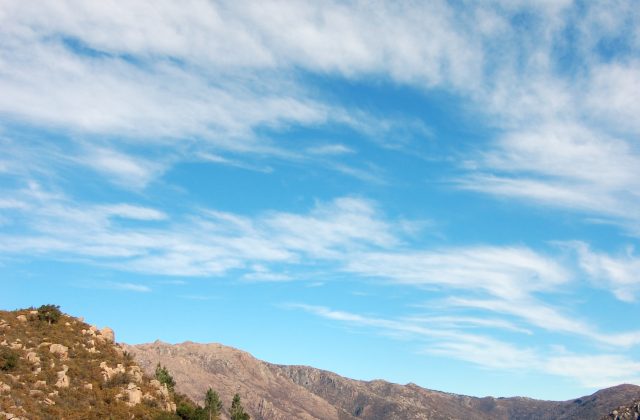
Photo: Ana Lucas Marinho, CC BY-SA 4.0
Montesinho occupies the extreme north-eastern corner of Portugal, the high, remote region of Tras-os-Montes, the land behind the mountains, along the Spanish frontier north of the walled city of Braganca, and it is one of the largest protected areas in the country and one of the least visited. Braganca, which serves as the base, with hotels, restaurants and a medieval citadel, is about two and a quarter hours by motorway from Porto and its airport, the opening of a long tunnel through the Marao range having ended its old isolation, and an hour and a half from Zamora in Spain. There are no gates, fees or formal visitor circuit, and although a few buses serve the villages, a car is indispensable, the pleasure of the park being precisely to drive its empty roads from village to village, stopping to walk. The park falls into two halves.
The eastern part, reached directly from Braganca, is the more visited: the road north leads through Franca to the village of Montesinho itself, at over a thousand metres, all granite houses with wooden balconies, from which tracks climb to the bare, boulder-strewn summit plateau and its reservoirs; and another road leads north-east to Rio de Onor, the most curious village in Portugal. The western part, round the small town of Vinhais, is greener, more deeply cut by rivers, and has a biological park with native animals and lodgings. Marked walking routes, of a few hours each, start from many of the villages, and the park office in Braganca supplies leaflets; but waymarking can be patchy, and the guided day tours from Braganca, by four-wheel drive with short walks, visits to a village bakery or a smokehouse, and the chance of seeing deer at dusk, are a good way to reach the heart of the area. Several villages have restored houses to rent.
Live dates and prices from GetYourGuide. Free cancellation on most tickets.
The natural park was created in 1979 and covers about 742 square kilometres of the Montesinho and Coroa ranges, between 438 and 1,486 metres, and, being a natural park and not a national one, it is a lived-in landscape: some nine thousand people inhabit its ninety-two villages, a number that falls every year as the young leave, and what it protects is as much a way of life as a fauna. The country is a rolling plateau of schist, dark and slaty, with outcrops of granite on the heights, cut by the clear, cold valleys of the Sabor, the Macas, the Baceiro and the Tuela, which hold trout and otters. Its vegetation is a meeting of the Atlantic and the Mediterranean: on the higher and moister ground grows one of the largest forests of Pyrenean oak in Europe, with heaths of heather, broom and gorse that turn the hills purple and yellow in spring, while the warmer valleys carry holm oak, and round every village stand groves of enormous, ancient sweet chestnuts, the soutos, for this district produces a large part of the chestnuts of Portugal, which were the staple food here before the potato. Because the human population is so thin and the wild prey abundant, red deer, roe deer and wild boar being all numerous, the park holds one of the densest populations of the Iberian wolf in the peninsula, several packs living within it, together with wildcats, genets, the rare Pyrenean desman in the streams, golden eagles, black storks, hen harriers, the eagle owl and some 120 breeding birds.
The villages are built of the local stone, schist roofed with slate or granite, with communal ovens, water mills, forges and washing places, many still in use, and round Braganca one sees the dovecotes of the region, whitewashed and horseshoe-shaped, built to supply both squabs and manure. Rio de Onor is a single village that happens to lie on both sides of the frontier, the Spanish half being called Rihonor de Castilla, whose inhabitants spoke their own dialect, ignored the border, and governed themselves by a system of communal property and labour, holding in common the pastures, the mill, the oven, the bull and the wine, fining offenders in measures of wine, and recording debts by notches cut in a stick; an anthropologist's study of 1953 made it famous, and traces of the system survive. In midwinter, between Christmas and Epiphany, the young bachelors of villages such as Varge and Aveleda put on masks of wood or tin and fringed costumes of many colours, and run through the streets as devils, rattling bells and chasing the girls, a rite far older than the saints' days to which it is attached; a museum of the mask in Braganca explains it. The cooking is of smoked sausages, above all the alheira, of kid, of chestnuts and of beef from the local breed.
The park is open all year. The local proverb gives the climate as nine months of winter and three of hell, which is an exaggeration in both directions, but winters are cold, with frost, fog and some snow on the heights from December to February, and July and August are hot and dry, above 30 degrees. The best times are May and June, when the heaths are in flower and the oaks in fresh leaf, and the autumn, from late September to early November, when the chestnut and oak woods turn gold, the chestnuts are gathered and roasted at village fairs, mushrooms abound, and the roaring of the red deer stags can be heard at dusk in late September and October.
The masked winter festivals take place from 25 December to 6 January and at Carnival. Fill the tank in Braganca, and expect little English. Allow two days. Braganca, with its castle and Romanesque town hall, is at the gate, Miranda do Douro and the Douro canyon an hour and a quarter south-east, and Puebla de Sanabria in Spain forty-five minutes north.
Yes. GetYourGuide lists one ticket or tour for Montesinho Natural Park, with live dates and prices and free cancellation on most of them.
The park is open all year.
Montesinho Natural Park covers 742 km².
Montesinho Natural Park was established in 1979.
Montesinho Natural Park is in Portugal. The map on this page shows the exact spot.
Portugal
Sintra-Cascais Natural Park is the green wedge of hills and Atlantic coast on Lisbon's doorstep, and it contains…
201 tickets & tours
Portugal
Madeira Natural Park covers about two thirds of the island, including nearly everything above the villages, so a visit…
67 tickets & tours
Portugal
Arrábida is the limestone ridge and coast south of Lisbon between Setúbal and Sesimbra, forty minutes from the city,…
37 tickets & tours
Portugal
Serra da Estrela is the highest range in mainland Portugal, in the centre of the country about three hours from Lisbon…
30 tickets & tours
Portugal
Peneda-Gerês is the only national park in Portugal, in the mountains of the far north on the Spanish border, an hour…
24 tickets & tours
Portugal
Ribeira dos Caldeirões is a small, green, landscaped valley with waterfalls and watermills in the parish of Achada, on…
5 tickets & tours