Plitvice Lakes National Park
55 km away
Plitvice is the park of sixteen terraced lakes in the Croatian interior, two hours from Zagreb and three from Split or…
20 tickets & tours
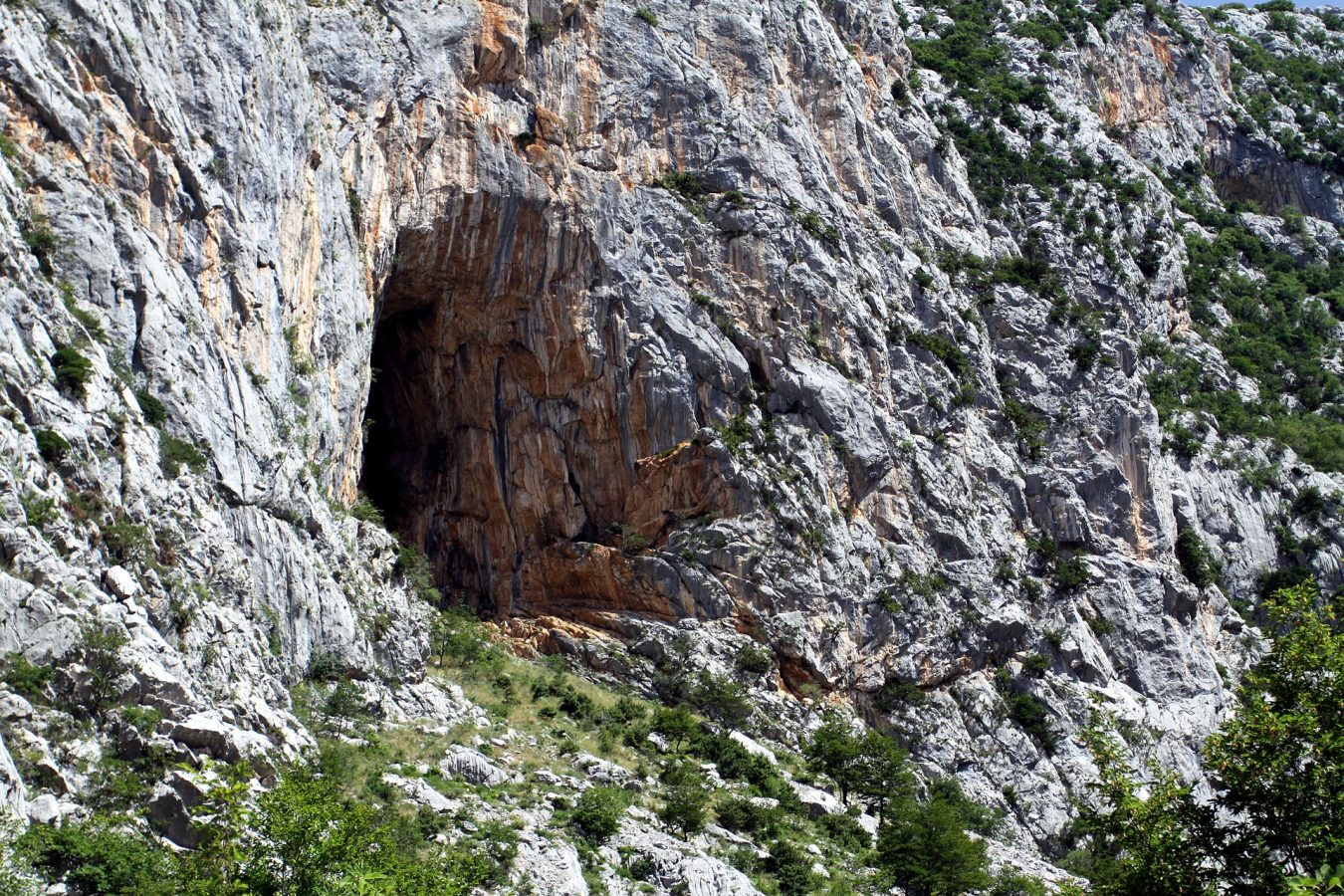
Photo: Chmee2, CC BY 3.0
Paklenica lies on the Adriatic coast of Croatia, in northern Dalmatia, where the southern end of the Velebit mountains rises straight from the sea, and it consists essentially of two great limestone gorges cut into the mountain wall, which is why it is at once the country's foremost rock-climbing centre and one of the easiest of its mountain parks to visit. Its entrance is at the seaside village of Starigrad-Paklenica, forty-five kilometres, about forty-five minutes by road, north-east of the city of Zadar, which has an airport served by many low-cost flights, and close to an exit of the motorway between Zagreb, three hours away, and Split, two; buses along the coast road stop in the village, which has hotels, apartments and campsites on the shore. Tickets are bought at the reception building on the edge of the village or at the inner entrance, two kilometres up a narrow road, where the car park lies, and are sold for one, three or five days, with a separate permit for climbers.
From the car park a broad, well-made path, paved in places, leads up the floor of the canyon of Velika Paklenica, the larger gorge, between cliffs on which climbers can be watched at every hour, climbs steadily beside the stream through beech and pine wood, and reaches in about two hours the forester's hut at Lugarnica, where drinks and simple food are sold in the season, and a little further the mountain hut, the base for those who go on to the peaks. This walk, of four to five hours there and back, is what most visitors do. A side path, steep and stony, climbs in an hour and a half from the canyon to the Manita Pec cave, which is shown by a guide on certain days. Anica Kuk, the great rock face, can be ascended by a marked walking route with a scramble at the top. The smaller gorge, Mala Paklenica, is wild, trackless in parts and takes a full, demanding day. The summits of Velebit are reached in two days.
Live prices from GetYourGuide for tours whose route includes this park. Free cancellation on most of them.
Paklenica was declared a national park in 1949, one of the first in Yugoslavia, after an earlier attempt in 1929, and covers 95 square kilometres; it forms part of the Velebit biosphere reserve, recognised in 1978, and in 2017 its beech forests were added to the World Heritage Site of the ancient and primeval beech forests of Europe. Velebit is the longest mountain of Croatia, a wall of limestone running for 145 kilometres along the coast, and here, at its southern end, it reaches its highest points, Vaganski Vrh, 1,757 metres, and Sveto Brdo, 1,753, within five or six kilometres of the sea. Two torrents, rising on the high plateau, have sawn through this wall to the coast, producing the gorges of Velika and Mala Paklenica, the great and the little, some fourteen and twelve kilometres long, with walls that in the narrowest part of the larger canyon stand only fifty metres apart and rise vertically for four hundred metres; the name is thought to come from paklina, the resin of the black pine, which the local people tapped for medicine, for lighting and for caulking boats, though others derive it from pakao, hell. Anica Kuk, a single buttress of grey limestone 350 metres high, 712 metres above the sea, is the centrepiece of Croatian climbing: the first route on it was made in 1940, and the park now has some six hundred equipped routes of every grade, from short training climbs beside the path at the canyon's mouth to long and serious lines on the great face, and an international gathering of climbers is held each spring, around the first of May.
The contrast of climates within a few kilometres, from the hot, dry, stony Mediterranean coast to cool forests and snowy, wind-scoured heights, gives the park a flora of more than a thousand species, with many plants found only on Velebit, among them the Velebit degenia, a small yellow-flowered crucifer of the scree that is the emblem of the mountain. Forests cover two thirds of it, black pine on the rocky slopes, beech, in splendid old stands, in the upper valleys, and dwarf mountain pine near the tops. Griffon vultures formerly nested on the cliffs and are being encouraged to return; golden eagles, short-toed eagles, peregrines and eagle owls breed, and the forests shelter brown bears, wolves, lynx, wildcats, chamois, which were reintroduced, and roe deer, together with the nose-horned viper, the most venomous snake in Europe, which walkers should watch for on sunny paths. In the early 1950s, at the height of Yugoslavia's fear of a Soviet invasion, a complex of tunnels was secretly excavated in the wall of the canyon as a shelter for Tito and his government; long sealed and forgotten, it has been opened as a visitor centre. The canyon also stood in for the American West in the German films of the Winnetou novels, shot here in the 1960s, which retain a devoted following.
The park is open all year. Spring, from April to June, and autumn, from September to early November, are the best seasons for walking and climbing, with mild temperatures, the stream running, flowers in spring and fine colours in the beech woods in October. July and August are very hot, 30 to 35 degrees on the coast, and although the canyon offers shade in the morning, the climb is tiring in the heat, and one should start as early as possible, carrying at least a litre and a half of water each; this is also the season of the greatest crowds, since holidaymakers come up from the beaches.
In winter the coast is mild but the mountain is under snow from about December to April, and the bura, a violent, cold, gusting wind that pours down from Velebit to the sea, particularly between November and March, can make walking impossible and closes the coast road and the bridges. Wear proper shoes, since the polished limestone is slippery. Allow a day, or two with the peaks. Zadar is forty-five minutes away, the islands of Pag and Nin near by, and the Zrmanja canyon half an hour to the south.
55 km away
Plitvice is the park of sixteen terraced lakes in the Croatian interior, two hours from Zagreb and three from Split or…
20 tickets & tours
62 km away
Telašćica is a long, sheltered bay cut into the southern end of Dugi Otok, the long island, the outermost of the large…
6 tickets & tours
69 km away
The Una is a river of astonishing emerald clarity in the north-western corner of Bosnia and Herzegovina, along the…
2 tickets & tours
Yes. GetYourGuide sells tickets and guided tours whose route includes Paklenica National Park; live prices are shown on this page.
The park is open all year.
Allow a day, or two with the peaks.
Paklenica National Park covers 95.1 km².
Paklenica National Park was established in 1949.
Paklenica National Park is in Croatia. The map on this page shows the exact spot.
Croatia
Krka is the waterfall park behind Šibenik, an hour from Split and an hour and a half from Zadar, and the day trip from…
34 tickets & tours
Croatia
Plitvice is the park of sixteen terraced lakes in the Croatian interior, two hours from Zagreb and three from Split or…
20 tickets & tours
Croatia
The Kornati are the archipelago of bare islands off the Dalmatian coast between Zadar and Šibenik, and the park is…
18 tickets & tours
Croatia
The Brijuni islands lie two kilometres off the Istrian coast opposite the fishing port of Fažana, fifteen minutes north…
10 tickets & tours
Croatia
Telašćica is a long, sheltered bay cut into the southern end of Dugi Otok, the long island, the outermost of the large…
6 tickets & tours
Croatia
Biokovo is the wall of grey limestone that rises straight behind the beaches of the Makarska Riviera in central…
5 tickets & tours