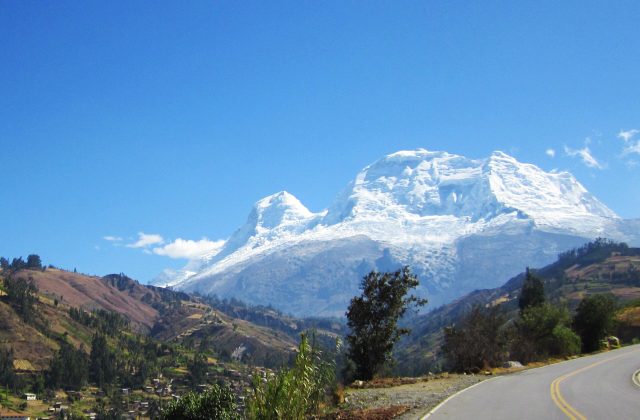
Huascaran National Park
184 km away
Huascaran National Park covers almost the whole of the Cordillera Blanca, the white range, in the department of Ancash…
2 tickets & tours
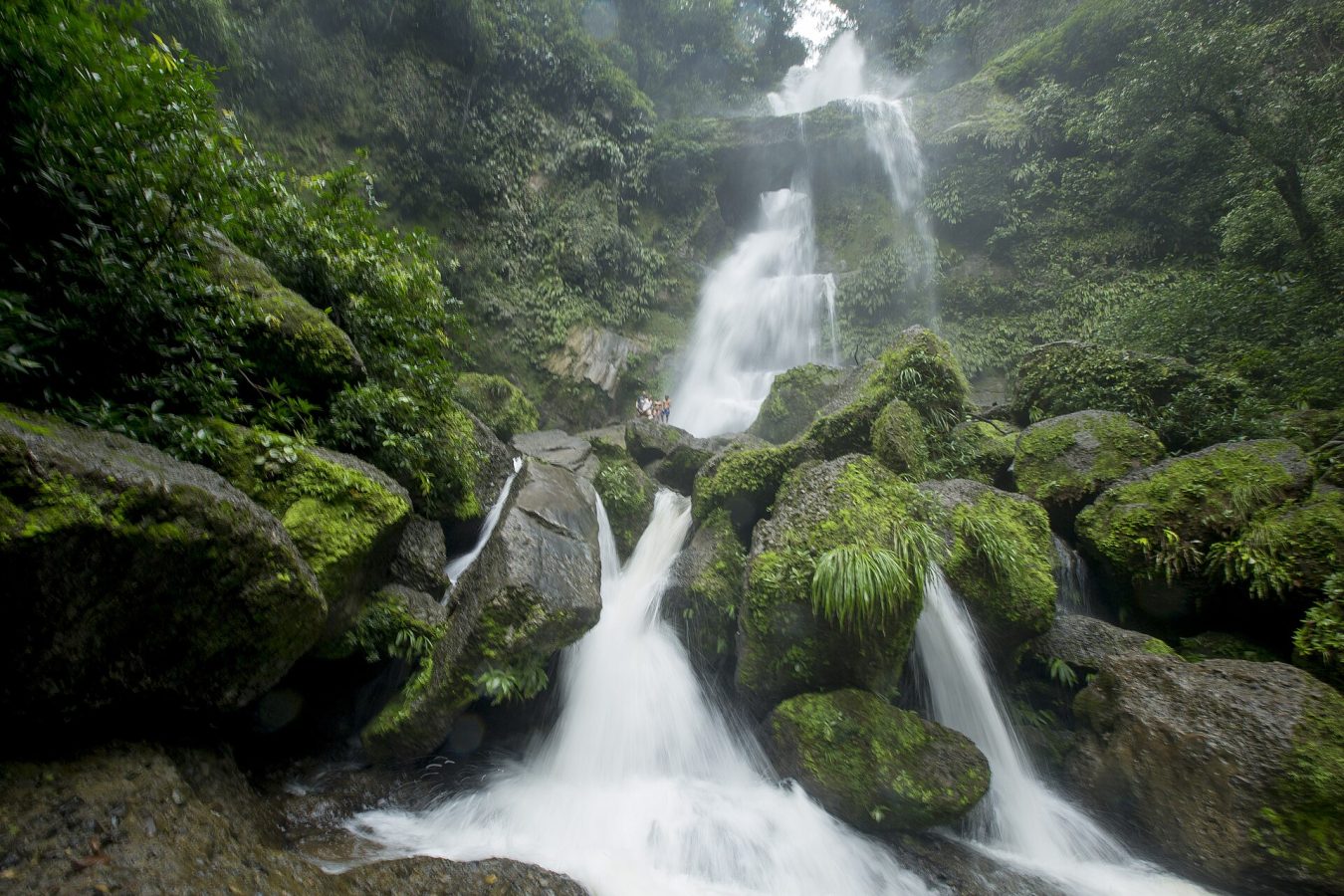
Photo: Martín Chumbe, CC BY-SA 4.0
Rio Abiseo lies on the eastern slope of the Andes in northern Peru, in the department of San Martin, where the mountains fall away towards the Amazon basin, and it is a park that combines cloud forest of extraordinary biological richness with the ruins of a lost pre-Inca civilisation. It is also, for practical purposes, closed. Since shortly after its creation, the Peruvian authorities have barred tourism from almost the whole of it, in order to protect both its extremely fragile high-altitude ecosystems and its archaeological sites, which deteriorate rapidly once the vegetation that covers them is cleared, and entry to the core is granted only to scientific expeditions with special authorisation from the state protected areas service and the ministry of culture. The famous ruins of Gran Pajaten, therefore, cannot be visited, and anyone who offers to take tourists there is acting illegally.
What has been opened, since the early 2000s, is a small area on the park's eastern, lower edge, in the valley of the Abiseo river itself. This is reached from the town of Juanjui, on the Huallaga river, which can be reached by road in about three hours from Tarapoto, a city with daily flights from Lima: from Juanjui one drives to the river port of Huicungo and continues by motorised canoe for several hours up the Huayabamba and the Abiseo to a control post and simple lodging, from which guided walks lead through lowland and foothill rainforest to waterfalls, among them the Breo falls, a cascade of several tiers in the forest, to river beaches and to caves with pre-Hispanic burials. The trips, of three to five days, are arranged with local associations and a few agencies in Juanjui and Tarapoto, who obtain the permit, and they are rough, with camping or basic shelters. Those who want to see Chachapoya ruins should go to Kuelap, several hours away in the neighbouring department of Amazonas.
The national park was created in 1983 and covers about 2,745 square kilometres, the whole basin of the Abiseo river, between 350 and 4,200 metres, and in 1990 it was inscribed as a World Heritage Site for its natural value, to which its cultural value was added in 1992, making it one of the few mixed sites in the Americas. Its range of altitude takes in at least seven distinct climatic zones, from the high, cold, wet grassland of the paramo, with glacial lakes, through elfin forest and montane cloud forest, which covers most of it, draped in mosses, ferns, bromeliads and orchids and wrapped in mist for most of the year, down to humid tropical forest, and because these mountain forests served as a refuge for plants and animals during the dry periods of the ice ages, they are exceptionally rich in species found nowhere else. The most celebrated is the yellow-tailed woolly monkey, a large, mahogany-coloured monkey with a yellow underside to its tail, the biggest mammal confined to Peru, which was known from a few skins and was believed extinct until it was rediscovered in 1974; it is critically endangered, and the park is one of its few strongholds. The spectacled bear, the mountain tapir, the northern pudu, the jaguar, the giant armadillo, the long-whiskered owlet, one of the smallest and rarest owls in the world, the Andean cock-of-the-rock and the golden-plumed parakeet are among more than nine hundred species of animals recorded, and scientists who are admitted continue to find frogs, rodents and orchids new to science.
The human story is as remarkable. Between about AD 800 and the Inca conquest of around 1470, these seemingly uninhabitable forested ridges, between 2,500 and 4,000 metres, were densely settled by people of the Chachapoya culture, the warriors of the clouds, who built stone towns, terraces, roads and cliff tombs, and thirty-six sites have been recorded in the park. The best known is Gran Pajaten, on a narrow ridge at 2,850 metres above the Montecristo river, a group of some twenty-six circular stone buildings on terraces, up to fifteen metres across, whose outer walls are decorated with mosaics of slate, set in relief, representing seated human figures with feathered headdresses, birds with outstretched wings and geometric friezes. It was found in 1963 by villagers from Pataz, on the western side of the mountains, and was made famous two years later by the American explorer Gene Savoy, who claimed the discovery; the clearing of the vegetation for early film crews and visitors did such damage to the stonework that the site was closed. Near by, at Los Pinchudos, tombs built into a cliff face are adorned with carved wooden figures hanging beneath the eaves.
In the accessible eastern sector the climate is that of the high jungle, warm, 22 to 30 degrees, and wet, with rain possible at any time of year; the driest and most practical months are from about May to September, when the rivers are lower, the trails firmer and the canoes can travel more safely, while from November to April heavy rains swell the Huayabamba and the Abiseo, make navigation difficult or dangerous and may close the area. In the high western part of the park, which visitors do not reach, it is cold, misty and rainy for most of the year.
Insect-borne diseases, including malaria, dengue and leishmaniasis, occur in the lowlands, and long clothing, repellent and a mosquito net are needed, together with rubber boots, waterproofs, a water filter and a vaccination against yellow fever. Permission must be arranged in advance through the park office in Juanjui. Allow four to five days from Tarapoto. The waterfalls and lakes round Tarapoto, and, further afield, Kuelap and the Gocta falls near Chachapoyas, are the other sights of the region.
184 km away
Huascaran National Park covers almost the whole of the Cordillera Blanca, the white range, in the department of Ancash…
2 tickets & tours
No online tour for Rio Abiseo National Park is listed on GetYourGuide; entry, where it is charged, is paid at the gate or through the park authority. Nearby parks with bookable tours are listed on this page.
Allow four to five days from Tarapoto.
Rio Abiseo National Park covers 2 724 km².
Rio Abiseo National Park was established in 1983.
Rio Abiseo National Park is in Peru. The map on this page shows the exact spot.
Peru
Manu is the Amazon park reached from Cusco, and it is visited only on organised expeditions of three to eight days,…
35 tickets & tours
Peru
Huascaran National Park covers almost the whole of the Cordillera Blanca, the white range, in the department of Ancash…
2 tickets & tours
