Manu National Park
Peru
Manu is the Amazon park reached from Cusco, and it is visited only on organised expeditions of three to eight days,…
35 tickets & tours
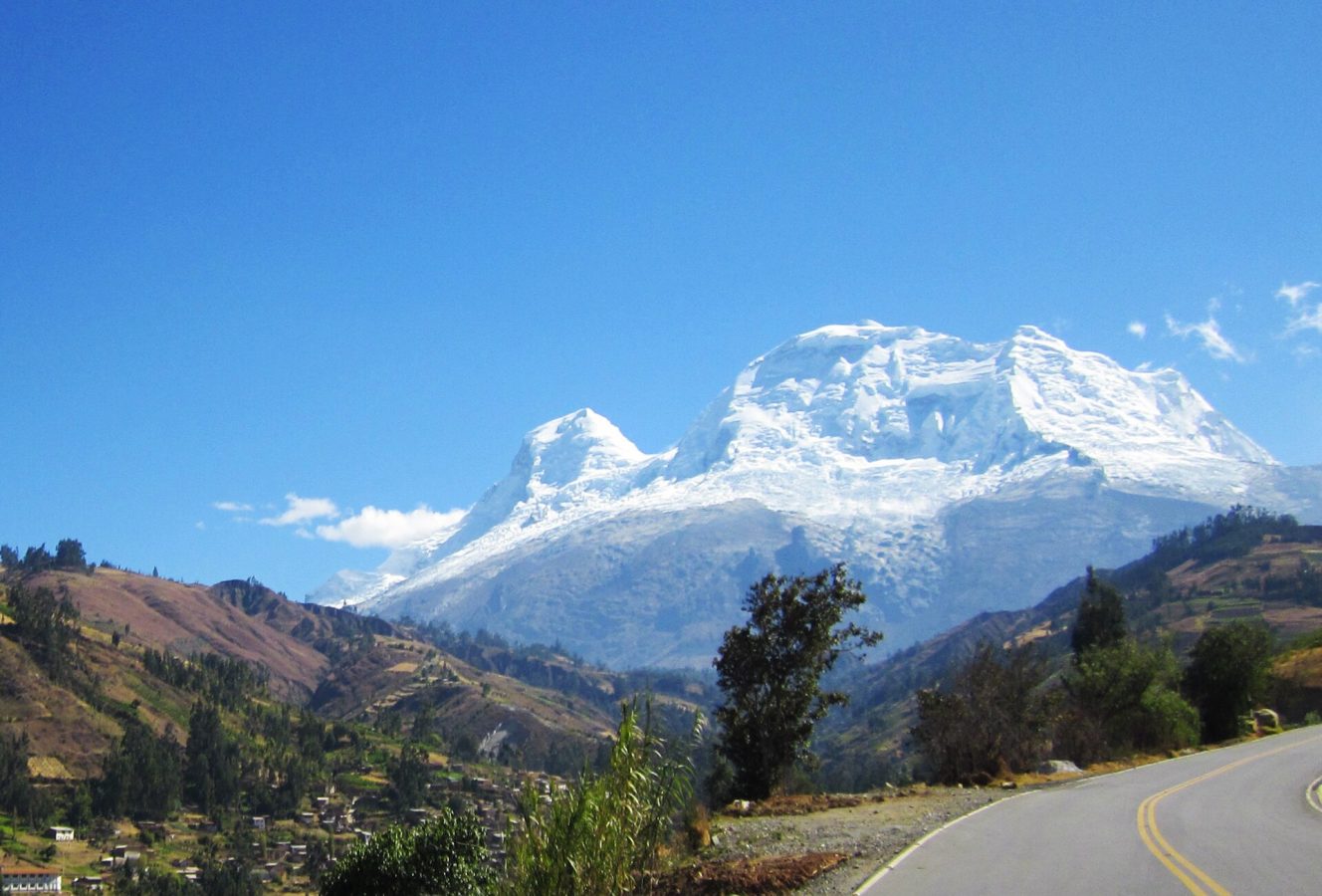
Photo: Ondando, CC BY-SA 4.0
Huascaran National Park covers almost the whole of the Cordillera Blanca, the white range, in the department of Ancash in northern Peru, and its gateway is the unlovely but well-equipped town of Huaraz, at 3,050 metres, eight hours by comfortable overnight bus from Lima; flights are irregular. Huaraz is the capital of Andean mountaineering and trekking, full of agencies, gear shops and guides, and nearly everything in the park is done as a day excursion or a trek from there. The day trips, sold by every agency for very little, go by minibus, leaving at five or six in the morning: to Laguna 69, the most popular, a turquoise lake at 4,600 metres under the ice wall of Chacraraju, reached by a walk of three hours up and two down from the roadhead at Cebollapampa, which is demanding chiefly because of the altitude; to the Llanganuco lakes, two milky blue-green lakes in a gorge between Huascaran and Huandoy, reached by road and requiring no walking;
to the Pastoruri glacier, at 5,000 metres, a short walk from the road; to Laguna Paron, the largest lake in the range, beneath the pyramid of Artesonraju; and to lakes Churup, Wilcacocha and Rajucolta, which serve for acclimatisation. The classic trek is Santa Cruz, fifty kilometres in four days over the Punta Union pass, 4,750 metres, with donkeys carrying the loads; longer are the Alpamayo circuit and the Huayhuash circuit, the latter in a separate range to the south. Climbers attempt Pisco, Vallunaraju, Ishinca and Urus, the standard introductory peaks of five to six thousand metres, with certified guides, and the serious go for Alpamayo, Tocllaraju and Huascaran itself. The park ticket, bought at the control posts, comes as a one-day, three-day or monthly pass. Two or three days' acclimatisation in Huaraz is essential before anything else.
Live dates and prices from GetYourGuide. Free cancellation on most tickets.
The park was created in 1975 and covers 3,400 square kilometres; it was declared a biosphere reserve in 1977 and a World Heritage Site in 1985. The Cordillera Blanca is the highest tropical mountain range in the world, 180 kilometres long and barely twenty wide, a granodiorite batholith pushed up along a great fault, with twenty-seven summits over six thousand metres, among them Huascaran, whose southern peak, at 6,768 metres, is the highest mountain in Peru and in the whole of the tropics, and Alpamayo, a fluted pyramid of ice which a German magazine poll in 1966 named the most beautiful mountain in the world. The range holds some six hundred glaciers, the largest mass of tropical ice on earth, and nearly three hundred lakes, most of them dammed by moraines, coloured turquoise, emerald or milky blue by the rock flour suspended in them. The glaciers are melting fast: the range has lost about forty per cent of its ice since the 1970s, Pastoruri, once used for skiing, has shrunk to a remnant and is now presented to visitors as a lesson in climate change, and the swelling lakes behind their unstable dams threaten the towns below, several having been lowered by tunnels and siphons.
The valley beneath, the Callejon de Huaylas, has a terrible history of such events. In 1941 a lake above Huaraz burst and killed some five thousand people; and on 31 May 1970 an earthquake of magnitude 7.9 shook loose the north face of Huascaran, and a mass of ice, rock and mud, moving at more than three hundred kilometres an hour, buried the town of Yungay and nearly all its eighteen thousand inhabitants within three minutes, leaving only the tops of four palm trees in the plaza and the cemetery hill, where ninety-two people had taken refuge; the site is now a memorial. The park's most remarkable plant is the Puya raimondii, the queen of the Andes, the largest bromeliad in the world, which grows for eighty or a hundred years, sends up a single flower spike ten metres tall bearing thousands of blossoms, and dies; stands of it grow in the Carpa sector on the way to Pastoruri. Forests of polylepis, the paper-barked queuna tree, grow higher than any other trees on earth. Spectacled bears, pumas, vicunas, the taruca deer, vizcachas, Andean condors, giant hummingbirds and torrent ducks live here.
The park is open all year, but the season for trekking and climbing is the Andean dry season, from May to September, with stable, clear, sunny days, nights well below freezing at the high camps, and June to August the busiest and most reliable; April and October are shoulder months with some afternoon showers; from November to March it rains or snows most afternoons, the passes are clouded and muddy, and only the day trips are worthwhile.
Sunburn is fierce at this altitude, and mountain sickness is the chief danger, so ascend gradually, drink coca tea and plenty of water, and do Laguna 69 last, not first. Allow five days to a week. Huaraz is the base, the Chavin de Huantar temple complex, a World Heritage Site three thousand years old, three hours away over the range, the memorial of Yungay an hour north, and Caraz beyond it the start of the Santa Cruz trek.
Yes. GetYourGuide lists 2 tickets and tours for Huascaran National Park, with live dates and prices and free cancellation on most of them.
Allow five days to a week.
Huascaran National Park covers 3 400 km².
Huascaran National Park was established in 1975.
Huascaran National Park is in Peru. The map on this page shows the exact spot.
Peru
Manu is the Amazon park reached from Cusco, and it is visited only on organised expeditions of three to eight days,…
35 tickets & tours
Peru
Rio Abiseo lies on the eastern slope of the Andes in northern Peru, in the department of San Martin, where the…
No online ticket