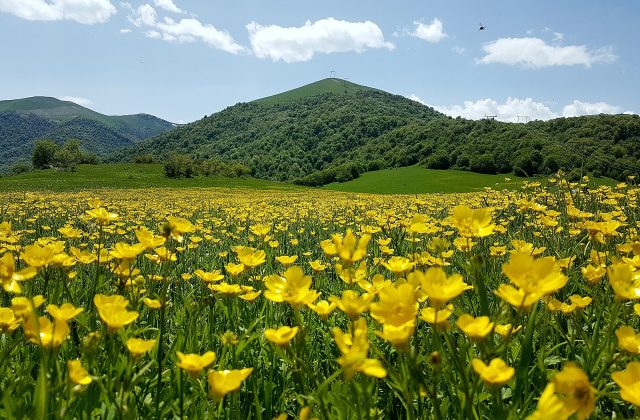
Dilijan National Park
Armenia
Dilijan is the forested hill country of north-eastern Armenia, an hour and a half to two hours from Yerevan by the road…
7 tickets & tours
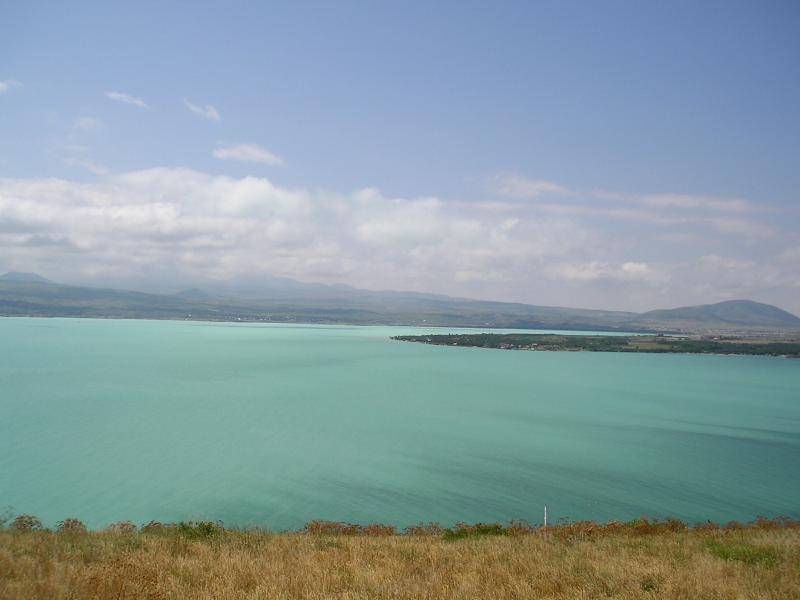
Lake Sevan is the great lake of Armenia, the blue eye of a landlocked country, which its people treat as their seaside, and the national park consists of the lake and a strip of its shores. It lies about sixty-five kilometres, an hour by a good motorway, north-east of Yerevan, and it is one of the two or three standard day excursions from the capital, nearly always combined with something else: the day tours couple it with the forested hill town of Dilijan and its monasteries, half an hour beyond the lake through a tunnel, and often with the ski resort of Tsaghkadzor and its Kecharis monastery, or with a zip-line park at Yenokavan.
Their one invariable stop at the lake is the Sevanavank monastery, on a peninsula near the town of Sevan at the north-western corner, where a flight of some two hundred steps climbs from the car park, past stalls selling crayfish, smoked fish, obsidian jewellery and knitted socks, to two small dark churches on a bluff with a view over the water. It is a fine sight, and it takes forty-five minutes; those who want more of the lake need a car. With one, the road round the western and southern shore leads to the monastery of Hayravank, on a rock above the water, and to Noratus, a village with the largest surviving field of khachkars, carved stone crosses, in the world. In July and August the beaches near the town of Sevan and along the north-eastern shore fill with Armenian families, with pedalos, jet skis, boat rides and lakeside restaurants serving grilled fish and crayfish kebab. There is no entrance fee for the lake; parking and beaches may charge.
Live dates and prices from GetYourGuide. Free cancellation on most tickets.
Sevan National Park was established in 1978 and covers about 1,500 square kilometres, of which the lake itself accounts for some 1,240; it is a Ramsar wetland. Sevan is one of the largest freshwater high-altitude lakes in the world, lying at about 1,900 metres above the sea in a basin ringed by bare volcanic mountains, the Geghama range to the west and the Areguni, Sevan and Vardenis ranges to the east and south, fed by twenty-eight rivers and streams and drained by one, the Hrazdan, which runs down through Yerevan. Its recent history is a cautionary tale of Soviet engineering. In the 1930s a plan was adopted to lower the lake by fifty metres, reducing it to a seventh of its area, in order to use the water for irrigation and a cascade of hydroelectric stations on the Hrazdan; by the time the scheme was halted in the 1950s and 1960s the level had fallen by about nineteen metres and the volume by more than two fifths, the shoreline had retreated, exposing a ring of pale lakebed, the water had turned turbid with algae, and the island on which Sevanavank stood had become the peninsula it is today.
Tunnels were bored through the mountains, the Arpa-Sevan tunnel of forty-eight kilometres completed in 1981 and the Vorotan tunnel in 2004, to bring in water from other rivers, and the level has been slowly raised again by several metres, drowning in turn the beaches, cafés and trees that had colonised the exposed shore. The lake's endemic trout, the ishkhan, the prince fish, in four races, two of which are now extinct and the others endangered by the fall in level and by the whitefish and crayfish introduced from Russia, is the dish every visitor is offered and ought to ask questions about. Sevanavank was founded in 874 by Princess Mariam, daughter of Ashot Bagratuni, soon to be the first king of medieval Armenia; two of its churches stand, of black tuff, with khachkars, one of them showing a rare crucifixion with a Mongol-featured Christ. The colony of the Armenian gull on the islets, the largest in the world, and the migrating waterfowl are the park's chief wildlife.
The park is open at all times. The lake's altitude makes it markedly cooler than Yerevan: when the capital is at 38 degrees in July and August, Sevan is at 22 to 25, which is its whole attraction for Armenians, though the water rarely exceeds 18 to 20 degrees and the sun at this height burns quickly. June and September are quieter and often beautiful; spring comes late, with wildflowers on the shores in May and June;
winter is long and harsh, with snow, fierce winds, temperatures far below zero, and the lake partly frozen in cold years, the monastery black against white. The wind rises on most afternoons. Allow two hours at the peninsula, a full day with Dilijan or Noratus. Dilijan is half an hour north, Tsaghkadzor twenty minutes west, the Selim pass and its caravanserai to the south, and Yerevan an hour.
Yes. GetYourGuide lists 3 tickets and tours for Sevan National Park, with live dates and prices and free cancellation on most of them.
There is no entrance fee for the lake; parking and beaches may charge.
There is no entrance fee for the lake; parking and beaches may charge.
The park is open at all times.
Allow two hours at the peninsula, a full day with Dilijan or Noratus.
Sevan National Park covers 1 501 km².
Sevan National Park was established in 1978.
Sevan National Park is in Armenia. The map on this page shows the exact spot.
Armenia
Dilijan is the forested hill country of north-eastern Armenia, an hour and a half to two hours from Yerevan by the road…
7 tickets & tours