
Pollino National Park
Calabria, Italy
Pollino is the largest national park in Italy, a block of mountains across the instep of the peninsula where Calabria…
11 tickets & tours
Forest Park · Calabria · Italy
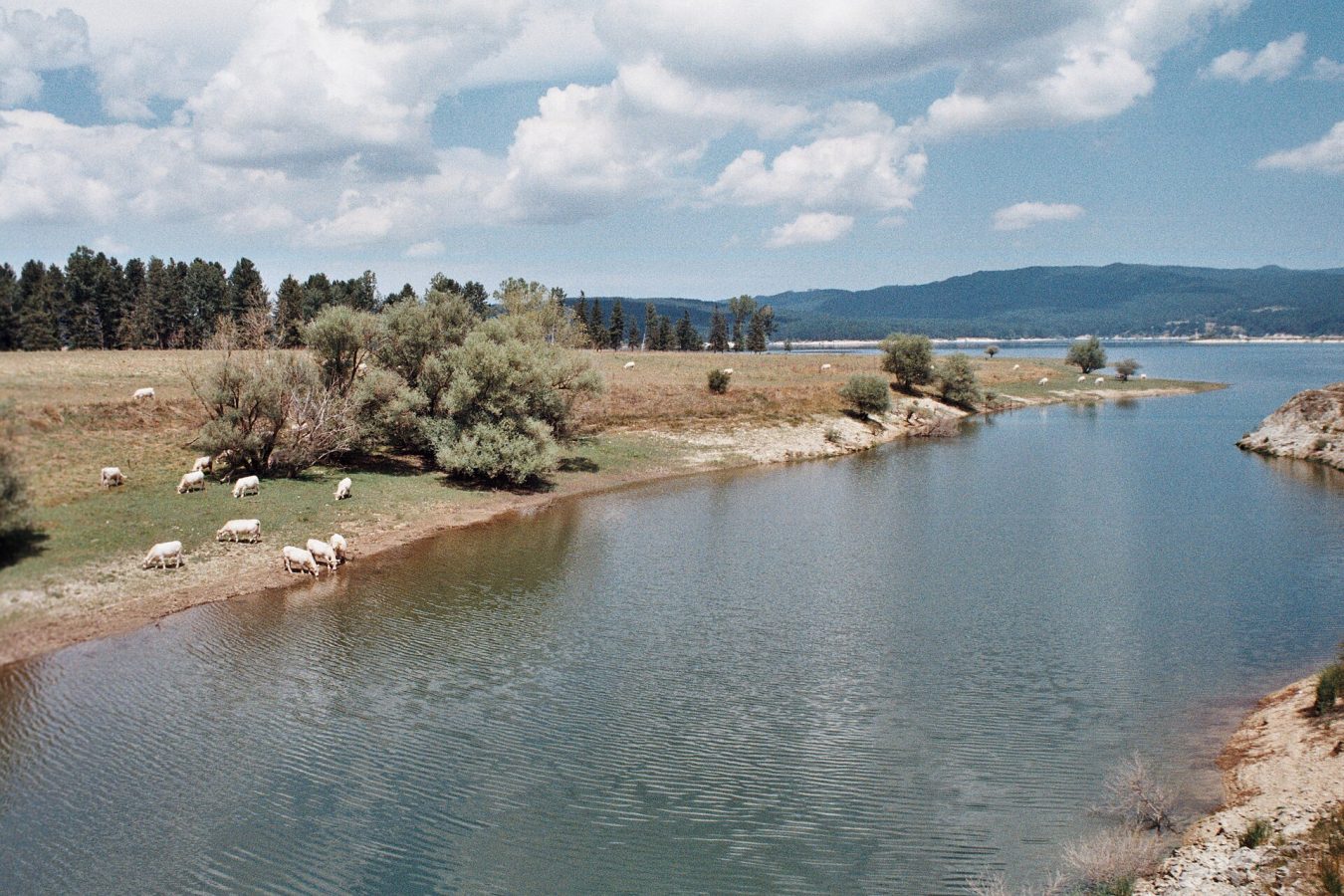
Photo: Ugo Leonetti, CC BY-SA 4.0
The Sila is a high, rolling plateau of forests, lakes and pastures in the middle of Calabria, the toe of Italy, a landscape so unlike the dry, Mediterranean coast an hour below it that Italians call it the great wood of Italy and compare it, with some justice, to Scandinavia. It is reached from the city of Cosenza, on the motorway from Naples, by a fast road that climbs in about half an hour to Camigliatello Silano, the main resort village, or from Crotone and Catanzaro on the Ionian side; Lamezia Terme, an hour and a half away, is the nearest large airport. There are no gates and no entrance fee, and a car is needed, since the plateau is large and public transport sparse.
The park's principal visitor centre, at Cupone on the shore of Lake Cecita, ten minutes from Camigliatello, has a museum, a botanical and geological garden, picnic areas, and a network of easy marked trails through the pines, some with enclosures and hides from which deer, roe deer, mouflon and wolves can be watched; a second centre is at the Garcea in the Sila Piccola. The nature reserve of the Giants of Fallistro, near the hamlet of Croce di Magara, managed by the Italian heritage trust FAI, charges a small fee for a short, level walk among the oldest trees. Local guides offer hiking excursions with a picnic, snowshoe walks and cross-country skiing in winter, mountain-bike and e-bike tours, horse riding, canoeing on the lakes and, on the fringes of the park, quad excursions; cooking classes and tastings introduce the plateau's produce. In summer, a restored steam train sometimes runs on the narrow-gauge Sila railway, one of the highest in Europe.
Live dates and prices from GetYourGuide. Free cancellation on most tickets.
The Sila National Park in its present form was established in 2002, enlarging and replacing the older Calabria national park of 1968, and covers about 740 square kilometres in the provinces of Cosenza, Catanzaro and Crotone; the plateau as a whole was designated a UNESCO biosphere reserve in 2014. The Sila is a block of ancient granite and metamorphic rock, geologically part of the Alps and not of the limestone Apennines, lifted into a tableland at an average of 1,300 metres, with gentle, rounded summits, of which Monte Botte Donato, 1,928 metres, in the Sila Grande, and Monte Gariglione, 1,765, in the Sila Piccola, are the highest; tradition divides it further into a Sila Greca in the north, settled by Albanian refugees in the fifteenth century. Four fifths of the park is forest. Its characteristic tree is the Calabrian pine, a local race of the Corsican or laricio pine, tall, straight and clean-trunked, which supplied the masts and the pitch of the Greek, Roman and later navies, mixed at higher levels with beech and silver fir.
At Fallistro stand fifty-eight colossal pines, planted, it is thought, around 1620 by the barons who owned the estate, some 350 to 400 years old, up to forty-five metres tall with trunks two metres across, the Giants of the Sila, along with great sycamore maples. The plateau's lakes, Cecita, Arvo and Ampollino, are all artificial, created between the 1920s and the 1950s for hydroelectricity, and look entirely natural, with wooded shores on which the snow lies into April. The air of the Sila has been measured as among the cleanest in Europe. The Apennine wolf, the park's symbol, never died out here even when it had vanished from most of Italy, and lives alongside roe and red deer, wild boar, wildcats, martens, otters, the black squirrel peculiar to southern Italy, the black woodpecker, goshawks and eagle owls. The plateau is cattle country, the home of the long-horned Podolica cow, from whose milk caciocavallo silano cheese is made, and it is famous for its potatoes, its porcini mushrooms, gathered by the ton each autumn, and its cured meats. San Giovanni in Fiore grew round the abbey founded in 1189 by the mystic Joachim of Fiore, whom Dante placed in Paradise.
The park is open at all times, and the visitor centres daily in summer and at weekends otherwise. Summer, from June to September, is the main season, when the plateau, at 20 to 25 degrees, is a refuge from the furnace of the Calabrian coast and fills with Italian families in August; autumn, from late September to early November, brings the beeches into colour and the mushroom hunters into the woods, and is the most beautiful time;
winter brings deep and reliable snow, surprising so far south, with downhill skiing at Camigliatello and Lorica and fine cross-country trails at Carlomagno; spring is late, green and empty. Nights are cool even in August. Allow two days. Cosenza and its old town are half an hour away, the Ionian coast and the castle of Le Castella an hour and a half, and Aspromonte and Pollino, Calabria's other national parks, to the south and north.
Yes. GetYourGuide lists 3 tickets and tours for Sila National Park, with live dates and prices and free cancellation on most of them.
There are no gates and no entrance fee, and a car is needed, since the plateau is large and public transport sparse.
There are no gates and no entrance fee, and a car is needed, since the plateau is large and public transport sparse.
The park is open at all times, and the visitor centres daily in summer and at weekends otherwise.
Sila National Park covers 737 km².
Sila National Park was established in 2002.
Sila National Park is in Calabria, Italy. The map on this page shows the exact spot.
Calabria, Italy
Pollino is the largest national park in Italy, a block of mountains across the instep of the peninsula where Calabria…
11 tickets & tours
Calabria, Italy
Aspromonte is the mountain at the very tip of the toe of Italy, a massif that rises from the Strait of Messina and the…
4 tickets & tours
