
Zaamin National Park
Uzbekistan
Zaamin is a mountain park in the Jizzakh region of eastern Uzbekistan, on the northern slope of the Turkestan range…
4 tickets & tours
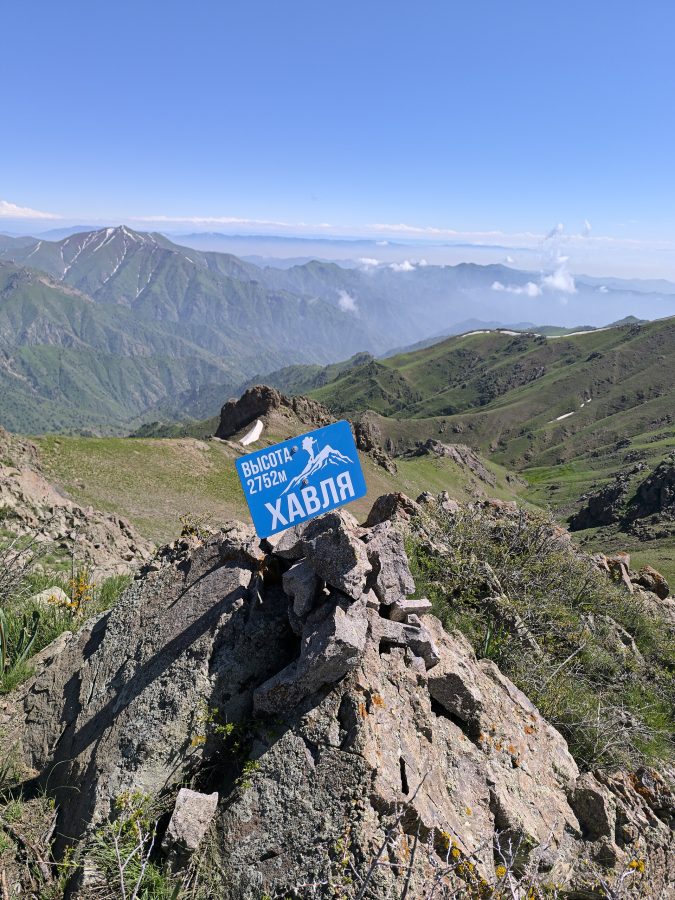
Photo: Antoshhh, CC BY-SA 4.0
Ugam-Chatkal is the mountain country of Uzbekistan, the western end of the Tien Shan, which rises abruptly from the plain eighty kilometres, an hour and a half by road, north-east of Tashkent, and it is where the people of that flat, hot city go to breathe; for the foreign visitor on the usual circuit of Samarkand, Bukhara and Khiva it offers a day or two of entirely different scenery. It is a very large area, with towns, resorts and a main road inside it, and there is no gate or general ticket, though the strict reserve within it is closed and some valleys near the borders with Kazakhstan and Kyrgyzstan require a permit. The standard day tour from Tashkent, by car with a driver and guide, makes a loop: up to the resort area of Chimgan, beneath Greater Chimgan, 3,309 metres, where an old Soviet chairlift operates; to Beldersay, with a longer chairlift or cable car to a ridge at about 2,900 metres;
to the modern ski and summer resort of Amirsoy, opened in 2019, with a gondola; and then down to the Charvak reservoir, a great turquoise lake ringed by mountains, for lunch, a swim or a boat ride from one of the beaches, before returning by the Chirchik valley. Walkers have a choice of short hikes, to the Gulkam canyon, a narrow gorge with waterfalls near Chimgan, to the petroglyphs of Beldersay, and to the Paltau waterfall and its cave above the Chatkal arm of the reservoir. The more adventurous tours go further, up the Pskem valley beyond the villages of Burchmulla and Nanai, to the Urungach lakes, known as the jade lakes, two pools of brilliant green dammed by rockfalls, reached by a rough road and an hour's walk, or a ride on a donkey hired from the villagers; this is border country, and the agency must obtain the permit some days in advance.
Live dates and prices from GetYourGuide. Free cancellation on most tickets.
The Ugam-Chatkal national park was established in 1990 and covers some 5,700 square kilometres of Tashkent province, taking in the ranges of the Ugam, the Pskem, the Koksu, the Chatkal and the Karzhantau and the valleys between them, from about 900 metres to 4,300; enclosed within it is the older Chatkal biosphere reserve, founded in 1947 and strictly closed to visitors, which has been a component of the World Heritage Site of the Western Tien Shan, shared with Kazakhstan and Kyrgyzstan, since 2016. The Western Tien Shan has a singular place in the history of what people eat. Its foothills and lower slopes carry open woodlands of wild fruit and nut trees, walnut, wild apple, pear, plum, cherry plum, apricot, almond, pistachio, hawthorn and vine, which are the ancestors or close relatives of many of the cultivated fruits of the temperate world, and above them grow forests of juniper, the archa, of three species, twisted, fragrant, slow-growing trees which may live a thousand years; higher still are subalpine meadows and rock. In April and May the slopes are covered with wild tulips, among them Greig's and Kaufmann's tulips, from which many garden varieties were bred in Holland, with eremurus, the foxtail lily, in tall spikes of white and pink, and with wild onions, irises and peonies.
The animals include the Siberian ibex, wild boar, roe deer, the Tien Shan brown bear, the wolf, the lynx, the stone marten, the porcupine, a very few snow leopards in the high Pskem, and Menzbier's marmot, the smallest of the marmots, which is found only in this corner of the Tien Shan; lammergeiers, Himalayan griffons, golden eagles, the blue whistling thrush and the paradise flycatcher are among the birds. The Charvak reservoir was created in 1970 by an earth and rock dam 168 metres high across the Chirchik river, below the junction of the Pskem, the Koksu and the Chatkal, to generate power and to water the fields of the Tashkent oasis, and it drowned a number of villages and archaeological sites. People have lived here for a very long time: in the Obi-Rahmat grotto, in the Paltau valley, archaeologists found stone tools and, in 2003, the teeth and skull fragments of a child some seventy thousand years old, with a puzzling mixture of Neanderthal and modern features. The rock engravings of Beldersay, of ibex, hunters and horsemen, date from the Bronze Age onwards.
The mountains can be visited all year, with quite different purposes. April to June is the best period for walking, with tulips and blossom in April and May, green slopes and full waterfalls; the high trails are free of snow from June. July and August are hot in the valleys, though ten degrees cooler than Tashkent, and are the season for Charvak, whose beaches and guesthouses are packed with holidaymakers at weekends, with heavy traffic on Sunday evenings.
September and October are clear, mild and golden, with the walnut and fruit harvest. From December to March, Amirsoy, Chimgan and Beldersay operate as ski resorts, with reliable snow from January. The reservoir is lowest in autumn and fullest in early summer. Carry your passport, since there are checkpoints on the roads. Allow a day, or two with a night at Charvak or Amirsoy. Tashkent is an hour and a half away, and the town of Gazalkent and the Khodjikent rock carvings lie on the road.
Yes. GetYourGuide lists 2 tickets and tours for Ugam-Chatkal National Park, with live dates and prices and free cancellation on most of them.
Allow a day, or two with a night at Charvak or Amirsoy.
April to June is the best period for walking, with tulips and blossom in April and May, green slopes and full waterfalls; the high trails are free of snow from June.
Ugam-Chatkal National Park covers 5 746 km².
Ugam-Chatkal National Park was established in 1990.
Ugam-Chatkal National Park is in Uzbekistan. The map on this page shows the exact spot.
Uzbekistan
Zaamin is a mountain park in the Jizzakh region of eastern Uzbekistan, on the northern slope of the Turkestan range…
4 tickets & tours