Weerribben-Wieden National Park
321 km away
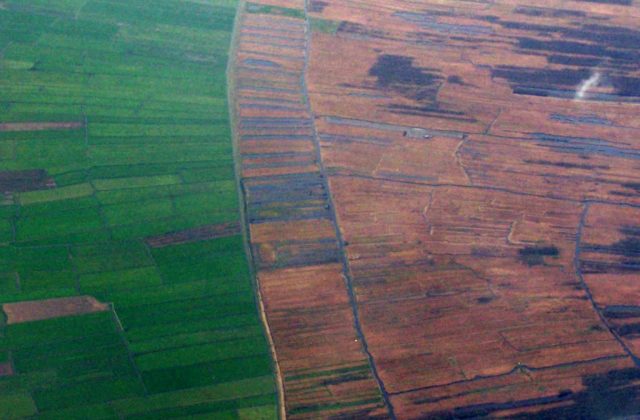
Weerribben-Wieden is a watery landscape of lakes, canals, reed beds, quaking bog and swamp forest in the north-west of…
1 ticket or tour
The Danish Wadden Sea National Park covers the south-western coast of Jutland, from the peninsula of Skallingen and the bay of Ho, near the port of Esbjerg, down to the German border, together with the three inhabited islands of Fano, Mando and Romo, and it should not be confused with the three German national parks that continue the same coast southwards, from whose harbours, Cuxhaven among them, the seal-bank cruises advertised under a similar name depart. Esbjerg is reached by train from Copenhagen in about three hours, and Billund airport is an hour away; a car, or a bicycle, the land being flat, is the way to get about. There are no gates or fees. The natural starting point is the Wadden Sea Centre at Vester Vedsted, ten kilometres south-west of the old cathedral town of Ribe, a striking thatched building with an excellent exhibition on the tides and the migrating birds, which organises guided activities throughout the year: walks out on to the sea bed at low tide, to find lugworms, cockles and shrimps;
oyster safaris, in the cold months, wading out in waders to beds of Pacific oysters, an invasive species of which anyone may gather as many as he can carry; seal safaris; and, in spring and autumn, evening trips to watch the starlings. From the same place, high-wheeled buses drawn by tractors cross six kilometres of tidal flats to the tiny island of Mando, which is cut off twice a day. Romo, the largest island, is reached by a causeway nine kilometres long, and has beaches so wide and firm that cars are driven and parked on them, with kite buggies and sand yachts at the southern end. Fano is reached by a ferry of twelve minutes from Esbjerg, and has the prettiest village, Sonderho, and good amber hunting after storms.
Live prices from GetYourGuide for tours whose route includes this park. Free cancellation on most of them.
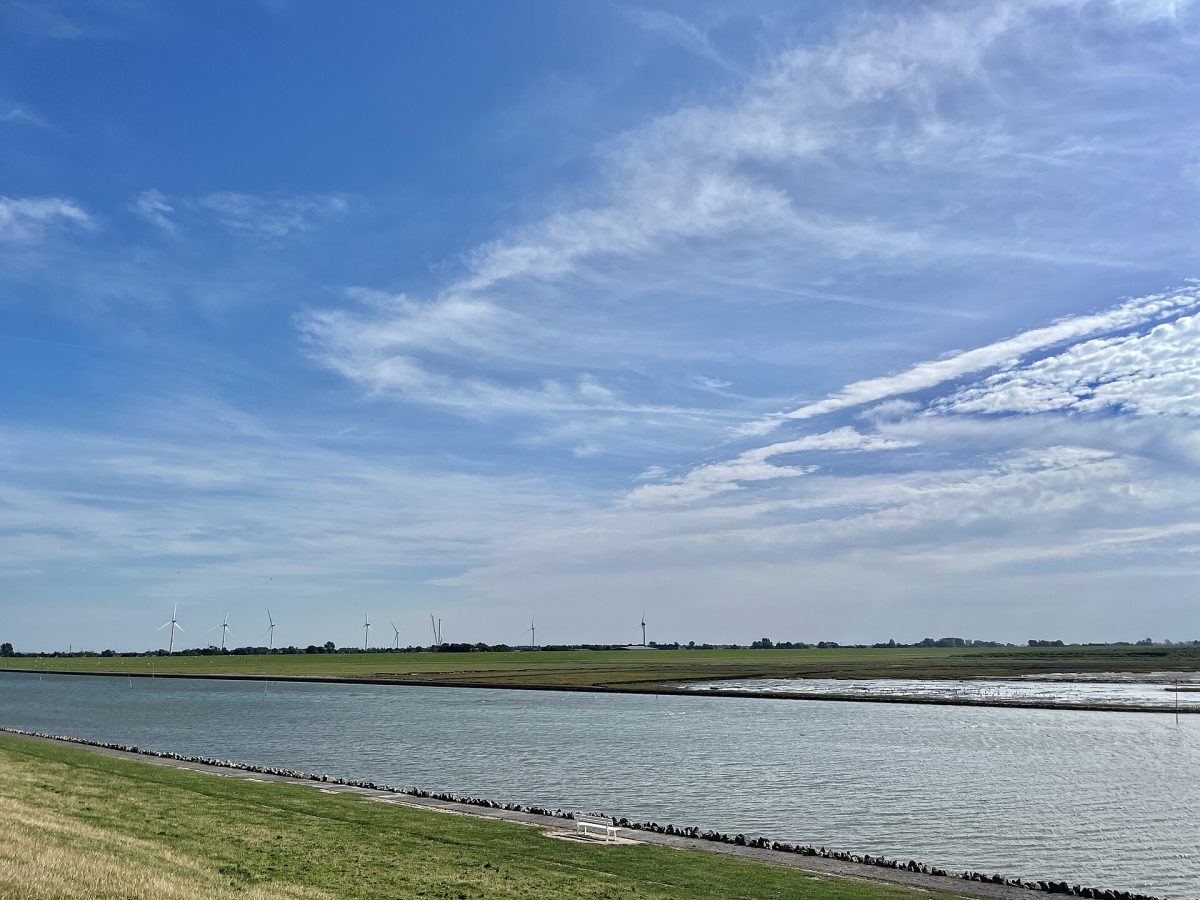
The national park was designated in 2008 and inaugurated in 2010, and with 1,459 square kilometres is by far the largest in Denmark proper; in 2014 the Danish section was added to the World Heritage Site of the Wadden Sea, inscribed in 2009 for the Dutch and German parts, which thus came to cover the whole of the largest unbroken system of intertidal sand and mud flats in the world, some five hundred kilometres of coast from Den Helder to Esbjerg. Twice a day the tide, with a range here of one and a half to two metres, withdraws for several kilometres, uncovering a grey-brown plain veined with channels, and twice a day it returns, faster than a person can walk in places, which is why nobody should venture far out without a guide or a knowledge of the tide table. The mud looks lifeless and is among the most productive habitats on the planet: a square metre may hold tens of thousands of mud snails, worms, shrimps and shellfish, feeding on the algae and the organic matter that each tide delivers, and on this the birds depend. The Wadden Sea is the indispensable refuelling station of the East Atlantic flyway, used each year by ten to twelve million waders, ducks and geese travelling between breeding grounds in the Arctic, from Canada to Siberia, and wintering grounds in western Europe and Africa: knots, dunlins, bar-tailed godwits, which double their weight here in a few weeks, oystercatchers, curlews, golden and grey plovers, brent and barnacle geese, shelducks, eiders, wigeon and pintail.
The most famous spectacle, however, is provided by a common bird. In March and April and again from late August to October, starlings migrating between Scandinavia and their wintering grounds gather in the marshes round Tonder and Ribe, and at dusk flocks of hundreds of thousands, sometimes a million, perform before settling in the reeds their aerial evolutions, swelling, twisting and contracting like smoke, especially when a hawk attacks, so densely that they darken the sunset, which the Danes call sort sol, the black sun. Harbour seals, some thousands, and a growing number of grey seals haul out on the sandbanks, and porpoises use the channels. The land behind is a creation of man: salt marsh was enclosed over the centuries by dykes to make rich, flat grazing, the marsk, protected by sluices and, since catastrophic storm floods such as those of 1362 and 1634, which drowned whole parishes, by ever higher sea walls, the newest dating from the 1980s. Ribe, founded about the year 710, is the oldest town in Scandinavia, with a Romanesque cathedral and a night watchman who still makes his rounds, and on Romo the houses of the whaling captains of the eighteenth century, tiled and fenced with the jawbones of whales, recall the island's seafaring age.
The park can be visited all year, and each season has a purpose. Spring, from March to May, and autumn, from August to October, are the migration seasons, when the numbers of birds are greatest, and the black sun is best from mid-March to mid-April and from mid-September to mid-October, the exact places changing from night to night, which is why a guided trip is worth its price. Summer, from June to August, is the season of the beaches of Romo and Fano, of walks on the sea bed in bare feet, of seal trips, and of the kite festival on Fano in June, with temperatures of 18 to 22 degrees and a steady wind.
Oyster safaris take place from October to April, when the water is cold and the shellfish safe to eat. Winter is raw, windy and empty, with great flocks of geese. Dress for wind and rain at any season, wear rubber boots or old shoes on the mud, and check the tide before crossing to Mando by the lower track. Allow two to three days. Ribe is ten minutes from the centre, Esbjerg half an hour, and Tonder and the German border forty-five minutes south.
321 km away
Weerribben-Wieden is a watery landscape of lakes, canals, reed beds, quaking bog and swamp forest in the north-west of…
1 ticket or tour
394 km away
De Hoge Veluwe, in the province of Gelderland in the east-central Netherlands, is an unusual national park in three…
3 tickets & tours
Yes. GetYourGuide sells tickets and guided tours whose route includes Wadden Sea National Park (Denmark); live prices are shown on this page.
Allow two to three days.
Wadden Sea National Park (Denmark) covers 1 459 km².
Wadden Sea National Park (Denmark) was established in 2008.
Wadden Sea National Park (Denmark) is in Denmark. The map on this page shows the exact spot.
