
De Hoge Veluwe National Park
Netherlands
De Hoge Veluwe, in the province of Gelderland in the east-central Netherlands, is an unusual national park in three…
3 tickets & tours
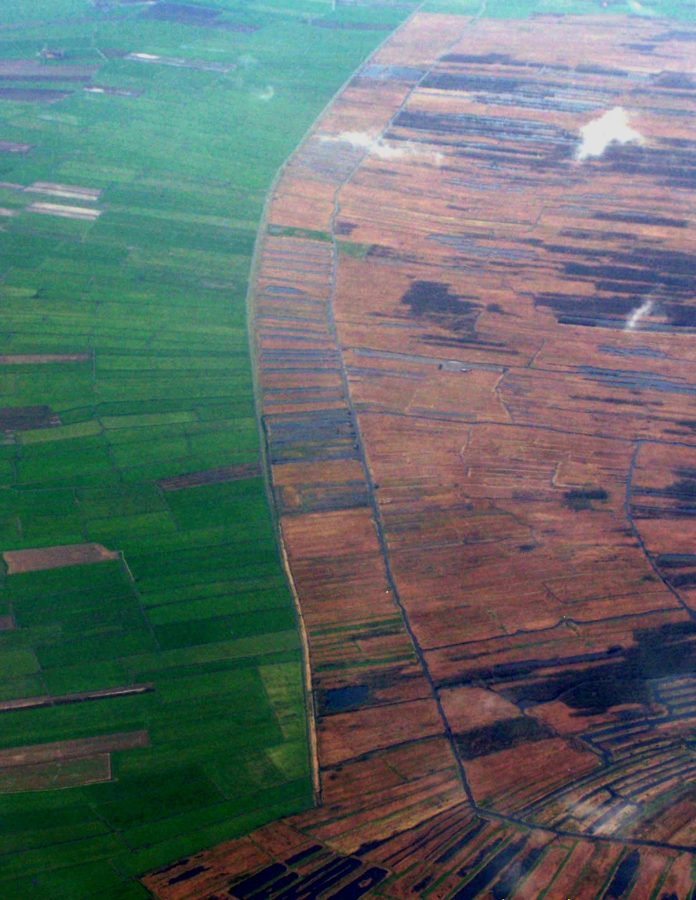
Photo: Original uploader was Debot at nl.wikipedia, CC BY-SA 3.0
Weerribben-Wieden is a watery landscape of lakes, canals, reed beds, quaking bog and swamp forest in the north-west of the province of Overijssel, in the Netherlands, the largest fen of its kind in north-western Europe, and it contains the village of Giethoorn, which is one of the most visited places in the country. It is about an hour and a half from Amsterdam and half an hour from Zwolle by road, and the railway station of Steenwijk, on the line from Zwolle to Leeuwarden, is linked by bus to Giethoorn and, less frequently, to the other villages. The park is free and open, and the way to see it is from the water or from a bicycle. At Giethoorn, the old village is strung along a canal with no road, only a footpath and some hundred and eighty high wooden footbridges leading to thatched farmhouses on their own little islands, and dozens of firms rent out electric whisper boats, flat-bottomed punts and canoes by the hour, run covered tour boats of an hour, and point their customers along a marked circuit through the village canal and across the adjoining lake;
from late morning until late afternoon in the season this becomes a slow procession of novice skippers, and the experience is best had before ten or after five, or avoided in favour of the quieter villages. Dwarsgracht and Belt-Schutsloot, in De Wieden, and Kalenberg and Ossenzijl, in De Weerribben, have the same canals and thatch with a fraction of the visitors, and boats and canoes for hire. There are two visitor centres, at Ossenzijl, in the north, run by the state forestry service, and at Sint Jansklooster, in the south, run by a conservation society, with an old water tower converted into a viewpoint forty-five metres high; both organise guided boat excursions with a naturalist into the reserves, and supply maps of signposted canoe routes, of a few hours to a full day, and cycle routes that use small self-operated or seasonal ferries.
Live dates and prices from GetYourGuide. Free cancellation on most tickets.
De Weerribben was made a national park in 1992, and in 2009 it was joined with De Wieden, immediately to the south, to form the present park of about a hundred square kilometres. Natural as it looks, the whole landscape is man-made, the by-product of an industry. From the late Middle Ages until the nineteenth century the people of this district dug peat for fuel, which was shipped to the towns of Holland: they scooped the peat from under water with long-handled dredges, leaving oblong pits, called weren, and spread it to dry on the narrow strips of land left standing between them, called ribben, which explains the name of the northern half and the pattern of parallel strips of water and land still visible from the air. In De Wieden the diggers were greedier, left the strips too narrow, and in the great storms of 1775, 1776 and 1825 the waves broke them down, merging the pits into broad, shallow lakes, the wieden; the village of Beulake disappeared beneath one of them in 1776. When the peat was exhausted, the water began to fill in again, by a natural succession that can be seen here at every stage: open water with water lilies and water soldier, then floating mats of vegetation, then quaking bog, a carpet of mosses, sedges, orchids and sundews that trembles underfoot, then reed beds, and finally swamp forest of alder and birch.
If left alone, all would become forest within a century, and the open stages survive because they are still used. Reed is grown and cut each winter for thatch, several hundred hectares of it, by local families with special machines, the bundles standing in stooks along the banks, and hay is mown on the wet meadows. Giethoorn was founded about 1230 by a group of settlers who, according to tradition, found on the site a great number of horns of wild goats drowned in a flood of 1170, and named it Geytenhorn; its canals were dug to carry out the peat. It was unknown to the outside world until a comic film was shot there in 1958. The wildlife is that of the great marshes which once covered the low countries. The otter, which became extinct in the Netherlands in 1988, was reintroduced here from 2002, with animals from eastern Europe, and now thrives and has spread across the country. The park holds the only surviving population in the world of a large, brilliant orange race of the large copper butterfly, which depends on the great water dock, and notable dragonflies, among them the Norfolk hawker. Black terns nest on floating rafts put out for them, and purple herons, bitterns, marsh harriers, great white egrets, spoonbills, Savi's and reed warblers and bearded tits breed in the reeds.
The park can be visited all year, but the boating season runs from about April to October, when the hire firms and ferries operate. May and June are the finest months, with the marsh orchids and the yellow flag in flower, birds singing and nesting in the reeds, long evenings and tolerable numbers at Giethoorn; July and August are warm, 20 to 25 degrees, and very crowded there, with coachloads of visitors from all over the world, and the large copper butterfly flies in July. September is quiet and mellow.
In winter the reed cutters are at work, the landscape is austere and empty, and in the rare years when the canals freeze hard the whole population takes to skates and a touring race is held between the villages. On the last Saturday of August, illuminated boat parades are held in the smaller villages. Keep to the marked channels, since much of the reserve is closed to boats in the breeding season, and bring insect repellent and a waterproof. Allow a day or two. The old Zuiderzee ports of Blokzijl and Vollenhove are ten minutes away, and Zwolle half an hour.
Yes. GetYourGuide lists one ticket or tour for Weerribben-Wieden National Park, with live dates and prices and free cancellation on most of them.
Weerribben-Wieden National Park covers 106 km².
Weerribben-Wieden National Park was established in 1992.
Weerribben-Wieden National Park is in Netherlands. The map on this page shows the exact spot.
Netherlands
De Hoge Veluwe, in the province of Gelderland in the east-central Netherlands, is an unusual national park in three…
3 tickets & tours