Banff National Park
Alberta, Canada
Banff is Canada's first and most visited national park, ninety minutes west of Calgary, and it is sold in every…
61 tickets & tours
Wetland Park · Alberta · Canada
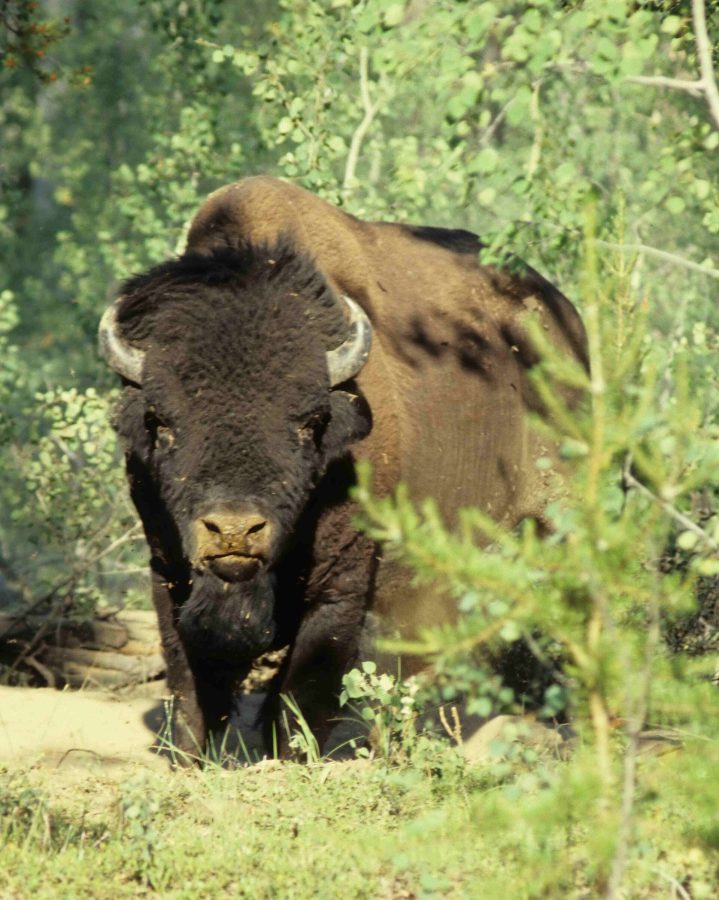
Photo: No machine-readable author provided. Ansgar Walk assumed (ba, CC BY-SA 2.5
Wood Buffalo is the largest national park in Canada and one of the largest in the world, a tract of northern forest, plains and wetlands larger than Switzerland, straddling the boundary between the province of Alberta and the Northwest Territories, and it is visited by no more than two or three thousand people a year. Its gateway is the small town of Fort Smith, in the Northwest Territories, on the Slave river just north of the Alberta boundary, which has the park's headquarters and visitor centre, a few hotels and a museum, and which is reached by scheduled flights from Edmonton and Yellowknife, or by an all-weather road of about 1,400 kilometres from Edmonton, fourteen hours and more, by way of the Mackenzie Highway and Hay River; a second, smaller office is at Fort Chipewyan, in Alberta, on Lake Athabasca, the oldest settlement in the province, which can be reached only by air, by boat, or, in winter, by an ice road.
Entry to the park is free. A car, hired in Fort Smith, is necessary, and the visitor must understand that this is a park to be driven and walked in a modest way, not a place of dramatic scenery: a gravel road runs south from Fort Smith through the park to the hamlet of Peace Point, some 120 kilometres, and along it and the highway to Hay River lie the accessible sights. These are the Salt Plains lookout, reached by a side road and a short, steep path down to the white flats; the karst trails near the Salt river, with sinkholes; the lookouts over the rapids of the Slave at Fort Smith, where white pelicans nest on islands in midstream; and Pine Lake, sixty kilometres south of the town, a string of clear, aquamarine sinkhole lakes with a beach, a campground, cabins and canoeing. Bison are very often seen along the roads. Multi-day canoe trips on the Peace and Slave rivers and backcountry hiking need registration.
The park was created in December 1922 to protect the last herds of wood bison in northern Canada, and enlarged in 1926, to 44,800 square kilometres; it was inscribed as a World Heritage Site in 1983, and in 2013 was declared the largest dark sky preserve in the world. The wood bison, the northern race of the American bison, darker, taller and heavier than the plains animal, the largest land mammal of the Americas, had been reduced by hunting to a few hundred individuals by the 1890s, all of them in this region. The park saved it, but at a cost: between 1925 and 1928 the government, anxious to dispose of surplus animals from a fenced park on the prairies, shipped more than six thousand plains bison north by rail and barge and released them here, where they interbred with the wood bison and brought with them bovine tuberculosis and brucellosis, diseases that still infect the herds and have complicated their management ever since. The park today holds some three thousand bison, the largest free-roaming, self-regulating herd in the world, and it is the one place on earth where the ancient relationship between bison and their natural predator, the wolf, continues uninterrupted, the wolves here being among the largest in existence and hunting bison in packs. It has a second, even greater claim. In 1954 the crew of a helicopter returning from a forest fire noticed, in a remote, boggy corner of the park, a pair of tall white birds with a chick: they had found by chance the nesting ground of the whooping crane, the tallest bird in North America, then reduced to twenty-one individuals in the wild, whose breeding place had been sought for decades.
It remains the only natural nesting site of the species, whose wild flock, which flies four thousand kilometres each autumn to winter on the coast of Texas, has recovered to more than five hundred birds; the nesting area is strictly closed. The park also contains most of the Peace-Athabasca delta, where those two great rivers meet at the western end of Lake Athabasca, one of the largest inland freshwater deltas in the world, a vast maze of channels, shallow lakes, marshes and sedge meadows, which is a staging and nesting area for more than a million ducks, geese and swans from all four North American flyways. Its health depends on spring floods, which dams upstream on the Peace, together with the oil sands developments on the Athabasca and a warming climate, have diminished, and in 2017 UNESCO, at the request of the Mikisew Cree, warned that the site might be placed on the list of those in danger, a question still under review. The Salt Plains, in the east, are flats of white salt, deposited by springs rising through beds laid down by an ancient sea, where salt-loving plants that belong on a seashore grow a thousand kilometres from the ocean, and the park has the finest gypsum karst in North America, with sinkholes, caves and underground streams. Moose, black bears, lynx, beavers, whose largest known dam, 850 metres long, was discovered here on satellite images, and the most northerly hibernating colony of red-sided garter snakes, which emerge in hundreds near the Salt river in late April, are its other inhabitants. Eleven Indigenous communities, Cree, Dene and Metis, retain the right to hunt, trap and fish in it.
The park is open all year. The summer season is short, from late May to early September, with long days, the sun hardly setting in June, temperatures of 18 to 25 degrees, and biting insects, mosquitoes, blackflies and horseflies, in numbers that make a head net, repellent and long clothing essential, above all in June and July; late August and early September, when the insects have gone, the aspens turn gold, and the nights are dark again, are the most comfortable, and a dark sky festival is held at Pine Lake in August.
The snakes emerge at the end of April and early May, the pelicans are at the rapids from May to September. Winter, from November to March, is severe, minus twenty to minus thirty-five, but it is the season of the northern lights, which are seen here with great frequency, of bison standing in frost and steam, and of the ice road to Fort Chipewyan. Forest fires are frequent in summer, and in 2023 forced the evacuation of Fort Smith. Keep at least a hundred metres from bison, which are dangerous, especially in the rut in July and August. Fuel and services are very far apart. Allow three to four days.
No online tour for Wood Buffalo National Park is listed on GetYourGuide; entry, where it is charged, is paid at the gate or through the park authority. Nearby parks with bookable tours are listed on this page.
Entry to the park is free.
The park is open all year.
Allow three to four days.
Wood Buffalo National Park covers 44 800 km².
Wood Buffalo National Park was established in 1922.
Wood Buffalo National Park receives about 2 399 a year (2022).
Wood Buffalo National Park is in Alberta, Canada. The map on this page shows the exact spot.
Alberta, Canada
Banff is Canada's first and most visited national park, ninety minutes west of Calgary, and it is sold in every…
61 tickets & tours
Alberta, Canada
Jasper is the largest and the quieter of the Canadian Rockies parks, four hours west of Edmonton and three and a half…
18 tickets & tours
Alberta, Canada
Waterton Lakes lies in the south-western corner of the Canadian province of Alberta, against the border of Montana, at…
10 tickets & tours
Alberta, Canada
Elk Island is a small, fenced national park on the prairie's edge thirty-five minutes east of Edmonton, Alberta,…
No online ticket