Yankari Game Reserve
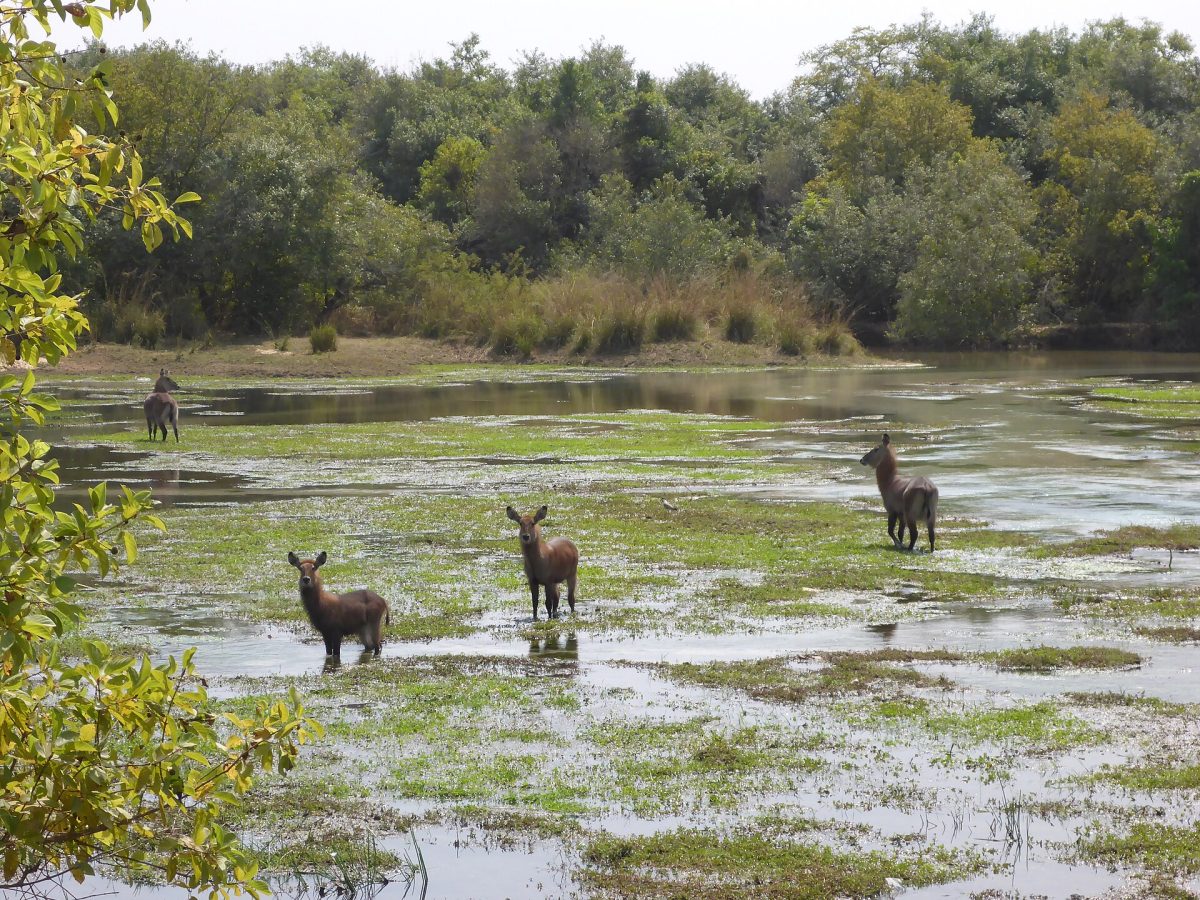
Photo: Charles Emogor, CC BY-SA 4.0
- Type
- Safari Park
- Where
- Nigeria
- Area
- 2 244 km²
- Founded
- 1956
- Tickets
- 1 ticket or tour
Yankari Game Reserve tickets and tours: which one to book
Yankari, in Bauchi state in the north-east of Nigeria, is the best-known wildlife reserve in the country and the most developed for visitors, which in the Nigerian context is a modest claim, and anyone considering a visit should begin by consulting the current security advice of his own government for that region, which has for some years been cautious; those who go generally do so with a reputable Nigerian tour operator, on organised trips of three or four days from Abuja, the capital. The reserve's entrance, at the village of Mainamaji, lies about 110 kilometres, an hour and a half to two hours by road, from the city of Bauchi, some 225 kilometres and four to five hours from Jos, and a long day's drive, eight hours or more, from Abuja; there are flights from Abuja and Lagos to Bauchi and to Gombe.
From the gate, where the entrance fees are paid, a road of about forty kilometres runs through the bush to Wikki camp, the only place to stay, on a bluff above the Gaji river valley, which has round chalets and rooms of varying standard and upkeep, a restaurant, a small museum and a student hostel, and whose resident baboons are expert at entering unlocked rooms and cars. All game viewing starts from the camp. Visitors may not drive themselves about: the reserve operates open-sided safari trucks, which leave at about half past seven in the morning and half past three in the afternoon on drives of two hours or so along the tracks of the Gaji valley, with an armed ranger, and private vehicles may go out only with a ranger aboard. Between drives everyone goes down the long flight of steps from the camp to the Wikki warm spring, which for many Nigerian visitors is the principal reason for coming. Excursions to the reserve's archaeological sites can be arranged with a guide.
Tickets and tours for Yankari Game Reserve
Live dates and prices from GetYourGuide. Free cancellation on most tickets.
Visiting Yankari Game Reserve: what you will see
The area was set aside as a game preservation area in 1956, after a minister of the then Northern Region had been impressed by a reserve he visited in Sudan, and was opened to the public on 1 December 1962; it was raised to a national park in 1991 and handed back in 2006 to the government of Bauchi state, since when it has again been styled a game reserve, and since 2014 its protection has been assisted by an international conservation society, which trains and equips the rangers. It covers about 2,244 square kilometres of rolling Sudan savanna, at 200 to 640 metres, a country of open woodland of Afzelia, Combretum, Anogeissus and shea butter trees, with tall grass, patches of thicket, and, cutting through the middle of it, the valley of the Gaji river and its tributaries, with flood plains, swamps and ribbons of evergreen forest, which is the only permanent water and the centre of animal life in the dry months. Yankari's most important inhabitants are its elephants, the largest surviving herd in Nigeria and one of the largest left in West Africa, which numbered about 350 in the early 2000s and, after heavy poaching for ivory, perhaps a hundred to a hundred and fifty today; they are often seen from the trucks, and some carry satellite collars. A few lions survive, one of only two populations remaining in the whole country, and are seldom seen.
Buffalo, hippopotamus, roan antelope, western hartebeest, waterbuck, bushbuck, oribi, duikers, warthogs, olive baboons, patas and tantalus monkeys are more readily met, and some 350 species of birds have been recorded, among them the saddle-billed stork, the Abyssinian ground hornbill, the martial eagle, bee-eaters and rollers. The Wikki spring, the largest of four warm springs in the reserve, wells out from under a sandstone cliff beside the camp at a constant 31 degrees, by day and by night and in every season, in a volume of some twenty-one million litres a day, and flows away over a bed of white sand as a stream two hundred metres long, a dozen wide and nearly two deep, of a transparency and a pale blue-green colour that seem improbable in that dusty landscape, shaded by tall trees; bathing in it is a delight. The reserve is also rich in the traces of earlier peoples: the Dukkey wells, more than a hundred shafts sunk into the rock and linked below ground, an elaborate system for storing water, of unknown date; the Marshall caves, fifty-nine dwellings cut into a sandstone escarpment, with rock engravings, found by a researcher in 1980; and, at Shau Shau and Ampara, the standing remains of dozens of shaft furnaces for smelting iron, one of the largest such industrial sites known in West Africa.
Yankari Game Reserve: best time to go, seasons and hours
The reserve is open all year, but the season for visiting is the dry season, from about November to May. Game viewing improves steadily as the country dries out, the grass is burned off and the animals are forced down to the Gaji valley, and is at its best from late February to the end of April, which is also the hottest period, with temperatures of 38 to 42 degrees in March and April; from December to February the harmattan blows from the Sahara, bringing cooler nights and a dusty haze that dulls the views.
The rains last from about May or June to September, when the grass grows higher than the vehicles, many tracks are impassable, the animals disperse and few people come. The reserve is crowded with Nigerian visitors at Christmas, Easter and the Muslim festivals. This is a malarial area, so take precautions, keep doors and windows shut against the baboons, carry cash, and bring swimming things. Allow three nights including travel. Bauchi, with the tomb of Nigeria's first prime minister, is two hours away, and Jos, on its cool plateau, four to five.
More tours and activities in Nigeria
Before you go
Can I book a tour or safari in Yankari Game Reserve online?
Yes. GetYourGuide lists one ticket or tour for Yankari Game Reserve, with live dates and prices and free cancellation on most of them.
When is Yankari Game Reserve open?
The reserve is open all year, but the season for visiting is the dry season, from about November to May.
How many days do you need in Yankari Game Reserve?
Allow three nights including travel.
How big is Yankari Game Reserve?
Yankari Game Reserve covers 2 244 km².
When was Yankari Game Reserve founded?
Yankari Game Reserve was established in 1956.
Where is Yankari Game Reserve?
Yankari Game Reserve is in Nigeria. The map on this page shows the exact spot.