Arikok National Park
- Type
- Desert Park
- Where
- Aruba
- Area
- 34 km²
- Founded
- 2000
- Elevation
- 188 m above sea level
- Tickets
- 3 tickets and tours
Arikok National Park tickets and tours: which one to book
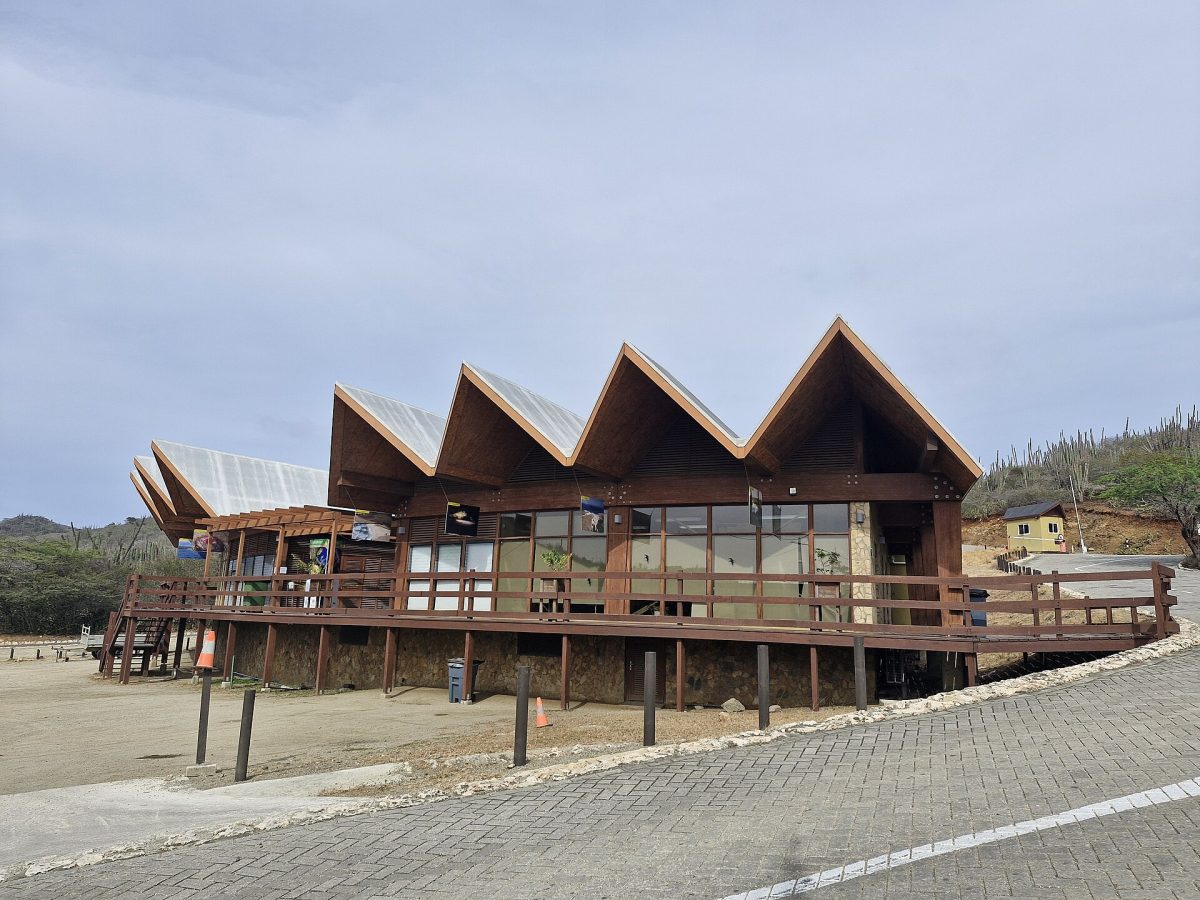
Arikok covers nearly a fifth of Aruba, the rugged, windward north-eastern side of an island whose hotels all stand on the calm, sandy west, and it is the chief reason for leaving the beach for a day. The main entrance and visitor centre are at San Fuego, near the town of Santa Cruz, twenty to thirty minutes' drive from the hotel strips of Palm Beach and Eagle Beach, where the conservation fee is paid, per adult per day, with children free, and a second entrance lies at Vader Piet in the south, near the wind farm. Inside, the roads are mostly rough dirt and rock, and rental agreements for ordinary cars generally forbid them, so that visitors either rent a 4×4 themselves, which gives freedom and demands some care, since the track to the natural pool in particular is a serious boulder-strewn crawl, or take one of the many guided tours: convoys of open jeeps and Land Rovers, on which guests sometimes drive in turn, UTV and ATV tours, which the park has progressively restricted because of the dust, noise and erosion they cause, horse rides to the natural pool from a ranch at the park's edge, and private tours with a guide in a closed vehicle, which suit those who want explanation rather than adrenalin. Most follow the same circuit: the caves, the beaches of Boca Prins and Dos Playa, and the Conchi natural pool, with snorkelling and lunch elsewhere on the island to fill the day. Walkers are well served by some thirty kilometres of marked trails, and the park's rangers lead free or cheap guided hikes at fixed times, including the climb of Jamanota, booked at the visitor centre.
3 tickets and tours for Arikok National Park
Live dates and prices from GetYourGuide. Free cancellation on most tickets.
Visiting Arikok National Park: what you will see
The park was formally established in 2000, after decades of proposals, and covers about 34 square kilometres, some 18 per cent of the island, including its two highest hills, Jamanota, 188 metres, and Arikok, 176, the latter named for a nineteenth-century planter, Arie Kok, whose restored adobe farmhouse, the Cunucu Arikok, with its cactus hedges and threshing floor, is visited on a short loop trail. Aruba lies outside the hurricane belt and the rain belt alike, with some 400 millimetres a year, and the landscape is a thorny desert on three kinds of rock, volcanic lava, a quartz-diorite batholith weathered into great rounded boulders, and terraces of fossil coral limestone along the coast: tall candelabra cacti, prickly pear, aloe, agave, the divi-divi tree bent permanently to the south-west by the trade wind, and the hardwood brazilwood and lignum vitae that once brought ships here. On the windward coast the Atlantic breaks against cliffs and pocket coves, of which Boca Prins, with its dunes, and Dos Playa are the best known, beautiful and too dangerous for swimming.
The Conchi, or natural pool, is a basin enclosed by a wall of volcanic rock over which the surf explodes while bathers float in calm water behind it. In the limestone are caves: Fontein, the most visited, whose ceiling bears drawings in red-brown pigment made by the Caquetío, the Arawak people who lived on the island before the Spanish deported them to Hispaniola in 1515, and Quadirikiri, two chambers lit by shafts of sunlight through holes in the roof, inhabited by long-nosed bats. The park shelters Aruba's endemic animals, the cascabel, a pale rattlesnake found nowhere else and critically endangered, the Aruban whiptail lizard, blue in the male, the cat-eyed snake, the Aruban burrowing owl, the island's national symbol, and the Aruban parakeet, with feral goats and donkeys, and four species of sea turtle nest on the beaches. The ruins of the Miralamar gold mine recall the rush of the nineteenth century.
Arikok National Park: best time to go, seasons and hours
The park is open daily from 8 am to 4 pm, with visitors to be out by 5. Aruba is hot, dry and windy all year, around 28 to 32 degrees, with a short, mild rainy season from October to January that briefly greens the hills; there is little shade and no water inside the park, and the sun and the wind together dehydrate walkers faster than they notice.
Go as early as the gate allows, when it is coolest, the light is best and the jeep convoys have not yet reached the natural pool, which is crowded from about ten to two; in rough seas the pool is closed. Turtle nesting runs from March to September. Allow a half-day, a full day with walking. Santa Cruz and the Ayo and Casibari rock formations are just outside, the California lighthouse at the island's northern tip, and Baby Beach and San Nicolas in the south.
More tours and activities in Aruba
Before you go
Can I book a tour or safari in Arikok National Park online?
Yes. GetYourGuide lists 3 tickets and tours for Arikok National Park, with live dates and prices and free cancellation on most of them.
How much is the entrance fee for Arikok National Park?
The main entrance and visitor centre are at San Fuego, near the town of Santa Cruz, twenty to thirty minutes' drive from the hotel strips of Palm Beach and Eagle Beach, where the conservation fee is paid, per adult per day, with children free, and a second entrance lies at Vader Piet in the south, near the wind farm.
When is Arikok National Park open?
The park is open daily from 8 am to 4 pm, with visitors to be out by 5.
How many days do you need in Arikok National Park?
Allow a half-day, a full day with walking.
How big is Arikok National Park?
Arikok National Park covers 34 km².
When was Arikok National Park founded?
Arikok National Park was established in 2000.
Where is Arikok National Park?
Arikok National Park is in Aruba. The map on this page shows the exact spot.