Bandipur National Park
Karnataka, India
Bandipur is one of the best-known tiger reserves of southern India, in the state of Karnataka at the point where it…
2 tickets & tours
Safari Park · Karnataka · India

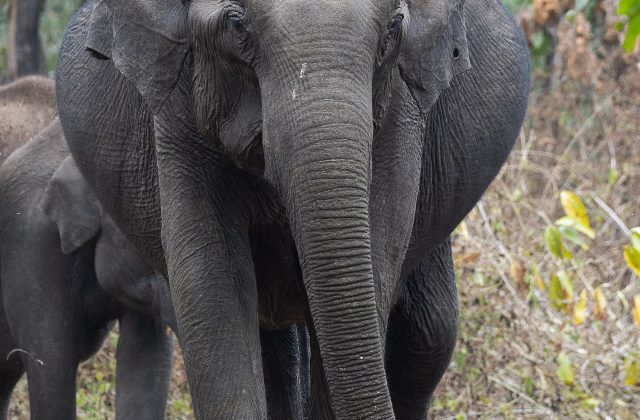
Photo: Muhammad Mahdi Karim, GFDL 1.2
Bannerghatta lies twenty-two kilometres south of the centre of Bangalore, the technology capital of India, an hour to an hour and a half away according to the city's notorious traffic, by taxi, ride-hailing car or the city buses that run from the Majestic and Shivajinagar stands, and what visitors see is not the national park proper but the Bannerghatta Biological Park, a complex of zoo and safari enclosures carved out of its edge in 2002 and run as a separate institution. It is an easy family outing and should be understood as such. Tickets, bought online or at the gate, are sold separately or in combination for the zoo, the butterfly park and the safari, with higher prices for foreigners and surcharges for cameras.
The safari, called the grand safari, is a drive of about an hour and a quarter through a series of large, fenced, forested enclosures, entered through double gates, in which herbivores, sloth bears, lions and tigers, including white tigers, live separately in semi-natural conditions; most visitors go in the park's non-air-conditioned buses with grilles over the windows, which leave when full, and those who want to take photographs pay considerably more for a seat in an air-conditioned bus or for a private jeep, booked in advance. The butterfly park, the first of its kind in India, with a domed conservatory, and the zoo, which holds rescued circus animals, elephants, reptiles and birds, fill the rest of the visit. The private day tours from Bangalore provide the transport and the tickets and sometimes add city sights. The national park beyond the fences is closed to casual visitors; trekking on a few designated routes is possible only with the forest department's permission and guides.
Live dates and prices from GetYourGuide. Free cancellation on most tickets.
Bannerghatta was founded in 1970 and declared a national park in 1974, and covers about 260 square kilometres of the hills and valleys of the Anekal range, between 740 and 1,034 metres, a strip of scrub, dry deciduous and moist deciduous forest with sandalwood, neem, tamarind, bamboo and great granite outcrops, running southwards from the edge of the city towards the Cauvery river. It owes its importance to its position: it is the northern terminus of a belt of forest that connects, by way of the Cauvery wildlife sanctuary and the Biligirirangan hills, with the great elephant and tiger country of the Nilgiris, and it serves as a corridor along which wild elephants move, as they always have, to within sight of a metropolis of thirteen million people. Between a hundred and a hundred and fifty elephants use the park, raiding the ragi and sugar-cane fields of the villages on its borders, six of which are actually enclosed within it, and the conflict between elephants and people here, with its trenches, solar fences, night watchmen and deaths on both sides, is one of the most studied in India.
Leopards are common and, as in Mumbai, prey on the dogs and livestock of the fringe; sloth bears, gaur, sambar, chital, barking deer, wild boar, pangolins, slender lorises, porcupines, pythons, cobras and monitor lizards inhabit the forest, and a tiger occasionally wanders in from the south. The biological park's rescue centre was established when India banned the use of big cats and bears in circuses in the 1990s, and it took in hundreds of animals, and later the dancing bears confiscated from the Kalandar community, which are cared for at a sanctuary here run by a wildlife charity. The Suvarnamukhi stream, which rises in the park and is held sacred, the hilltop Champakadhama temple of the Hoysala period at Bannerghatta village, and the Uddigebande viewpoint are the landmarks.
The biological park is open from about 9.30 am to 5 pm and is closed on Tuesdays. Bangalore's climate is mild all year: October to February is the pleasantest period, cool and dry; March to May is warm, up to 35 degrees; the monsoon, from June to September, brings rain in the afternoons and the greenest forest.
Weekends, school holidays and festivals bring very large crowds and long waits for the safari buses, so come on a weekday and be at the gate at opening, when the animals are also most active; by midday the cats are asleep in the shade. Allow half a day including travel. The city's Lalbagh gardens and Bangalore palace, the Art of Living ashram, and, further afield, the hill of Nandi and the temples of Mysore are the other excursions.
Yes. GetYourGuide lists 2 tickets and tours for Bannerghatta National Park, with live dates and prices and free cancellation on most of them.
The biological park is open from about 9.30 am to 5 pm and is closed on Tuesdays.
Allow half a day including travel.
Bannerghatta National Park covers 261 km².
Bannerghatta National Park was established in 1974.
Bannerghatta National Park is in Karnataka, India. The map on this page shows the exact spot.
Karnataka, India
Bandipur is one of the best-known tiger reserves of southern India, in the state of Karnataka at the point where it…
2 tickets & tours
Karnataka, India
Nagarhole, in the south of the Indian state of Karnataka, at the foot of the Western Ghats, is among the best places in…
1 ticket or tour