
Bandipur National Park
Karnataka, India
Bandipur is one of the best-known tiger reserves of southern India, in the state of Karnataka at the point where it…
2 tickets & tours
Safari Park · Karnataka · India
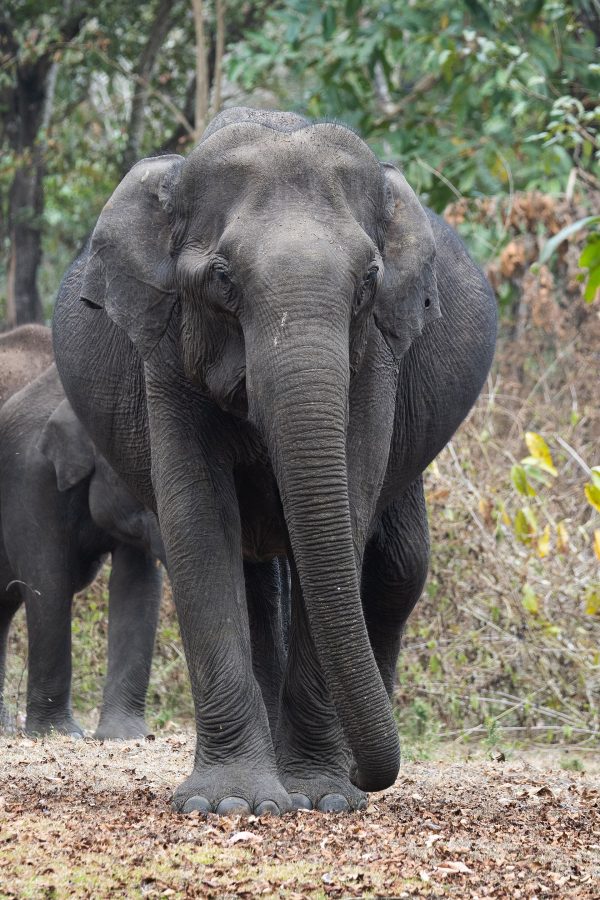
Photo: Kandukuru Nagarjun from Bangalore, India, CC BY 2.0
Nagarhole, in the south of the Indian state of Karnataka, at the foot of the Western Ghats, is among the best places in southern India for seeing large mammals, and its south-eastern corner, along the Kabini river, has become famous among wildlife photographers for leopards, tigers and, above all, a black leopard. It lies about 220 kilometres, five hours by road, south-west of Bangalore, the nearest large airport, and eighty to ninety kilometres, two hours, from the old royal city of Mysore, and tours from Bangalore commonly combine it with the Tibetan monastery of Bylakuppe and the coffee country of Coorg. There are three gates, and the choice matters. The Kabini side, entered near the villages of Antharasanthe and Karapura, is where the lodges are, some twenty of them along the reservoir, led by the state-run Kabini River Lodge, in the former hunting lodge of the maharaja of Mysore;
safaris here are of two kinds, by jeep or minibus into the forest, and by motor boat on the backwaters, which is the best way to watch elephants, crocodiles, otters and water birds, and places on both are allotted in advance, chiefly through the lodges, which include them in their packages. Independent visitors can take the forest department's minibus safaris, booked online or at the counter, from the same side. The Veeranahosahalli gate, near the town of Hunsur, and the Nanachi gate, near Kutta on the Coorg side, offer departmental minibus and jeep safaris with fewer visitors and fewer sightings. Safaris last about three hours, from half past six in the morning and from three in the afternoon. The public road that crosses the park is closed to traffic from dusk to dawn, and no walking is allowed inside.
Live dates and prices from GetYourGuide. Free cancellation on most tickets.
The forest was the private hunting ground of the maharajas of Mysore, was declared a wildlife sanctuary in 1955, enlarged, made a national park in 1988, officially renamed after Rajiv Gandhi, and brought under Project Tiger in 1999; the national park covers 643 square kilometres and the tiger reserve about 850. It forms part of the Nilgiri biosphere reserve, and with the adjoining reserves of Bandipur, from which the Kabini separates it, Mudumalai in Tamil Nadu and Wayanad in Kerala, makes up the largest block of protected forest in southern India, holding the largest populations of both the Asian elephant and the tiger in the world. Nagarhole means snake stream in Kannada, from the winding river that crosses it. The terrain is gently rolling, at 700 to 950 metres, with moist deciduous forest in the wetter north and west, tall and dense, dominated by teak and rosewood, for which the forest was long exploited, with some trees of great size, and drier forest in the south-east, more open and therefore better for viewing; scattered through it are swampy grass clearings called hadlus, on which deer and gaur graze and which predators watch. The density of prey animals is one of the highest recorded in Asia, chital in large herds, sambar, gaur, the great dark wild cattle with white stockings, wild boar, barking deer, the four-horned antelope and langurs, and it supports a correspondingly high density of predators, studied here for decades by the biologist Ullas Karanth, whose methods of counting tigers by camera traps became the standard: tigers at about ten to a hundred square kilometres, leopards, which here spend much time in trees, and dholes, the wild dogs, hunting in packs. From about 2015 a melanistic leopard, a black panther, took up a territory in the Kabini tourist zone and was photographed and filmed for years, often in company with a normally spotted mate, making Kabini a place of pilgrimage for photographers. The Kabini dam, built in 1974, drowned the river valley, and as the reservoir shrinks in the dry months it exposes wide meadows of fresh grass, on which elephants gather in March, April and May in herds that may total several hundred, the largest congregation of Asian elephants anywhere; it was on these banks that the maharajas staged the khedda, the driving of wild herds into stockades, for viceroys and visiting royalty, until 1971. Sloth bears, mugger crocodiles, smooth-coated otters, giant squirrels and some 270 species of birds, including the Malabar trogon, the Malabar pied hornbill, ospreys and grey-headed fish eagles, are also seen. Several thousand tribal people, the Jenu Kuruba, traditionally honey gatherers, the Betta Kuruba and the Yerava, lived in the forest, and their resettlement outside it has been a long and bitter controversy.
The park is open all year, though safaris may be suspended for short periods in the heaviest monsoon rain or during fire alerts. The dry season, from February to May, is the best for wildlife: the forest is leafless and open, water is scarce, the elephants are massed on the Kabini banks, and tigers and leopards are most often seen, though April and May are hot, up to 35 degrees. From June to September the south-west monsoon turns the forest a brilliant green, with few visitors, lower prices and harder viewing;
October to January is cool, lush and pleasant, with excellent birdwatching and misty mornings. Weekends and Indian holidays are booked far ahead at Kabini, and the most sought-after jeep places go months in advance. Wear muted colours, bring a warm layer for winter mornings, and binoculars. Allow two nights and four safaris. Mysore, with its palace, is two hours away, Bylakuppe and Coorg an hour and a half, and Bandipur, across the river, two hours by road.
Yes. GetYourGuide lists one ticket or tour for Nagarhole National Park, with live dates and prices and free cancellation on most of them.
The park is open all year, though safaris may be suspended for short periods in the heaviest monsoon rain or during fire alerts.
Allow two nights and four safaris.
Nagarhole National Park covers 643 km².
Nagarhole National Park was established in 1988.
Nagarhole National Park is in Karnataka, India. The map on this page shows the exact spot.
Karnataka, India
Bandipur is one of the best-known tiger reserves of southern India, in the state of Karnataka at the point where it…
2 tickets & tours
Karnataka, India
Bannerghatta lies twenty-two kilometres south of the centre of Bangalore, the technology capital of India, an hour to…
2 tickets & tours
