Mole National Park
175 km away
Mole is Ghana's largest park and the place in West Africa where elephants are most easily and cheaply seen, but it…
7 tickets & tours
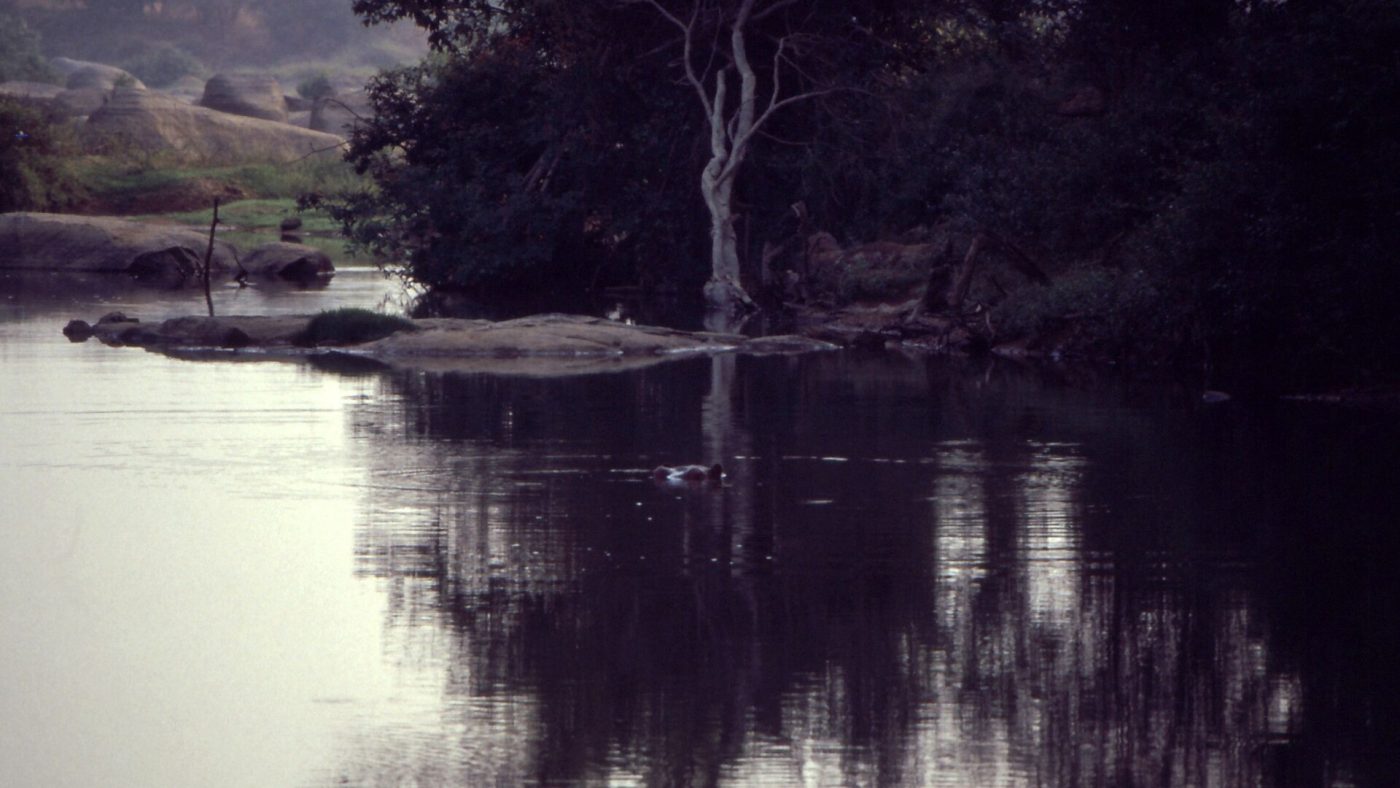
Photo: Albert Backer, CC BY-SA 3.0
Comoe, in the north-east of Ivory Coast, is the largest protected area in West Africa, a vast, remote and very little visited wilderness of savanna and forest along the river of the same name, and a journey there is an undertaking for experienced and self-reliant travellers, not a conventional safari. It lies some 570 kilometres and at least nine or ten hours by road from Abidjan, by way of Bondoukou to the town of Bouna, near the eastern entrance, or by Korhogo to Kafolo, on the northern side, where a safari lodge has operated at times, and there is no scheduled air service. Before anything else, a visitor must read the current advice of his own government: the northern border zone with Burkina Faso has suffered armed attacks in recent years, including at Kafolo in 2020, and many governments advise against travel to parts of the area.
The park is managed by the Ivorian office of parks and reserves, to whose stations at Bouna or the park gates one reports to pay the entrance fee and to be assigned a ranger guide, who is obligatory. Tourist infrastructure inside the park is minimal, consisting of a network of earth tracks, which are reopened after each rainy season and are passable only in a four-wheel drive, a few viewpoints over the river and the salt licks, and simple campsites, so that visitors must bring their vehicle, fuel, food, water and camping equipment, or, more practically, engage one of the few Ivorian operators who organise expeditions of several days. Game is present but is shy and thinly spread after years of poaching, and should be looked for along the river and at waterholes in the early morning and late afternoon; the pleasure of the place lies as much in its emptiness, its birds and its landscapes as in its large animals.
The area was first protected as a game refuge in 1926, became the Bouna reserve in 1953 and a national park in 1968, covering 11,500 square kilometres, and was declared a biosphere reserve and a World Heritage Site in 1983. Its exceptional interest lies in its position and its river. The Comoe rises in Burkina Faso and flows south through the park for some 230 kilometres, and because it carries permanent water and is lined by a dense gallery forest, it allows plants and animals of the humid south to penetrate far northwards into the dry Sudanian savanna, so that within a single park are found a whole series of habitats that normally lie hundreds of kilometres apart: wooded and shrub savannas on the plateau, open grassy plains that flood in the rains, isolated granite inselbergs rising to some six hundred metres, islands of dense dry forest, and the tall riverine forest along the Comoe and its tributaries. About 620 species of plants have been recorded, 135 of mammals, including eleven primates, and more than five hundred of birds. The antelopes are those of West Africa, the kob, by far the most numerous, the roan, the western hartebeest, the waterbuck, the oribi, the bushbuck and several duikers, with buffalo, warthogs, hippos in the river pools, three species of crocodile, among them the little dwarf crocodile of forest streams, olive baboons, green, patas, mona and white-collared monkeys, black and white colobus, and a small, isolated population of chimpanzees that lives, unusually, in savanna and has been studied for its use of tools to obtain honey and water.
Elephants, once numbering over a thousand, were reduced to perhaps a few hundred or fewer, leopards and spotted hyenas survive, and the lion is believed to have disappeared or to be on the point of doing so. Among the birds are the Denham's and white-bellied bustards, the Abyssinian ground hornbill, the saddle-billed stork, the hammerkop, the Pel's fishing owl and the African finfoot. The park's recent history is one of loss and partial recovery. During the Ivorian civil conflict, from 2002 to 2011, the north of the country was held by rebels, the park's staff fled, and poachers, herdsmen with their cattle, gold diggers and farmers moved in unopposed; UNESCO placed it on the list of World Heritage in danger in 2003. After the return of peace, management was re-established with international support, the cattle were driven out, and surveys showed that the populations of kob, hartebeest, buffalo and chimpanzee were recovering, so that in 2017 the park was removed from the danger list, one of the few African sites ever to achieve this. A German university has maintained a research station on the river since 1989. The Lobi people, who live to the east of the park, are known for their fortified earthen houses, without windows, built like small castles.
The park is accessible only in the dry season, from about December to May, the tracks being flooded and overgrown during the rains, which last from June to October, with a peak in August and September. The best months for wildlife are from late January to April, when the grass has been burned, the pools on the plains have dried and the animals are concentrated along the river; from December to February the harmattan, the dry, dusty wind from the Sahara, brings cool nights, hazy skies and pleasant days of about 30 degrees, while March and April are very hot, 36 to 40 degrees, before the first storms.
This is a malarial region, and tsetse flies are present in the gallery forest, so that prophylaxis, repellent and neutral-coloured clothing are needed, together with a yellow fever certificate, which is required for entry to the country. Carry ample water and fuel, and do not drive at night. Allow at least three days in the park, and a week for the whole journey from Abidjan.
175 km away
Mole is Ghana's largest park and the place in West Africa where elephants are most easily and cheaply seen, but it…
7 tickets & tours
No online tour for Comoe National Park is listed on GetYourGuide; entry, where it is charged, is paid at the gate or through the park authority. Nearby parks with bookable tours are listed on this page.
The park is managed by the Ivorian office of parks and reserves, to whose stations at Bouna or the park gates one reports to pay the entrance fee and to be assigned a ranger guide, who is obligatory.
Allow at least three days in the park, and a week for the whole journey from Abidjan.
Comoe National Park covers 11 500 km².
Comoe National Park was established in 1968.
Comoe National Park is in Ivory Coast. The map on this page shows the exact spot.
Ivory Coast
Taï is the last great block of primary rainforest in West Africa, in the far south-west of Ivory Coast on the Liberian…
No online ticket