
Serra Malagueta Natural Park
Cape Verde
Serra Malagueta is the mountain range in the north of Santiago, the main island of Cape Verde, an hour and a half from…
12 tickets & tours
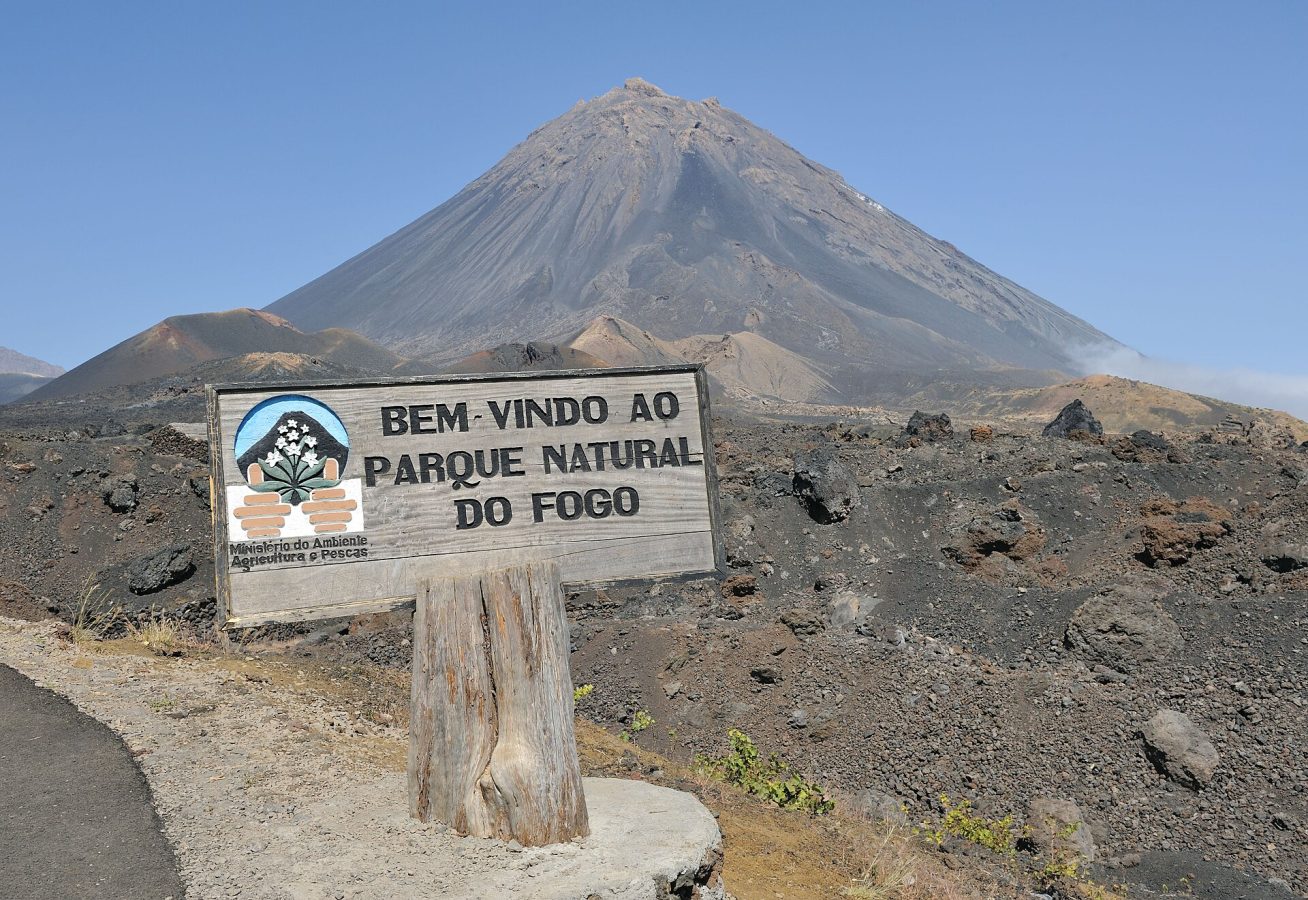
Photo: Cayambe, CC BY-SA 3.0
Fogo is the volcano island of Cape Verde, reached by a half-hour flight from Praia on Santiago to the airstrip at São Filipe, or by a ferry of three to four hours on an often rough sea, and the park is the volcano's summit caldera, an hour and a half's drive up from the town by shared aluguer minibus or taxi; it should not be mistaken for the Lagoa do Fogo crater lake on São Miguel in the Azores, whose hikes turn up in the same searches. The object of most visitors is to climb Pico do Fogo, and for that a local guide is obligatory and sensible, hired through the guides' association in the village of Portela on the caldera floor, through the guesthouses there, or as part of a package from São Filipe.
The ascent climbs about 1,100 metres from the village, up steep, loose cinder and then rock, in three to four hours, starting at five or six in the morning to be up before the heat and the cloud; the descent, by a different line, is a run down a long slope of fine ash, knee-deep and exhilarating, in forty-five minutes. Those with less in their legs climb the small cone of the 1995 eruption or walk across the lava of 2014 to its vents, two to three hours. The Bordeira rim trek, the walk through the Monte Velha cloud forest and coffee plantations down to the town of Mosteiros on the north coast, and tastings of the caldera's wine at the cooperative are the other days. Stay a night or two in the caldera, in one of the rebuilt family guesthouses; there is little electricity, and the sky at night is reason enough.
Live dates and prices from GetYourGuide. Free cancellation on most tickets.
The natural park was established in 2003 and covers about 85 square kilometres, nearly a fifth of the island, on the highest ground in Cape Verde. The whole island is one volcano, rising from the sea floor, whose original summit collapsed eastwards into the ocean in a giant landslide some seventy thousand years ago, leaving a caldera nine kilometres wide, Chã das Caldeiras, open to the east and walled on the west by the Bordeira, a cliff up to a thousand metres high; inside it a new cone has grown, the Pico do Fogo, 2,829 metres, a steep, almost perfectly symmetrical black pyramid. The volcano has erupted about thirty times since Portuguese settlers arrived in the fifteenth century and gave the island its name, fire: from the summit until 1785, and since then from vents on the caldera floor, in 1951, in 1995 and from November 2014 to February 2015, when lava advanced slowly for weeks over the villages of Portela and Bangaeira, burying houses, the school, the wine cooperative, the park's new headquarters and much of the farmland, without loss of life.
The fifteen hundred inhabitants came back, against official advice, and rebuilt on top of the still-warm flows, houses of black lava blocks with round, thatched or concrete roofs. They farm the volcanic cinders at 1,700 metres without irrigation, relying on dew and mist: vines in individual hollows, which give the Chã and Manecom wines, the only wines of Cape Verde, along with apples, quinces, pomegranates, beans and an excellent goat cheese. Many of the caldera's people are fair-haired and light-eyed, and trace their descent from Armand Montrond, a French nobleman who settled on Fogo in the 1870s and is credited with bringing the vines. Endemic plants, the língua-de-vaca and a tall blue-flowered echium among them, grow on the cliffs, and the Fea's petrel nests in the Bordeira.
The park is open at all times, and ascents leave before dawn. October to June is the season, with the clearest and coolest weather from November to March, when nights in the caldera fall close to freezing and the summit is cold and windy; July to September is the rainy season, short and unreliable, with cloud and occasional storms, and the grape harvest falls in July and August.
Trade-wind cloud often fills the lower slopes while the caldera stands in sun above it. The island's festival, the Bandeira de São Filipe with its horse races, is on the first of May. Allow two nights in the caldera. São Filipe's colonial sobrado houses and black-sand beach are an hour and a half below, the island of Brava is a short ferry ride away, and Santiago is the hub.
Yes. GetYourGuide lists 6 tickets and tours for Fogo Natural Park, with live dates and prices and free cancellation on most of them.
The park is open at all times, and ascents leave before dawn.
Allow two nights in the caldera.
Fogo Natural Park covers 84.7 km².
Fogo Natural Park was established in 2003.
Fogo Natural Park is in Cape Verde. The map on this page shows the exact spot.
Cape Verde
Serra Malagueta is the mountain range in the north of Santiago, the main island of Cape Verde, an hour and a half from…
12 tickets & tours
Cape Verde
Morro de Areia, the hill of sand, is a reserve of dunes, cliffs and empty beach on the south-western coast of Boa…
1 ticket or tour
