
Serra Malagueta Natural Park
Cape Verde
Serra Malagueta is the mountain range in the north of Santiago, the main island of Cape Verde, an hour and a half from…
12 tickets & tours
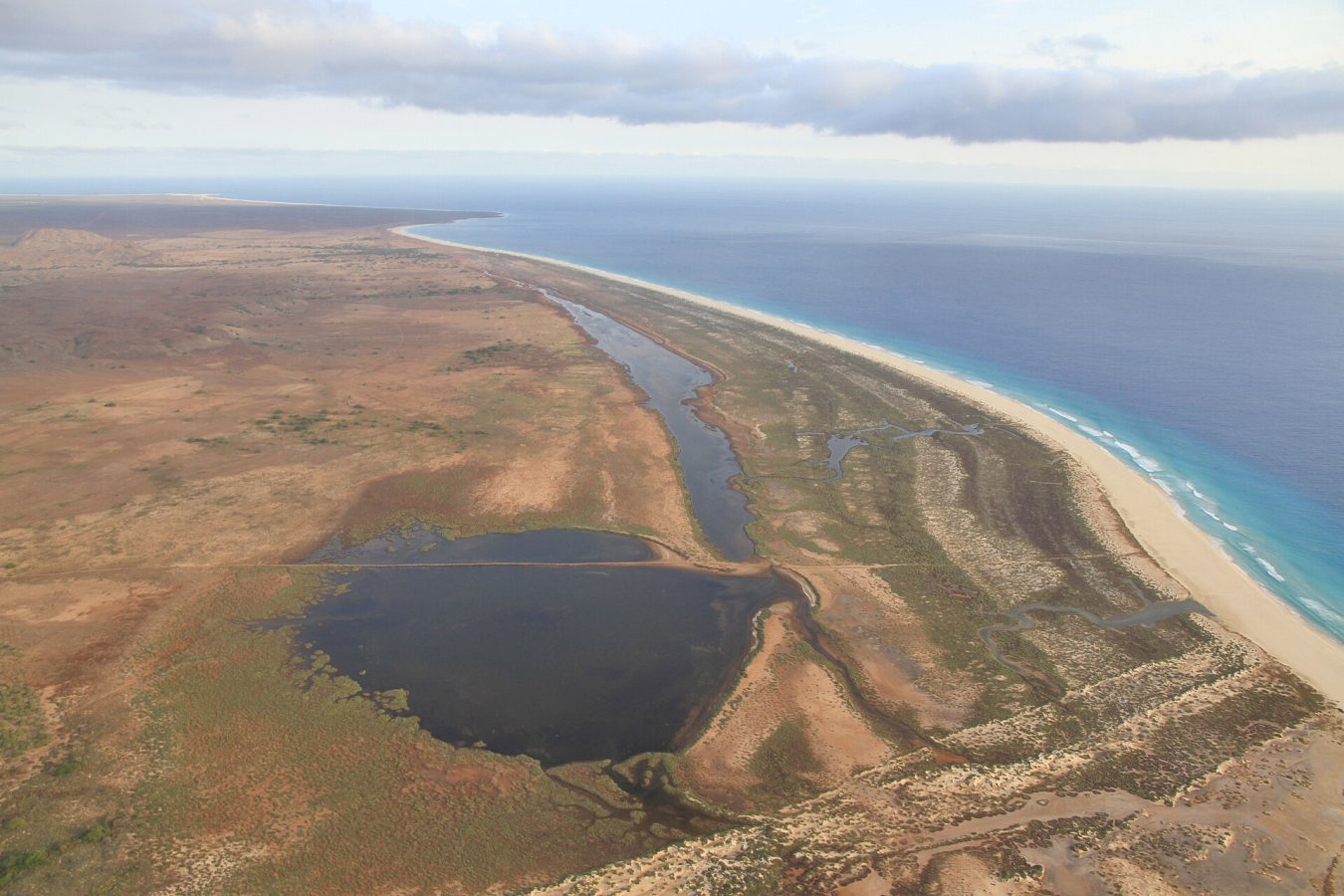
Photo: Ximonic, Simo Räsänen, GFDL
Morro de Areia, the hill of sand, is a reserve of dunes, cliffs and empty beach on the south-western coast of Boa Vista, the easternmost and most desert-like of the Cape Verde islands, in the Atlantic off West Africa, to which charter aircraft bring package holidaymakers directly from many European countries. The island is small, its airport lies at Rabil, only a few kilometres from the northern end of the reserve, and the big resort hotels stand along Chaves beach at its edge, while the little capital, Sal Rei, is a quarter of an hour further north. There is no gate, ticket office, road or facility of any kind in the reserve, and the sandy and stony tracks that lead into it are passable only in a four-wheel drive, so that nearly everyone visits it on a half-day excursion by pickup truck or jeep from the hotels or from Sal Rei.
The most popular of these is the sandboarding trip, in which a small group is driven to the great dune, climbs its soft flank on foot with boards supplied by the guide, and slides down, sitting, lying or standing, as often as the legs will bear the climb back, before being taken to a viewpoint on the cliffs and perhaps on along the coast. Other tours, by four-wheel drive, combine the reserve with the caves and the wild beach of Varandinha, just to the south, and with the immense beach of Santa Monica beyond it, and some go on quad bikes or buggies, which are required to keep to the tracks and off the dunes and beaches, a rule not always respected. Energetic walkers can reach the northern dunes on foot along the shore from the last hotel on Chaves beach in an hour or so, carrying water, since there is none, nor any shade.
Live dates and prices from GetYourGuide. Free cancellation on most tickets.
The reserve was created under the law of 2003 that set up Cape Verde's network of protected areas, and covers about twenty-one square kilometres of land, with a marine strip three hundred metres wide, along some ten kilometres of coast from the southern end of Chaves beach to the beginning of Santa Monica. Boa Vista is the oldest and most worn down of the archipelago's volcanic islands, low, flat and arid, receiving less than a hundred millimetres of rain in most years, and swept for much of the year by the north-east trade wind, which carries sand from the beaches of the northern and eastern shores right across the island and piles it against the higher ground of the south-west. The Morro de Areia itself is a ridge 167 metres high, the seaward face of which is buried under a huge drift of pale, almost white sand, made largely of the ground shells and skeletons of marine organisms, that pours in places directly over dark basalt cliffs into the sea, so that from its crest one looks along a coast where white dunes, black rock and turquoise surf meet, with not a building in sight. Inland, the dunes give way to a stony plain with scattered tamarisks, date palms in the dry watercourses, and the low, fleshy shrubs that tolerate salt and drought. The reserve's importance to wildlife lies first in its beaches.
Cape Verde holds one of the three largest nesting populations of the loggerhead turtle in the world, and the great majority of the nests are dug on Boa Vista; the main nesting beaches are in the south-east of the island, but turtles come ashore here too, from about June to October, which is the reason for the ban on vehicles on the sand, since wheels crush nests and the ruts trap hatchlings. The cliffs provide nesting ledges for the osprey, which is commoner on Boa Vista than almost anywhere in the eastern Atlantic, building its great stick nests on stacks and headlands, for the red-billed tropicbird, with its long white tail streamers, and for the brown booby, and the dunes and plains hold desert birds, the cream-coloured courser, the greater hoopoe-lark, the bar-tailed lark, the brown-necked raven, and the Iago sparrow, which is found only in these islands. Reptiles include geckos and skinks peculiar to Boa Vista. From February to May humpback whales, of a small population that breeds in Cape Verde and feeds off Iceland and Norway, gather in the bay off Sal Rei and are sometimes seen from the cliffs. The island's name, the good view, is said to record the relief of Portuguese sailors at sighting it, and the many wrecks along its reefs suggest that others saw it too late.
The reserve can be visited all year, since the island is warm and dry in every month, with air temperatures of 24 to 30 degrees and the sea at 22 to 27. From November to June the trade wind blows strongly, which makes the heat easy to bear, drives stinging sand across the dunes on some days, and occasionally brings the dusty haze of the harmattan from the Sahara; from July to October the wind drops, the air is hotter and more humid, what little rain there is falls in brief storms, and the turtles are nesting.
For sandboarding, the early morning and the late afternoon are much the best times, both for the temperature of the sand, which burns bare feet at midday, and for the light. The sea along this coast has a heavy shore break and powerful currents, and bathing is dangerous except in a few sheltered corners. Take water, a hat, sunglasses, sunscreen, and a scarf for the blowing sand, and carry away all rubbish. Allow half a day. Sal Rei and Rabil, with its pottery, are fifteen minutes away, Santa Monica beach half an hour south, and the Viana desert twenty minutes north.
Yes. GetYourGuide lists one ticket or tour for Morro de Areia Nature Reserve, with live dates and prices and free cancellation on most of them.
Morro de Areia Nature Reserve covers 21.3 km².
Morro de Areia Nature Reserve was established in 2003.
Morro de Areia Nature Reserve is in Cape Verde. The map on this page shows the exact spot.
Cape Verde
Serra Malagueta is the mountain range in the north of Santiago, the main island of Cape Verde, an hour and a half from…
12 tickets & tours
Cape Verde
Fogo is the volcano island of Cape Verde, reached by a half-hour flight from Praia on Santiago to the airstrip at São…
6 tickets & tours
