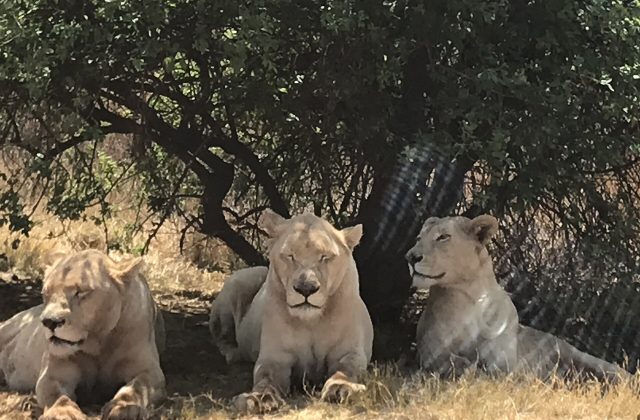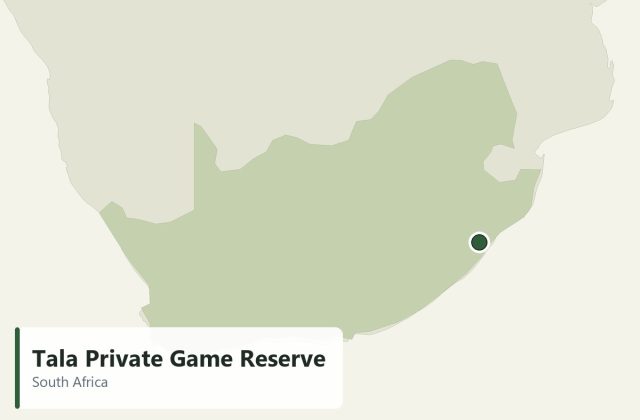
Tala Private Game Reserve
120 km away
Tala is a privately owned game reserve in the rolling hills of the KwaZulu-Natal midlands, in the east of South Africa,…
17 tickets & tours
Mountain Park · KwaZulu-Natal · South Africa
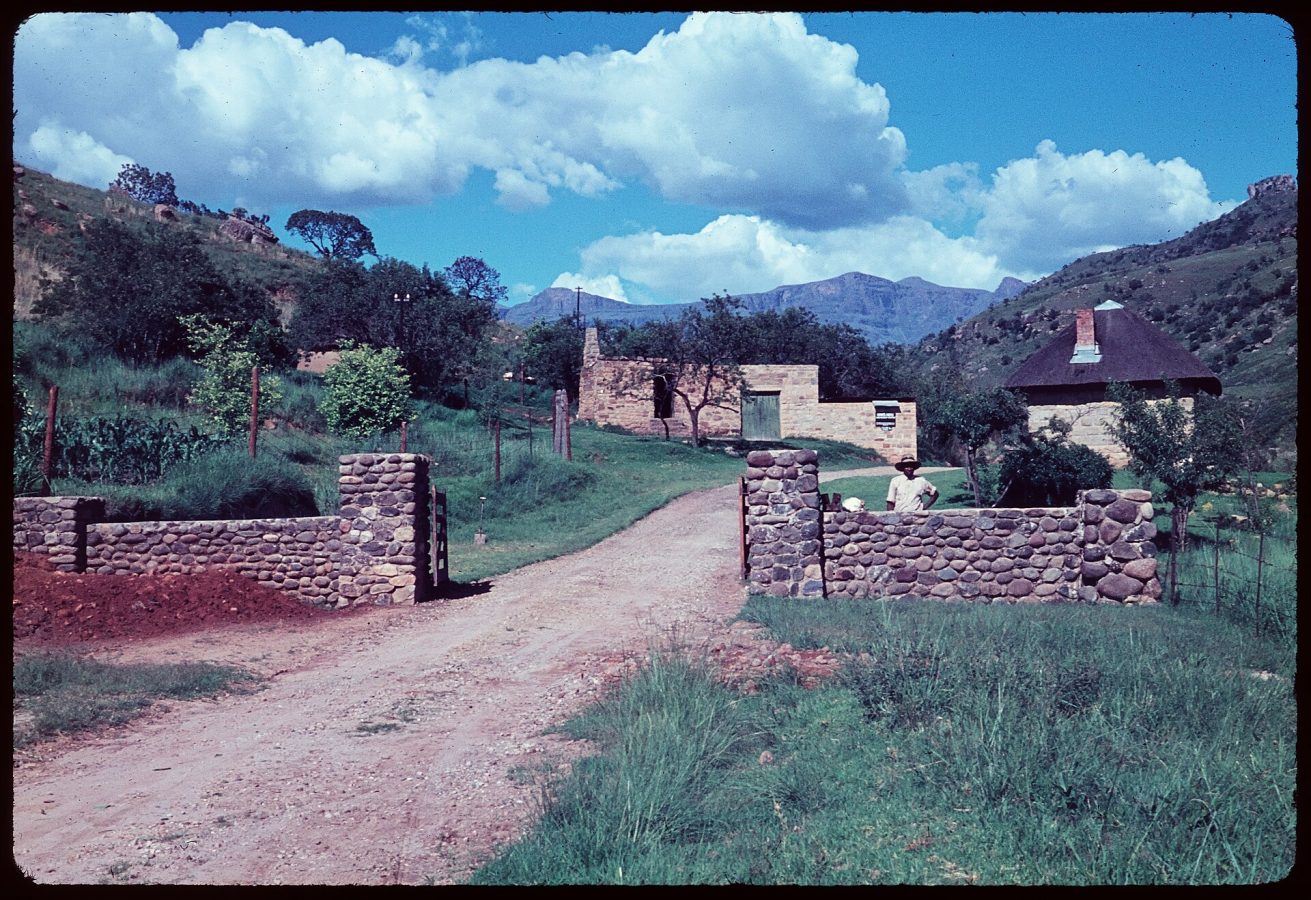
Photo: Guus Gorter, CC BY-SA 4.0
Giant's Castle lies in the central Drakensberg, the great basalt escarpment that forms the border between the South African province of KwaZulu-Natal and the mountain kingdom of Lesotho, and it is one of the oldest and best loved sections of the uKhahlamba-Drakensberg park, known for three things, its herds of eland, its gallery of Bushman paintings, and its bearded vultures. It is about two and a half to three hours by road from Durban, by the N3 motorway to Mooi River or Estcourt and then some sixty-five kilometres of country road westwards towards the mountains, the last part through Zulu villages, and four and a half hours from Johannesburg. There is no public transport. An entrance fee per person is paid at the gate to the provincial conservation authority, which also runs the only accommodation, a well-sited camp of thatched chalets with a restaurant and shop, on a spur above the Bushman's river with the wall of the escarpment filling the view.
Day visitors are welcome and use the picnic area and the trails. The essential walk is to the Main Caves, about two kilometres along the river valley from the camp, thirty to forty minutes each way on an easy path, where a custodian admits visitors on the hour throughout the day, for a small fee, to a fenced overhang in which boardwalks pass in front of the paintings, with a recorded commentary and a life-size tableau of a Bushman family. Many other trails start from the camp, from a riverside stroll of an hour to day walks up to the contour path beneath the cliffs, to World's View, and, for the fit, the climb of Langalibalele pass or Bannerman pass to the top of the escarpment at three thousand metres. The vulture hide, high on a ridge, is let to one party at a time and must be booked many months ahead. The Injisuthi camp, in the northern part of the reserve, is reached by a separate road.
Live prices from GetYourGuide for tours whose route includes this park. Free cancellation on most of them.
The reserve was proclaimed in 1903 by the government of Natal, chiefly to protect the last herds of eland, the largest of the antelopes, which the settlers had all but exterminated, and it is thus among the oldest protected areas in Africa; it covers about 35,000 hectares and forms part of the uKhahlamba-Drakensberg park, which was inscribed as a World Heritage Site in 2000 for both its natural beauty and its rock art, and was extended in 2013 to include the adjoining national park in Lesotho. The Zulu name of the range, uKhahlamba, means the barrier of spears, and the Afrikaans one the dragon mountains. The escarpment is the edge of a pile of basalt lava flows more than a kilometre thick, erupted some 180 million years ago as the supercontinent of Gondwana began to split, resting on pale, massive sandstone, laid down earlier in a desert of dunes, which weathers into broad overhangs, the caves of the mountains. Giant's Castle itself, 3,315 metres, is a huge buttress projecting from the wall, whose outline, seen from the east, resembles a sleeping giant. Below the cliffs lie steep grassy spurs, the Little Berg, cut by clear streams, with protea savanna and pockets of yellowwood forest in the ravines. For several thousand years these mountains were the home of the San, the Bushmen, hunters and gatherers who painted on the walls of the sandstone shelters, and the Drakensberg holds the greatest concentration of rock paintings in Africa south of the Sahara, some forty thousand images at six hundred sites.
The Main Caves contain more than five hundred of them, and Battle Cave at Injisuthi some 750: eland above all, rendered in shaded red, white and black with a delicacy unmatched in prehistoric art, other antelope, human figures dancing, hunting and running, and strange beings, part man and part animal, which are now understood to represent the visions of healers in trance, for whom the eland was the animal of greatest spiritual power. The San were squeezed between African farmers and European settlers, took to raiding cattle, were hunted down by commandos, and had disappeared from these mountains by the 1880s. In 1873 the reserve was the scene of the flight of the Hlubi chief Langalibalele, who defied the colonial government and escaped over the pass that bears his name, where a skirmish cost the lives of five of the pursuing party, whose graves lie at its head. Eland now number in the thousands across the park, with mountain reedbuck, grey rhebok, oribi, bushbuck, baboons, black-backed jackals and, rarely seen, caracal and serval. At the vulture hide, from May to September, the staff put out bones, and photographers watch at a few metres the bearded vulture, of which barely a hundred pairs survive in southern Africa, all in these mountains, the Cape vulture, the jackal buzzard, Verreaux's eagle and the white-necked raven.
The reserve is open all year, with gate hours from sunrise to sunset. The Drakensberg has dry, sunny winters and wet summers. From May to August the days are clear and mild, 12 to 18 degrees, the nights fall below freezing, snow lies from time to time on the summits and occasionally at the camp, the grass is golden and partly burned in firebreaks, and this is the season of the vulture hide and the best for long walks.
From November to March it is warm, green and lush, with wild flowers and swollen streams, but violent thunderstorms build up on most afternoons, with dangerous lightning on the exposed spurs, so that walks must begin early and end by early afternoon, and mist can come down suddenly. April, May, September and October are good compromises. Sign the mountain register before any long walk, carry warm and waterproof clothing at every season, and do not touch or wet the paintings. Allow two days. The Midlands Meander craft route and the Nelson Mandela capture site near Howick are on the way from Durban.
120 km away
Tala is a privately owned game reserve in the rolling hills of the KwaZulu-Natal midlands, in the east of South Africa,…
17 tickets & tours
398 km away
The Rhino and Lion Nature Reserve, which now trades under the name Bothongo, is a privately owned, fenced game park in…
2 tickets & tours
Yes. GetYourGuide sells tickets and guided tours whose route includes Giant’s Castle Game Reserve; live prices are shown on this page.
An entrance fee per person is paid at the gate to the provincial conservation authority, which also runs the only accommodation, a well-sited camp of thatched chalets with a restaurant and shop, on a spur above the Bushman's river with the wall of the escarpment filling the view.
The reserve is open all year, with gate hours from sunrise to sunset.
Giant’s Castle Game Reserve covers 346 km².
Giant’s Castle Game Reserve was established in 1903.
Giant’s Castle Game Reserve is in KwaZulu-Natal, South Africa. The map on this page shows the exact spot.
KwaZulu-Natal, South Africa
Tala is a privately owned game reserve in the rolling hills of the KwaZulu-Natal midlands, in the east of South Africa,…
17 tickets & tours