
Haleakala National Park
Hawaii, United States
Haleakalā is the volcano that forms the eastern three quarters of the island of Maui, and its national park has two…
4 tickets & tours
Volcano Park · Hawaii · United States
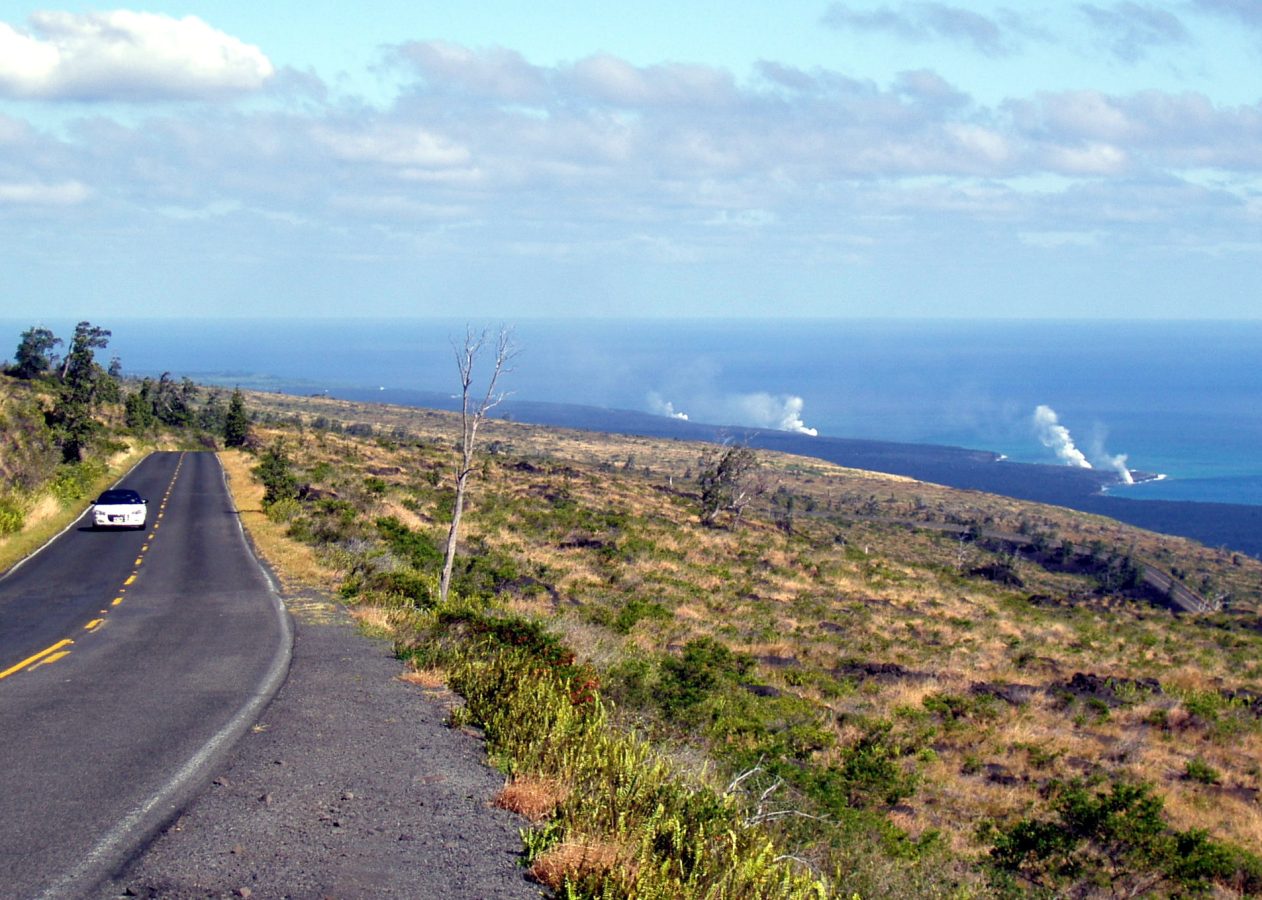
Photo: Jos-uit-boston at Dutch Wikipedia, CC BY-SA 3.0
Hawaii Volcanoes is the park of Kīlauea and Mauna Loa on the south-east of the Big Island, forty-five minutes from Hilo and two and a half hours from the Kona resorts, and the tours sold for it come from three directions. From Hilo, where the cruise ships dock, the half-day and full-day van tours drive to the Kīlauea summit, the steam vents, the Thurston lava tube and down the Chain of Craters Road, often with Rainbow Falls and a macadamia or coffee stop; they are the practical option for ship passengers with eight hours ashore. From Kona and the Kohala coast, the circle-island tours make a twelve-hour day of the volcano, the black-sand beach at Punalu’u and the Hilo side, which is long but saves a tired drive home in the dark after lava viewing.
From O’ahu, Maui and Kaua’i, the one-day fly-in packages include the inter-island flights and a guided van day, expensive and efficient. The helicopter and small-plane flights from Hilo and Kona fly over the rift zones and the 2018 flows, and are the only way to see the scale of what the eruption did; the evening tours combine the glow of Halema’uma’u with stargazing. The park entrance fee is per vehicle for seven days, and everything else in the park is free and self-guided, so a rental car, a stop at the Kīlauea visitor centre for the day's eruption report and the park's own ranger walks are all an independent visitor needs. Whether lava is visible changes by the week; check the Hawaiian Volcano Observatory's update before booking anything sold on the promise of it.
Live dates and prices from GetYourGuide. Free cancellation on most tickets.
The park was established in 1916 as Hawaii National Park, the first in a US territory, and separated from Haleakalā in 1961; it covers 1,435 square kilometres from the sea to the summit of Mauna Loa at 4,169 metres, a World Heritage Site since 1987, and it contains two of the most active volcanoes on earth. Kīlauea, the younger, has erupted almost continuously since 1983: the Pu’u ’Ō’ō vent on its east rift buried the village of Kalapana and added land to the island for thirty-five years, and in 2018 the summit lava lake drained, the caldera floor collapsed by 500 metres in a summer of earthquakes and explosions, and fissures in the Leilani Estates subdivision outside the park destroyed 700 homes; the Jaggar Museum on the rim was wrecked and later demolished.
Since 2020 lava has returned to Halema’uma’u crater in episodes of fountaining, watched from the rim overlooks at Uēkahuna and Keanakāko’i, by day as a crusted grey lake and by night as a red glow that Hawaiians know as the home of Pele. The Crater Rim drive and trail pass the steam vents, the sulphur banks and the Kīlauea Iki crater, whose floor, a lava lake in 1959, is crossed on one of the best day hikes in the national parks; the Thurston lava tube, Nāhuku, is a tunnel in a fern forest. The Chain of Craters Road descends 1,100 metres past pit craters and flows of the 1970s to the coast, where the Hōlei sea arch stands in the surf, the road ends under lava, and the Pu’u Loa field holds 23,000 petroglyphs. The rainforest of ’ōhi’a and tree fern shelters the nēnē goose, the ’apapane and other honeycreepers, and the Ka’ū desert and the long trail up Mauna Loa, which erupted in 2022, are the park's empty quarters.
The park is open twenty-four hours every day, with the visitor centre from about 9 am to 5 pm. The weather at the 1,200-metre summit is cool, wet and changeable in every month, with rain more likely from November to March, while the coast at the end of the road is hot and dry; bring a rain jacket and warm layer for the evening.
The glow, when there is one, is best after dark or before dawn, and the overlooks are crowded from sunset to about nine, so go later or at five in the morning. Volcanic gas closes areas at short notice. Allow a full day, with a night in Volcano village to see the crater after dark. Hilo is forty-five minutes north-east, Punalu’u black-sand beach half an hour south-west, and Mauna Kea's summit is the island's other mountain.
Yes. GetYourGuide lists 10 tickets and tours for Hawaii Volcanoes National Park, with live dates and prices and free cancellation on most of them.
The park entrance fee is per vehicle for seven days, and everything else in the park is free and self-guided, so a rental car, a stop at the Kīlauea visitor centre for the day's eruption report and the park's own ranger walks are all an independent visitor needs.
The park is open twenty-four hours every day, with the visitor centre from about 9 am to 5 pm.
Allow a full day, with a night in Volcano village to see the crater after dark.
Hawaii Volcanoes National Park covers 1 435 km².
Hawaii Volcanoes National Park was established in 1916.
Hawaii Volcanoes National Park receives about 1.4 million a year (2024).
Hawaii Volcanoes National Park is in Hawaii, United States. The map on this page shows the exact spot.
Hawaii, United States
Haleakalā is the volcano that forms the eastern three quarters of the island of Maui, and its national park has two…
4 tickets & tours