Arrecifes de Cozumel National Park
Mexico
The reefs of Cozumel, off the Caribbean coast of the Yucatan peninsula of Mexico, are among the most celebrated diving…
75 tickets & tours
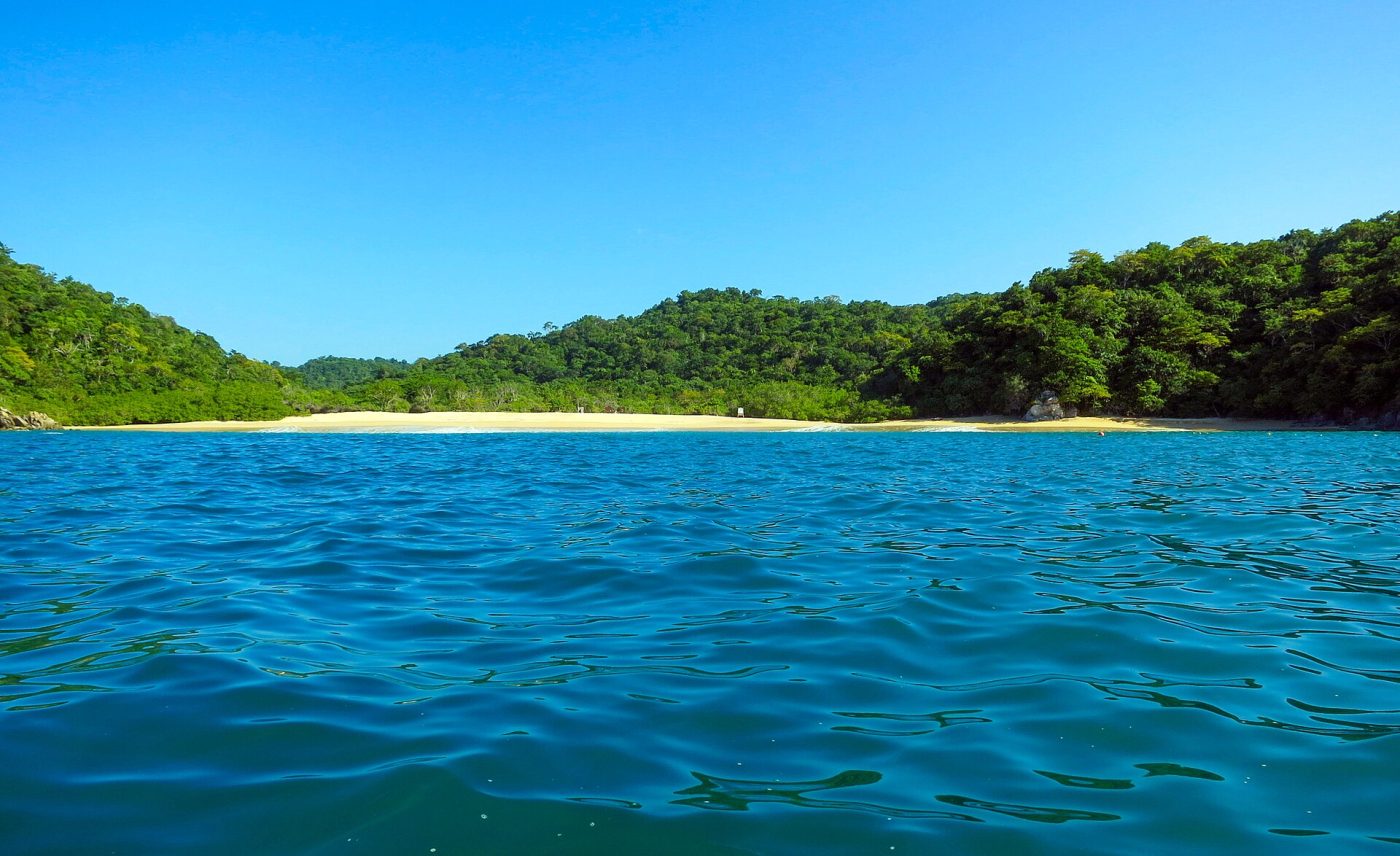
Huatulco is a planned resort on the Pacific coast of the Mexican state of Oaxaca, strung along nine bays with thirty-six beaches, and what distinguishes it from the country's other purpose-built resorts is that the western bays were never built on at all: five of them lie within a national park and remain as they were, backed by forest, without hotels or, in most cases, roads. The airport, with flights from Mexico City and seasonal ones from the United States and Canada, is twenty minutes from the hotel zones of Tangolunda and Santa Cruz and the town of La Crucecita. The standard way of seeing the park is from the sea.
Boats leave the marina of Santa Cruz every morning on the tour of the bays: a large catamaran with music and an open bar for those who like that, or, better, a small shared or private launch hired through the boatmen's cooperative at the dock, which cruises westwards along the rocky coast past a blowhole and a rock face in the shape of a profile, stops for snorkelling over the coral at San Agustín, La India or Riscalillo, lands at the long, empty beach of Cacaluta and generally ends with a lunch of grilled fish at the beach restaurants of Maguey or San Agustín. A small conservation bracelet fee is charged. By land, Maguey and Órgano are reached by a paved road and a short forest path, Cacaluta by a walking and cycling trail of several kilometres through the dry forest, and San Agustín by a long dirt road from the highway. Guided hikes with snorkelling, birdwatching at dawn, kayaking, and diving with the local centres are the better tours; the jungle ATV rides and coffee-plantation days sold alongside them take place outside the park, in the hills.
Live dates and prices from GetYourGuide. Free cancellation on most tickets.
The national park was decreed in July 1998, fourteen years after the federal tourism development agency expropriated the coast and began building the resort, and covers 11,890 hectares, of which 6,375 are land and 5,516 sea, between the Copalita river's neighbouring bays and the bay of San Agustín; it is a Ramsar wetland site and the core of a UNESCO biosphere reserve declared in 2006. The land is covered by one of the best-preserved tracts of tropical dry forest on the Pacific coast of Mexico, a biome that has largely vanished elsewhere under cattle pasture: a low, dense woodland that is lush and green from June to October and then drops its leaves and stands grey, thorny and apparently dead through the long dry season, with columnar and candelabra cacti, gumbo-limbo trees with peeling copper bark, morning glory trees that flower white in the leafless months, and mangroves round the lagoons behind Cacaluta and Chachacual.
Some 430 species of plants, 130 of mammals, including white-tailed deer, collared peccaries, armadillos, coatis, anteaters, ocelots and jaguarundis, more than 290 of birds, among them the West Mexican chachalaca, the citreoline trogon, the orange-breasted bunting and several other species found only in western Mexico, and 72 of reptiles have been recorded. Offshore are the most important coral communities of the southern Mexican Pacific, a dozen or more reef patches built mainly of branching Pocillopora coral, in the shelter of the bays, with parrotfish, angelfish, puffers, morays, octopuses and rays; green, olive ridley, hawksbill and leatherback turtles use the beaches and waters, dolphins are seen on most boat trips, and humpback whales pass from December to March. The bays are, from east to west within the park, Órgano, Maguey, Cacaluta, a heart-shaped bay with an island in its mouth, where a well-known Mexican film was shot, Chachacual with La India beach, and San Agustín. The name Huatulco comes from the Nahuatl for the place where the wood is revered, from a legend of a great cross on the beach at Santa Cruz that pirates, Thomas Cavendish among them in 1587, could neither burn nor pull down.
The park is open daily in daylight hours. The dry season, from November to May, has almost unbroken sunshine, calm seas, the clearest water, and a leafless forest in which birds and animals are easy to see; it is hot, around 30 to 33 degrees, all year. The rains, from June to October, fall mostly in heavy bursts in the late afternoon and at night, turn the forest an intense green within days, and coincide with the Pacific hurricane season, which occasionally closes the port to small boats for a day or two.
Mornings are calmer for snorkelling than afternoons, and weekends and Mexican holidays crowd Maguey and San Agustín. Wear biodegradable sunscreen. Allow a full day for the bays. La Crucecita is the town, the coffee fincas of Pluma Hidalgo an hour and a half into the hills, the turtle beaches of Mazunte and the surf of Zipolite an hour west, and Oaxaca city six hours or a short flight.
Yes. GetYourGuide lists one ticket or tour for Huatulco National Park, with live dates and prices and free cancellation on most of them.
The park is open daily in daylight hours.
Allow a full day for the bays.
Huatulco National Park covers 119 km².
Huatulco National Park was established in 1998.
Huatulco National Park is in Mexico. The map on this page shows the exact spot.
Mexico
The reefs of Cozumel, off the Caribbean coast of the Yucatan peninsula of Mexico, are among the most celebrated diving…
75 tickets & tours
Mexico
Puerto Morelos is the fishing village between Cancún and Playa del Carmen whose reef, part of the Mesoamerican barrier…
45 tickets & tours
Mexico
Ría Lagartos is the flamingo lagoon on the northern tip of Yucatán, two hours from Valladolid and three from Cancún or…
28 tickets & tours
Mexico
Los Arcos are the granite islets with the arches off Mismaloya, twelve kilometres south of Puerto Vallarta, and the…
16 tickets & tours
Mexico
Cabo Pulmo is a village of a few hundred people on the East Cape of Baja California Sur, on the Gulf of California,…
8 tickets & tours
Mexico
Iztaccihuatl and Popocatepetl, the second and third highest mountains of Mexico, stand side by side on the eastern rim…
6 tickets & tours


