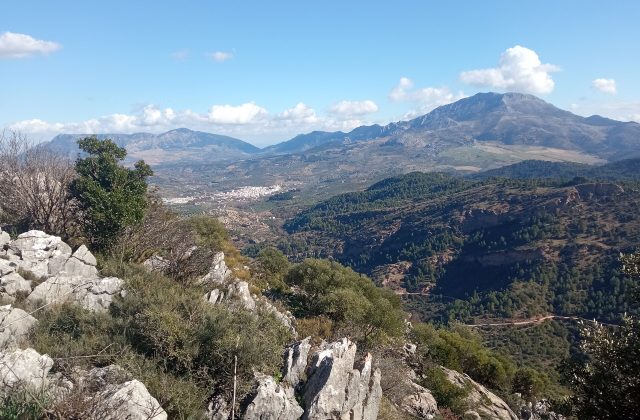
Gibraltar Nature Reserve
302 km away
The Gibraltar Nature Reserve is the upper part of the Rock, and it contains nearly everything that visitors to the…
3 tickets & tours

Photo: Josep Renalias, CC BY-SA 3.0
Ifrane National Park lies in the Middle Atlas mountains of Morocco, about sixty kilometres, an hour by road, south of the imperial cities of Fes and Meknes, and it protects the greatest forest of Atlas cedar in the world, the home of the Barbary macaque. It is a favourite day excursion from Fes, by hired car, by shared taxi to the towns of Ifrane or Azrou, or on the day tours that make a circuit of the Middle Atlas, and it is also crossed by everyone who travels by road from Fes to the desert at Merzouga. There are no gates and no fees. The two bases are very different. Ifrane, at 1,650 metres, was built by the French in 1929 as a hill station, with steep-roofed villas, gardens, a royal palace and, since 1995, a private English-language university, so that it looks like a Swiss or Alsatian resort mislaid in Africa, scrupulously clean, and is famous among Moroccans for its snow and for a stone lion carved in a park.
Azrou, seventeen kilometres away, is a Berber market town with green-tiled roofs, a weekly market on Tuesdays and a cooperative selling carpets. Between and beyond them the main road to the south passes through the cedar forest, and at a roadside clearing eight kilometres from Azrou, round the bleached skeleton of a giant tree known as the Cedre Gouraud, stalls sell fossils and peanuts and troops of macaques wait for the visitors; the tours all stop here. It is better to walk away from the road, along any of the forest tracks, where the monkeys behave naturally, or to take the signposted tourist circuit of the lakes, a loop of some sixty kilometres on small roads north-east of Ifrane, past the lakes of Dayet Aoua, Dayet Ifrah and Dayet Hachlaf, for birds and picnics. Local guides in Azrou and Ifrane offer walks of a day or several days, with nights in village houses.
Live prices from GetYourGuide for tours whose route includes this park. Free cancellation on most of them.
The national park was created in 2004 and enlarged in 2008 to about 1,250 square kilometres, the larger figure now usually given, in the provinces of Ifrane and Boulemane, on a high limestone plateau at 1,300 to 2,400 metres, scattered with extinct volcanic cones and sheets of black basalt, which receives more rain and snow than any other part of Morocco and is the water tower of the country: the Sebou and the Oum er Rbia, the two largest rivers, rise here, and the springs feed the cities of the plain. The Atlas cedar, a majestic conifer with a tiered, flat-topped crown of blue-green needles, which can reach forty metres and live for eight or nine hundred years, grows wild only in the mountains of Morocco and Algeria, and the forests of this park, mixed with evergreen holm oak and, lower down, with thuya and juniper, represent something like a tenth of all that remains. The Cedre Gouraud, named after a French general of the protectorate, was reckoned to be some eight hundred years old when it died, in the early 2000s, and is kept standing as a monument. The Barbary macaque, the only macaque outside Asia and the only monkey native to Africa north of the Sahara, a stocky, thick-furred, tailless animal, the same species as the apes of Gibraltar, has its principal stronghold in these woods, where it survives the snowy winters by eating cedar needles and bark;
its total numbers have fallen by more than half in a generation, to perhaps eight to ten thousand, and it is classed as endangered, the causes being the capture of infants for sale as pets, largely to Europe, the loss of the forest, and competition with sheep and goats. The feeding of the roadside troops by tourists, which makes them fat, quarrelsome and careless of traffic, is one of the problems that the park is trying to control. The forest itself is under strain: overgrazing by the flocks of the semi-nomadic Beni Mguild Berbers, who pitch their dark tents on the plateau in summer, prevents young trees from growing, illegal felling for the valuable timber continues, and a succession of dry years has killed many old cedars. The last wild Barbary lion, the magnificent dark-maned lion of the Atlas, was shot in these mountains, it is thought, in the 1940s, and the leopard has gone the same way, though red deer and the Barbary sheep have been reintroduced in fenced reserves, and wild boar, jackals, genets, the Barbary partridge, Levaillant's woodpecker, a green woodpecker confined to the Maghreb, the Atlas flycatcher, Moussier's redstart, the ruddy shelduck, the crested coot and red-knobbed coot on the lakes are all to be seen. The lakes, which lie in hollows of the karst, have shrunk alarmingly in recent dry years, and Dayet Aoua has at times dried out altogether.
The park can be visited all year, and the seasons in this part of Morocco are strongly marked. Spring, from April to June, is the finest, with wild flowers in the clearings, full lakes, migrant birds and temperatures of 15 to 25 degrees; autumn, from September to November, is clear and golden. Summer is warm but never oppressive at this altitude, 25 to 30 degrees, which is why the people of Fes and Meknes come up in great numbers at weekends to escape the furnace of the plain.
Winter, from December to March, is cold, Ifrane having recorded the lowest temperature ever measured in Africa, minus 23.9 degrees, in 1935, and snow lies for weeks, drawing Moroccan families for sledging and the small ski slopes of Michlifen; roads may be closed for a day or two after heavy falls. Do not feed the monkeys, keep bags closed and children close, and do not buy young animals offered for photographs. Bring warm clothing outside summer. Allow a day from Fes. The cascades of Oum er Rbia's sources are an hour and a half south of Azrou, and Fes and Meknes an hour north.
302 km away
The Gibraltar Nature Reserve is the upper part of the Rock, and it contains nearly everything that visitors to the…
3 tickets & tours
364 km away
Toubkal is the High Atlas park above Marrakech, an hour and a half from the city to the village of Imlil at its gate,…
20 tickets & tours
367 km away
The Sierra de las Nieves is the limestone massif that rises between Marbella and Ronda in the province of Málaga, less…
5 tickets & tours
Yes. GetYourGuide sells tickets and guided tours whose route includes Ifrane National Park; live prices are shown on this page.
Allow a day from Fes.
Ifrane National Park covers 1 250 km².
Ifrane National Park was established in 2004.
Ifrane National Park is in Morocco. The map on this page shows the exact spot.
Morocco
Toubkal is the High Atlas park above Marrakech, an hour and a half from the city to the village of Imlil at its gate,…
20 tickets & tours
Morocco
Souss-Massa is a strip of Atlantic coast in southern Morocco, of dunes, sea cliffs, steppe and two river mouths,…
1 ticket or tour