Watarrka National Park
Northern Territory, Australia
Watarrka National Park, in the desert of the southern Northern Territory, contains Kings Canyon, a great cleft of red…
11 tickets & tours
Wetland Park · Northern Territory · Australia
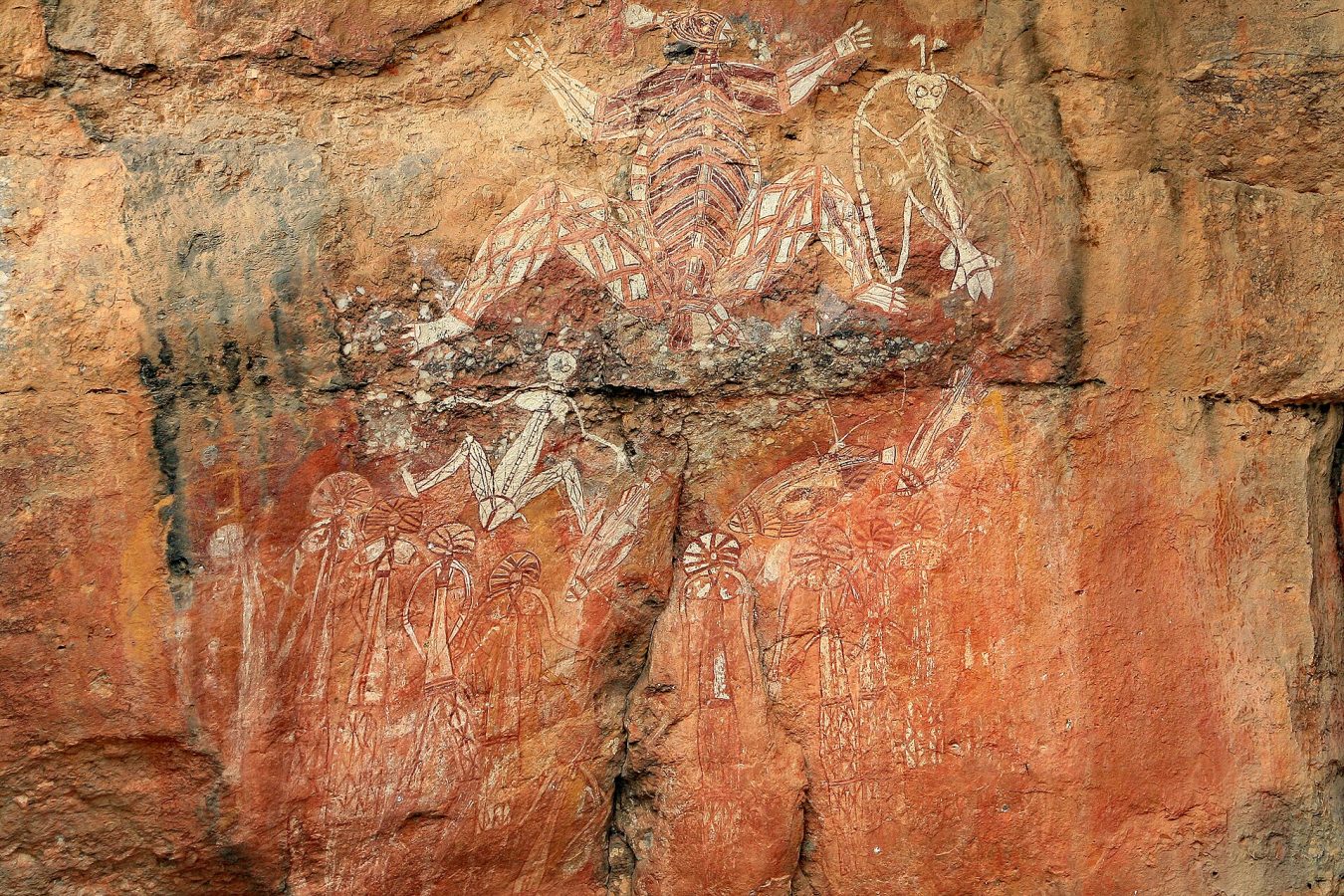
Photo: W. Bulach, CC BY-SA 4.0
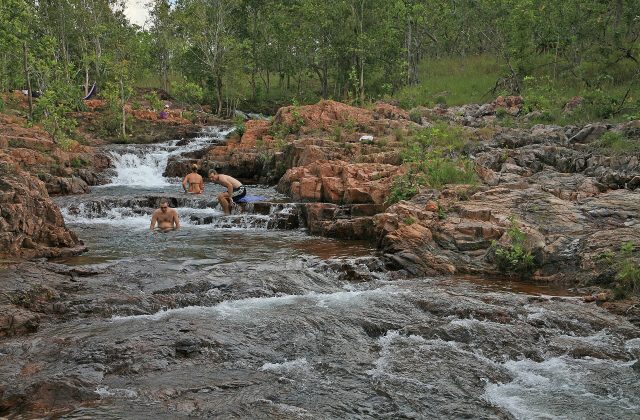
Kakadu lies in the tropical north of Australia, its edge 150 kilometres and its centre at Jabiru 250 kilometres east of Darwin, and the first decision is whether to see it in a day. The day tours from Darwin exist and leave at six for fourteen hours, of which eight are on the highway: they reach the rock art of Nourlangie or Ubirr, the Warradjan cultural centre and a cruise on Yellow Water, and they are better than nothing for someone with one day; versions that include the evening cruise return after midnight. The two- to five-day tours, in comfortable coaches with hotel nights at Jabiru or Cooinda or in 4WD trucks with camping, are the proper way, and the 4WD ones reach the plunge pools and waterfalls at the end of rough tracks, Maguk, Gunlom and, in the dry months, Jim Jim and Twin Falls, which ordinary tours and cars cannot.
From Jabiru and Cooinda, local operators run day trips by 4WD to those falls, Aboriginal-guided cultural tours, including boat trips on the East Alligator river with Guluyambi guides and day permits into Arnhem Land, and scenic flights of thirty minutes or an hour over the escarpment, the only way to see Jim Jim and Twin Falls in flood during the wet season, when the tracks are closed. The Yellow Water cruises run from Cooinda several times a day and the sunrise one is the best two hours in the park. A park pass is required, bought online, cheaper in the wet season; self-drivers manage well on the sealed Arnhem and Kakadu highways.
Live dates and prices from GetYourGuide. Free cancellation on most tickets.
The park was declared in stages from 1979 and covers nearly 20,000 square kilometres, about the size of Wales, Australia's largest national park on land, taking in almost the whole catchment of the South Alligator river from the sandstone plateau of Arnhem Land to the sea; it is a World Heritage Site for both nature and culture. About half is Aboriginal land, leased to the national parks agency and managed jointly with its Bininj and Mungguy owners, whose ancestors have lived here for at least 65,000 years, the age of the Madjedbebe rock shelter, the oldest dated site of human occupation in Australia. The galleries at Ubirr, Nourlangie, which is properly Burrungkuy, and Nanguluwurr are among the great rock-art sites of the world: X-ray paintings of barramundi, turtles and wallabies, the Lightning Man Namarrgon, Mimi spirits, thylacines extinct on the mainland for thousands of years and, from the last centuries, Macassan boats and Europeans with guns;
from the top of Ubirr at sunset the Nadab floodplain stretches green to Arnhem Land. The Arnhem Land escarpment runs for 500 kilometres along the park's east, with Jim Jim Falls dropping 200 metres from it. Below lie savanna woodland, monsoon forest, paperbark swamps and the floodplains and billabongs, of which Yellow Water is the most famous, where a third of Australia's bird species occur: magpie geese in hundreds of thousands, jabirus, brolgas, jacanas walking on lily pads, sea eagles and kingfishers. Some ten thousand estuarine crocodiles live in the park, and they are the reason for never swimming except where the rangers have declared a pool open. The Ranger uranium mine, an enclave surrounded by the park, closed in 2021 and is being rehabilitated, and Jabiluka, fought over for decades, will never be mined.
The park is open all year, but the seasons decide everything; the Bininj count six. The dry, from May to October, has blue skies, cool nights and open tracks, with Jim Jim and Twin Falls usually reachable from June and the waterbirds crowding the shrinking billabongs by August and September, when it is also busiest. The build-up in October and November is hot and oppressively humid.
The wet, from December to April, brings monsoon storms, flooded roads, closed falls and closed Ubirr at times, a fraction of the visitors, green country, thundering waterfalls seen from the air, and the Yellow Water cruise running over the flooded plain. Check the daily road report. Allow three days at the least. Litchfield National Park is an easier day trip from Darwin, and Nitmiluk gorge at Katherine is three hours south of the park.
Yes. GetYourGuide lists 9 tickets and tours for Kakadu National Park, with live dates and prices and free cancellation on most of them.
The park is open all year, but the seasons decide everything; the Bininj count six.
Allow three days at the least.
Kakadu National Park covers 19 804 km².
Kakadu National Park was established in 1979.
Kakadu National Park is in Northern Territory, Australia. The map on this page shows the exact spot.
Northern Territory, Australia
Watarrka National Park, in the desert of the southern Northern Territory, contains Kings Canyon, a great cleft of red…
11 tickets & tours
Northern Territory, Australia
Uluru stands in the middle of Australia, 450 kilometres by road from Alice Springs, and nearly everyone stays at…
10 tickets & tours
Northern Territory, Australia
The West MacDonnell Ranges run due west from Alice Springs in the centre of Australia, and the park's first gorge,…
8 tickets & tours
Northern Territory, Australia
Litchfield is the waterfall park an hour and a half south of Darwin, by way of the small town of Batchelor, and…
7 tickets & tours
Northern Territory, Australia
Nitmiluk, formerly called Katherine Gorge, is a chain of thirteen sandstone gorges cut by the Katherine river in the…
2 tickets & tours
Northern Territory, Australia
Emily Gap and Jessie Gap are two narrow clefts in the long red wall of the East MacDonnell Ranges, in the very centre…
No online ticket