Watarrka National Park
Northern Territory, Australia
Watarrka National Park, in the desert of the southern Northern Territory, contains Kings Canyon, a great cleft of red…
11 tickets & tours
Desert Park · Northern Territory · Australia
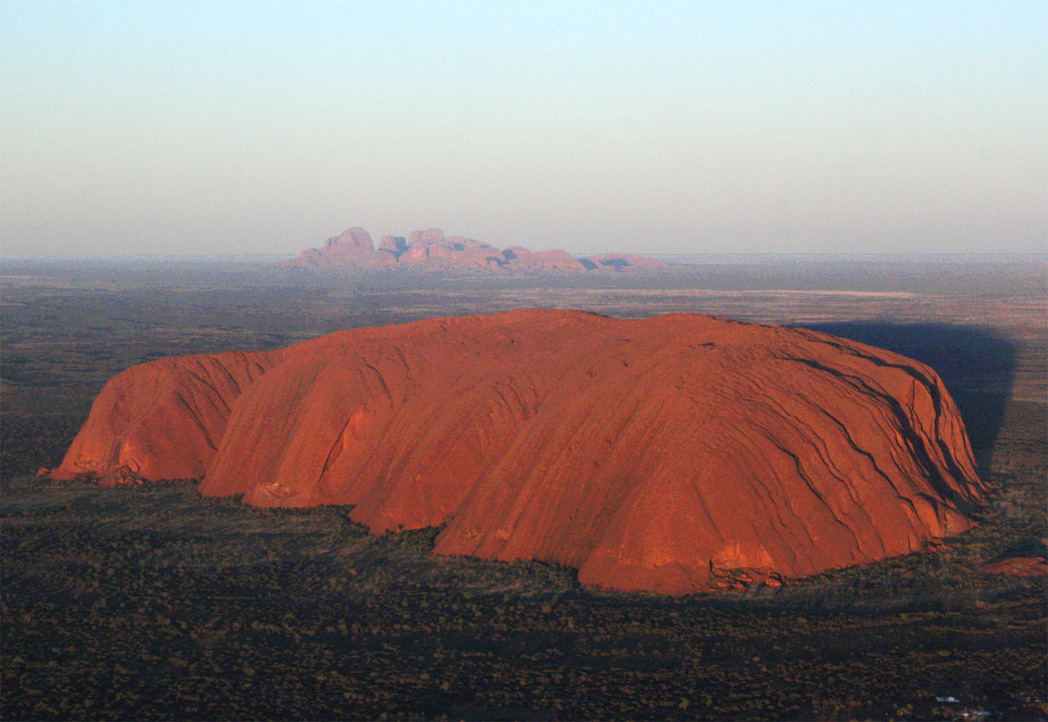
Uluru stands in the middle of Australia, 450 kilometres by road from Alice Springs, and nearly everyone stays at Yulara, the resort village twenty minutes from the rock, which has its own airport with flights from Sydney, Melbourne, Brisbane and Cairns. The park pass, valid for three days and bought online, is required of everyone and is added to most tour prices. Without a rental car the choice is between the coach tours and the hop-on hop-off shuttle from the resort, which runs to the sunrise and sunset viewing areas, the Mala and Kuniya car parks and Kata Tjuta on a timetable and suits independent walkers. The standard tours are the Uluru sunrise with a guided walk along part of the base and to the Mutitjulu waterhole, the sunset with sparkling wine at the viewing area, and the morning at Kata Tjuta with the walk into Walpa gorge or the longer Valley of the Winds;
the better guides explain the Tjukurpa, the law and stories of the place, and the Anangu-owned tours and the dot-painting workshops do so in the owners' own voice. Helicopter and light-aircraft flights circle both formations and reach Lake Amadeus, camel rides cross the dunes at sunrise and sunset, and the dinners under the stars and the Field of Light installation are the resort's evenings. The camping safaris of two to four days from Alice Springs or Yulara add Kings Canyon in Watarrka National Park, three hours away, sleeping in swags by a fire, which is the young traveller's classic. Climbing Uluru has been prohibited since October 2019.
Live dates and prices from GetYourGuide. Free cancellation on most tickets.
The park covers 1,326 square kilometres of spinifex plain, desert oak and red dune in the south-west of the Northern Territory and is one of the few places on the World Heritage list twice over, for its geology in 1987 and as a living cultural landscape in 1994. It was declared in 1958, and on 26 October 1985 the title was handed back to its traditional owners, the Anangu, Pitjantjatjara and Yankunytjatjara people, who leased it to the national parks agency for ninety-nine years and manage it jointly with a majority on the board; the date of the climb's closure, thirty-four years later to the day, was chosen for that reason. Uluru, which the surveyor William Gosse named Ayers Rock in 1873, is a single mass of arkose sandstone 348 metres high, 863 above sea level and 9.4 kilometres around, the tilted edge of a bed that continues for kilometres underground, grey in itself and rusted red on the surface, which glows orange and crimson at sunrise and sunset and turns silver with waterfalls in the rare rains.
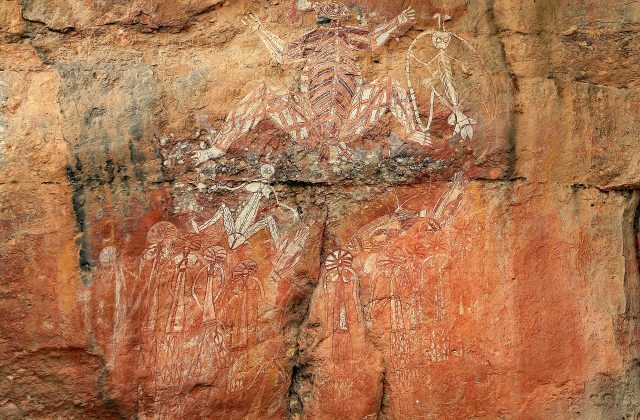
It is not smooth: the base walk of 10.6 kilometres, flat and the best thing to do in the park, passes caves with rock art, overhangs, the waterholes of Mutitjulu and Kantju, and features that are the physical marks of ancestral beings, Kuniya the python woman, Liru the poisonous snake, the Mala hare-wallaby people; several are sacred sites where photography is asked not to be done. Kata Tjuta, the many heads, fifty kilometres west, is a cluster of thirty-six conglomerate domes, the highest, Mount Olga, 546 metres above the plain and taller than Uluru; the Valley of the Winds circuit of 7.4 kilometres climbs between them to two lookouts. The cultural centre near the rock should come first. Red kangaroos, dingoes, thorny devils, perenties and 170 birds live here, and the mala has been brought back inside a predator-proof enclosure.
The park opens before sunrise and closes after sunset, with the hours changing monthly, from about 5 am to 9 pm in summer and 6.30 am to 7.30 pm in winter. May to September is the season: clear days in the low twenties, nights near or below freezing, and the most visitors. From October to March the temperature regularly passes 40 degrees;
the Valley of the Winds is closed beyond the first lookout from 11 am when 36 degrees is forecast, the base walk should be finished by then too, and the bush flies are maddening, so that a head net is no joke. Rain on the rock, a few days a year, is the luckiest sight. Allow two full days, three with Kings Canyon. Alice Springs and the West MacDonnell ranges are five hours north-east, and the Mereenie loop links them by way of Kings Canyon.
Yes. GetYourGuide lists 10 tickets and tours for Uluru-Kata Tjuta National Park, with live dates and prices and free cancellation on most of them.
Allow two full days, three with Kings Canyon.
Uluru-Kata Tjuta National Park covers 1 326 km².
Uluru-Kata Tjuta National Park was established in 1958.
Uluru-Kata Tjuta National Park receives about 250 000 a year (2019).
Uluru-Kata Tjuta National Park is in Northern Territory, Australia. The map on this page shows the exact spot.
Northern Territory, Australia
Watarrka National Park, in the desert of the southern Northern Territory, contains Kings Canyon, a great cleft of red…
11 tickets & tours
Northern Territory, Australia
Kakadu lies in the tropical north of Australia, its edge 150 kilometres and its centre at Jabiru 250 kilometres east of…
9 tickets & tours
Northern Territory, Australia
The West MacDonnell Ranges run due west from Alice Springs in the centre of Australia, and the park's first gorge,…
8 tickets & tours
Northern Territory, Australia
Litchfield is the waterfall park an hour and a half south of Darwin, by way of the small town of Batchelor, and…
7 tickets & tours
Northern Territory, Australia
Nitmiluk, formerly called Katherine Gorge, is a chain of thirteen sandstone gorges cut by the Katherine river in the…
2 tickets & tours
Northern Territory, Australia
Emily Gap and Jessie Gap are two narrow clefts in the long red wall of the East MacDonnell Ranges, in the very centre…
No online ticket