
Una National Park
81 km away
The Una is a river of astonishing emerald clarity in the north-western corner of Bosnia and Herzegovina, along the…
2 tickets & tours
Forest Park · Bosnia and Herzegovina
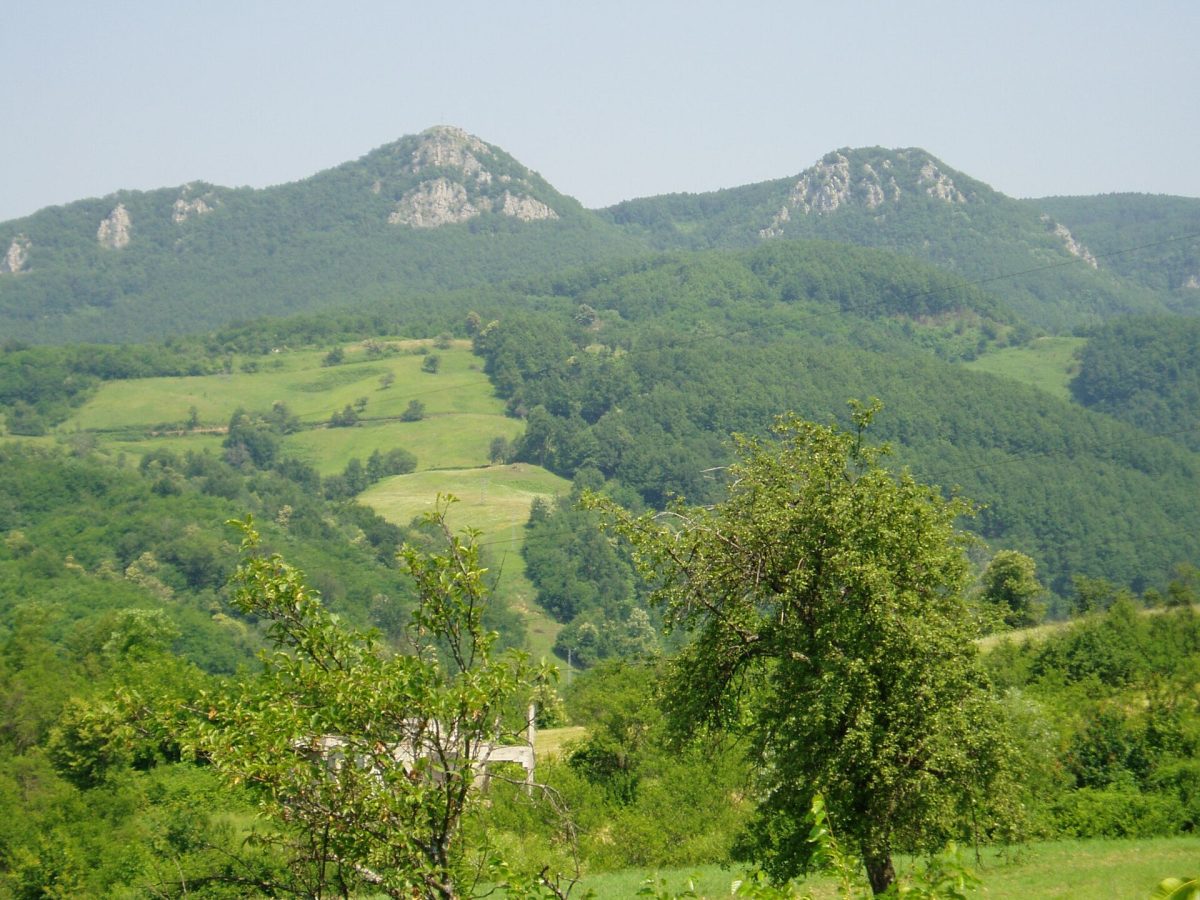
Kozara is a small park on a densely wooded mountain in the north-west of Bosnia and Herzegovina, in the entity of Republika Srpska, between the rivers Una, Sava, Sana and Vrbas, and it is at once a place of recreation for the surrounding towns and one of the most important memorial sites of the Second World War in the former Yugoslavia. It lies twenty-five kilometres, half an hour by a good road, from the town of Prijedor, and about fifty-five kilometres, an hour, from Banja Luka, the largest city of the region, which has an airport with a few international flights; from Zagreb it is two hours by road. There is no regular public transport to the top.
A modest entrance fee per vehicle is paid at a barrier on the access road, which climbs through the forest to the plateau of Mrakovica, at about eight hundred metres, the centre of the park, where there are a large car park, a hotel, several restaurants and snack bars, a visitor centre, children's playgrounds, a short ski lift and sledging slope used in winter, and, on the summit of the hill, approached by a broad flight of steps through the trees, the monument and its museum. From Mrakovica a network of marked footpaths and mountain-bike trails, of a few kilometres to a full day, leads through the beech and fir forest to viewpoints such as Gola Planina and Zecji Kamen, to springs and to the higher summit of Lisina, 978 metres, and an educational trail explains the forest. The walking is gentle, on broad forest tracks, and suits families. Simple mountain huts and picnic places with shelters are scattered through the woods, and the people of Prijedor and Banja Luka come up in large numbers at weekends to eat grilled meat in the fresh air.
Kozara was declared a national park in 1967, by a decision associated personally with Tito, and covers about 3,500 hectares of the central part of the mountain, adjoined by a much larger hunting reserve. The mountain is of modest height, a long ridge of flysch and volcanic rocks between five and nearly a thousand metres, whose rounded forms are covered by one of the finest forests of northern Bosnia, of beech and silver fir, with oak, hornbeam, maple, spruce and pine, threaded by clear streams; it is known as the green beauty of the Krajina, and shelters roe deer, wild boar, foxes, martens, badgers, squirrels, wildcats, hawks, buzzards, owls and woodpeckers. Its name, however, means something else to anyone who grew up in Yugoslavia. In the spring of 1942 the mountain and the villages round it, inhabited mainly by Serbs, formed a liberated territory held by some 3,500 partisans, to whom tens of thousands of peasants had fled from the terror of the Ustasha regime of the wartime Croatian state. In June the Germans, with Croatian and Hungarian forces, some forty thousand men supported by aircraft, tanks and gunboats on the rivers, encircled the mountain and closed in. On the night of 3 to 4 July the partisans attempted to break out, taking the civilians with them; part of the force and perhaps ten thousand people got through, and the rest were trapped.
Some sixty-eight thousand civilians, among them more than twenty thousand children, were driven down from the mountain to the camps of Jasenovac, Stara Gradiska and Sisak, where a great part of them, including thousands of the children, died, or were deported as forced labour. The battle, celebrated in a famous film of 1962 and in poems learned by every schoolchild, became one of the central legends of the partisan struggle. The monument at Mrakovica, by the sculptor Dusan Dzamonja, completed in 1972, is among the most remarkable of the abstract memorials of socialist Yugoslavia: a cylinder thirty-three metres high, composed of twenty vertical concrete fins faced with stainless steel, divided by deep, dark slits into which a person can squeeze, the projecting ribs standing for life and victory and the hollows for death, surrounded by low horizontal blocks that represent the encircling enemy. Behind it, a memorial wall carries on bronze plaques the names of 9,921 partisans from the region who fell in the war, and a museum tells the story. A later history lies close by. In 1992, in the war that destroyed Yugoslavia, the district of Prijedor was the scene of the camps of Omarska, Keraterm and Trnopolje and of the expulsion and killing of its Bosniak and Croat inhabitants, crimes established by the international tribunal at The Hague, which are commemorated by the survivors and not by the local authorities; the visitor should be aware of both memories.
The park is open all year. Spring, from late April to June, when the beech woods come into leaf and the forest floor is covered with flowers, and autumn, in October, when they turn gold and copper, are the most beautiful seasons for walking. Summer is warm, 22 to 28 degrees, pleasantly cooler than the plains below, and the busiest time, especially at weekends and on the anniversary of the breakout, in early July, when a large commemorative gathering is held at the monument.
In winter, from December to February, snow usually covers Mrakovica, the small ski slope operates, and the road is kept open. The museum keeps office hours and may be closed on Mondays. Keep to the marked paths in the forest. Bring a waterproof and good shoes. Allow half a day. Prijedor is half an hour away, Banja Luka, with its fortress on the Vrbas, an hour, the memorial site of Jasenovac, across the Sava in Croatia, an hour and a quarter, and the Una National Park two hours to the west.
81 km away
The Una is a river of astonishing emerald clarity in the north-western corner of Bosnia and Herzegovina, along the…
2 tickets & tours
101 km away
Plitvice is the park of sixteen terraced lakes in the Croatian interior, two hours from Zagreb and three from Split or…
20 tickets & tours
153 km away
Krka is the waterfall park behind Šibenik, an hour from Split and an hour and a half from Zadar, and the day trip from…
34 tickets & tours
No online tour for Kozara National Park is listed on GetYourGuide; entry, where it is charged, is paid at the gate or through the park authority. Nearby parks with bookable tours are listed on this page.
The park is open all year.
Kozara National Park covers 34 km².
Kozara National Park was established in 1967.
Kozara National Park is in Bosnia and Herzegovina. The map on this page shows the exact spot.
Bosnia and Herzegovina
The Una is a river of astonishing emerald clarity in the north-western corner of Bosnia and Herzegovina, along the…
2 tickets & tours
Bosnia and Herzegovina
Sutjeska is the oldest national park of Bosnia and Herzegovina, in the south-east of the country against the border of…
1 ticket or tour


